
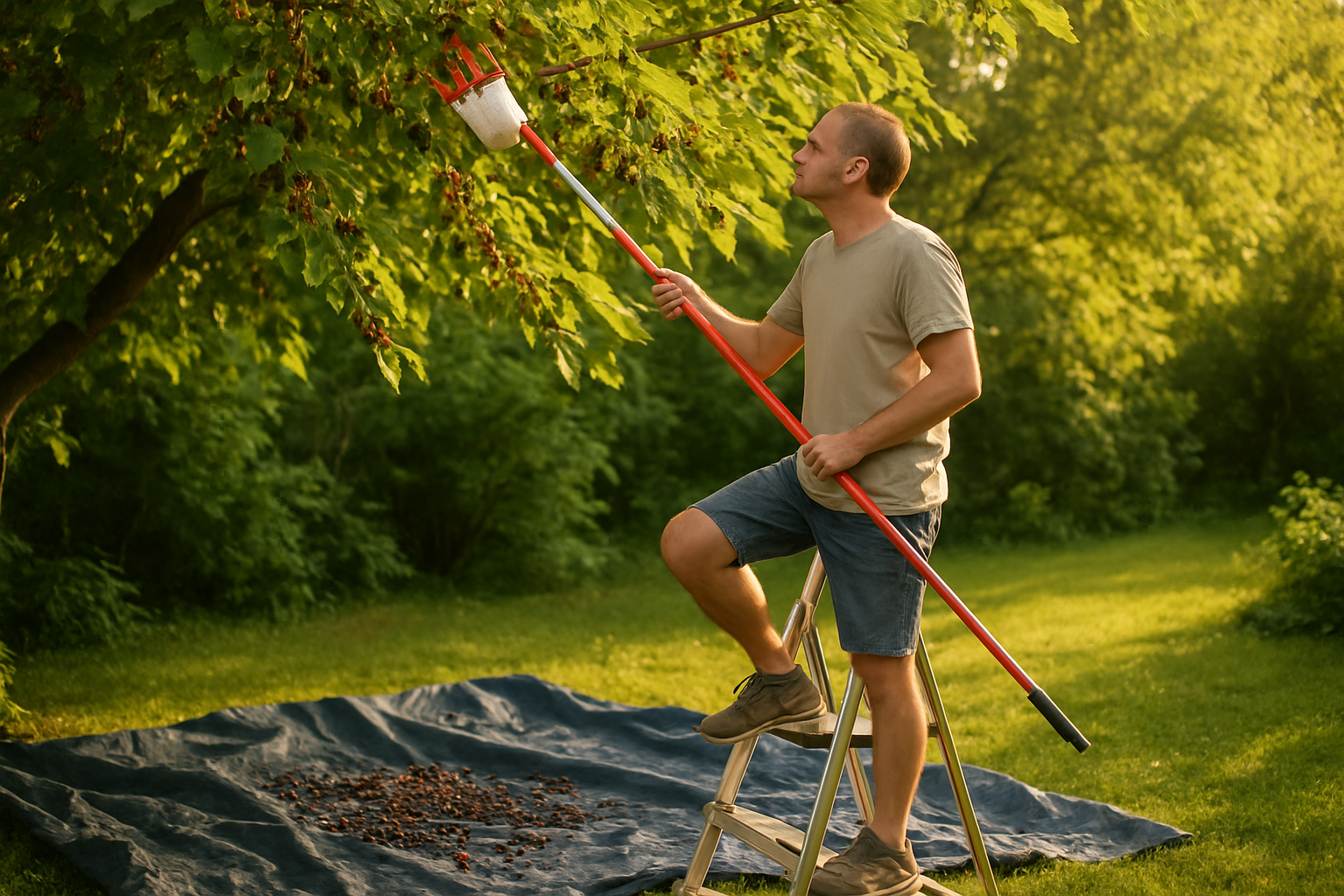
Last summer, I climbed a wobbly extension ladder propped against my 20-foot mulberry tree, grabbed a branch way above my head, and promptly watched the whole ladder slide sideways along the trunk. I grabbed the branch. The ladder hit the grass. I hung there like the world’s least graceful ornament, covered in mulberry juice, heart hammering, until I could swing myself down. It was embarrassing, it was frightening, and I’d destroyed about a third of the ripe fruit in the process. That disaster is exactly why I became obsessed with figuring out how to harvest mulberries from a tall tree — safely, efficiently, and without turning into a cautionary tale.
This post contains affiliate links. As an Amazon Associate, I earn from qualifying purchases. This means if you click a link and make a purchase, I may earn a small commission at no extra cost to you. I only recommend products I genuinely find useful.
If your mulberry tree has been growing for more than a few years, chances are it’s well above your reach. Mulberries grow fast — sometimes two to three feet per year — and before you know it, the most fruit-heavy branches are eight, twelve, even fifteen feet off the ground. The berries don’t wait for you to figure out your technique. They ripen, they drop, and the birds and ants get there first. So let me share what actually works, hard-won from my own (sometimes painful) experience.
Why Harvesting a Tall Mulberry Tree Is Its Own Challenge
Mulberries are not like apples or pears. You can’t just twist them off the branch and toss them in a bag. Ripe mulberries are incredibly soft and fragile — squeeze even slightly too hard and you’ve got purple mush. They also don’t all ripen at once, so you’re making multiple passes at the same tree across several weeks. And unlike some fruits, mulberries don’t develop full sweetness until they’re completely ripe, so picking them early “to be safe” just means a bucket of sour, disappointing berries.
All of this means the way you reach those high branches matters enormously. You need methods that are gentle enough to protect the fruit, stable enough to keep you safe, and practical enough that you’ll actually use them every few days during peak season.
The Tarp-and-Shake Method: Your Best Friend for Harvest Mulberries Tall Tree Style
Honestly, this is the technique I wish someone had told me about before my ladder incident. Ripe mulberries fall easily — that’s the key insight. When a berry is truly ready, it barely needs encouragement. So instead of reaching for individual fruits, you work with gravity.
Here’s how it works: Spread a large clean tarp, old bedsheet, or painter’s drop cloth on the ground beneath the canopy. Then gently shake the lower branches, or use a long pole to tap the higher ones. Ripe fruit falls onto the tarp; unripe fruit stays put. Gather the corners of the tarp together and funnel the berries into your container. Repeat every two to three days as new fruit ripens.
A few tips to make this work better:
- Harvest in the morning when temperatures are cooler — berries hold their shape better and spoil more slowly.
- Use a light shake, not a violent one. You’re coaxing ripe fruit, not thrashing the tree.
- Sort quickly after gathering — any berries that are still slightly pink or firm can be set aside to ripen for a day.
- Wash and use or freeze berries the same day. At room temperature, fully ripe mulberries start to break down within hours.
Tools That Help You Reach the High Branches Safely
The tarp method gets you a lot of fruit, but there will always be clusters up high that didn’t quite shake loose — big, gorgeous, perfectly ripe bunches just sitting there taunting you. That’s where good tools make all the difference.
Adjustable Fruit Picker Poles
A fruit picker pole with a basket lets you reach high branches while keeping both feet on the ground. For most tall mulberry trees, I’d suggest looking for something that extends to at least 13 feet. The basket cradles the fruit as it detaches, which is critical for soft mulberries that would otherwise splatter on the way down.
For a solid mid-range option, the DonSail Fruit Picker Pole Tool with Basket adjusts from 35 to 65 inches and works beautifully for lower-to-mid canopy branches. If your tree is taller, the BlumeTrec 13.5FT Fruit Picker extends all the way to 161 inches — that’s over 13 feet — and gives you serious reach. I’ve also had great results with the Walensee 13FT Fruit Picker, which has a lightweight stainless steel pole and a generously sized basket that catches multiple berries at once.
When using a picker pole with mulberries, position the basket directly under a cluster and gently nudge rather than yank. The fruit should drop right in.
Orchard Ladders (The Safe Kind)
If you do need to get up into the canopy — for pruning, for fruit that’s deep in the branches, or for trees that just don’t shake well — please ditch the standard extension ladder against the trunk. That’s exactly what got me into trouble. Orchard ladders are designed differently: they’re tripod-style or wide-based, so they stand independently without leaning against the tree.
The Folding Lightweight Tripod Ladder is a great starting point — it’s compact, folds easily for storage, and the tripod design keeps it stable on uneven garden ground. If you want something with wider steps for better footing, the Aluminum Orchard Ladder with Wider Steps is worth considering — those broader steps make a real difference when you’re standing at height for several minutes at a time.
Always have someone nearby when you’re on a ladder, even a stable orchard one. Mulberry branches can be slippery with juice, and the ground under a mature tree is often uneven from surface roots.
Putting It All Together: A Simple Harvest Routine
Here’s the routine I now follow every two to three days during peak season, and it has transformed my harvests from stressful scrambles into something I genuinely look forward to: