
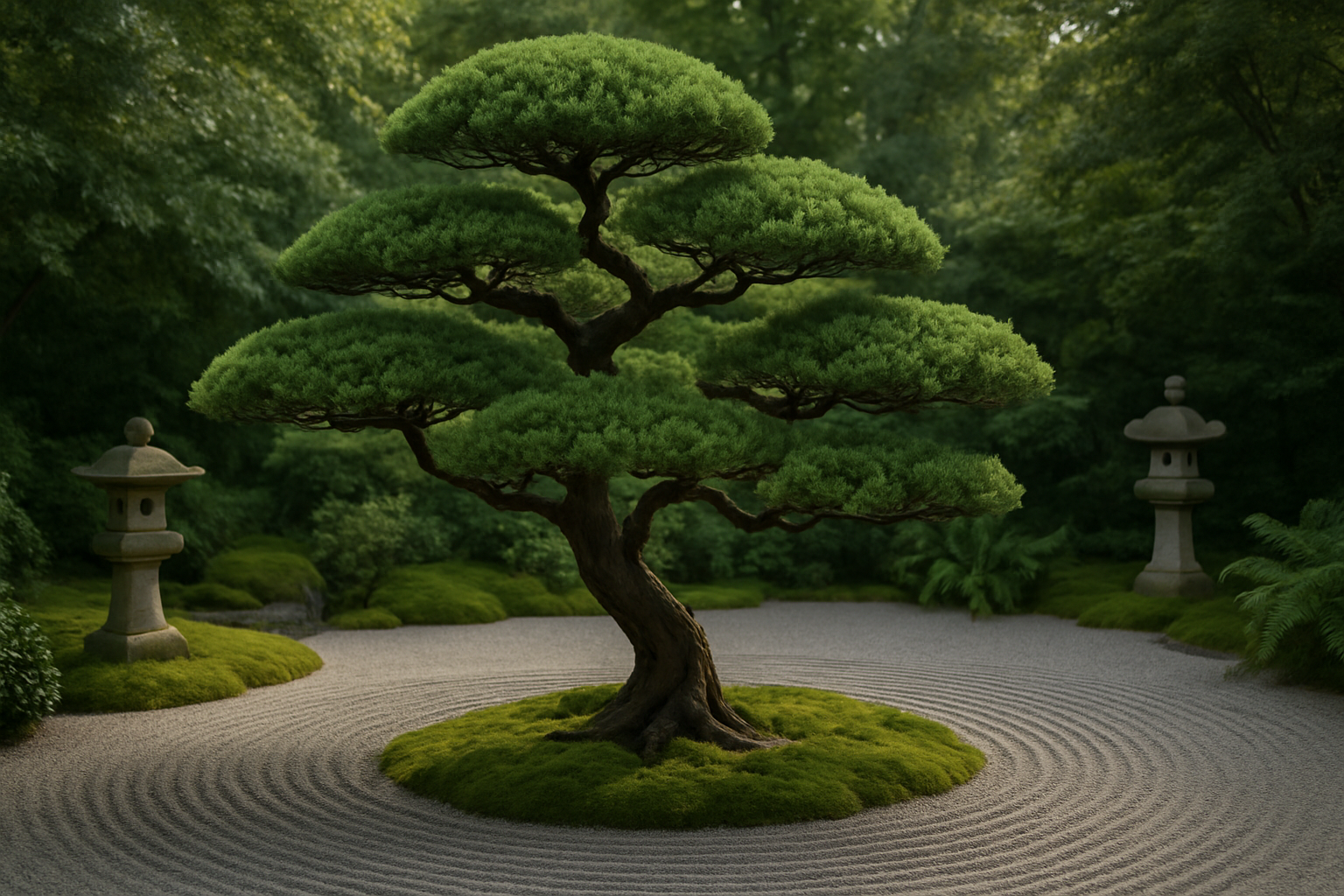
I once spent an entire Saturday afternoon arranging river rocks around my mulberry tree, convinced I was creating a serene Japanese zen garden. I stepped back, squinted artistically, and thought, “Yes. This is it. This is the one.” My neighbor walked over, tilted his head, and said, “Did your dog dig that up?” Reader, it looked like a badger had an argument with a gravel pit. But that humiliating moment sent me down a wonderful rabbit hole of research into Japanese mulberry garden design — and what I discovered completely transformed my backyard into something I’m genuinely proud of, without spending a fortune.
This post contains affiliate links. As an Amazon Associate, I earn from qualifying purchases. This comes at no extra cost to you, and it helps keep MagnificentMulberries.com growing — pun absolutely intended.
Why Japanese Garden Design and Mulberry Trees Are a Natural Match
Here’s the thing nobody tells you: mulberry trees are practically tailor-made for Japanese-inspired garden aesthetics. In East Asian garden traditions, fruit-bearing trees are celebrated for offering beauty in every season — spring blossoms, summer shade, autumn color, and dramatic winter silhouettes. The mulberry checks every single one of those boxes. Its broad, sculptural canopy creates exactly the kind of layered, contemplative atmosphere that Japanese garden design is famous for. And unlike a traditional Japanese maple, it actually feeds you. That feels like a win on every level.
Japanese garden philosophy centers on three core ideas: simplicity, natural materials, and intentional placement. None of those things require a big budget. They require patience, a little planning, and — I say this from experience — the ability to laugh at yourself when round one looks like a construction zone.
Japanese Mulberry Garden Design on a Budget: Where to Start
Choose the Right Mulberry Variety for Your Space
Before you place a single stone, know your tree. For compact gardens or smaller yards, the Dwarf Everbearing mulberry is a fantastic choice — it stays under six feet, responds beautifully to pruning, and produces fruit for months. If you have more room, the Illinois Everbearing develops a sweeping canopy that becomes the natural focal point of your design. White mulberry varieties (Morus alba) have a particular elegance that suits a minimalist Japanese aesthetic, with smaller leaves and a more refined silhouette.
Plant your mulberry where it will be visible from a window or a sitting area. In Japanese design, the garden is meant to be experienced from multiple vantage points — indoors and out. That intentional sightline is completely free and makes an enormous difference.
Ground Cover: The Art of the Simple
After my gravel disaster, I did my homework. The key to Japanese-style ground cover isn’t just dumping rocks around a tree — it’s about creating deliberate contrast between textures. I started using smooth, pale stones in a clean ring around the base of my mulberry tree, with a defined edge separating them from the surrounding grass or mulch. The visual difference was immediate and dramatic.
For this, I now use Virekm decorative river rocks and ornamental pebbles. They’re smooth, naturally polished, and come in a neutral palette that works beautifully with the earthy tones of mulberry bark. Spread them about two to three inches deep around the drip line of your tree — they suppress weeds and retain moisture while looking genuinely intentional. No badger-fight vibes whatsoever.
Mulberry Tree Care That Enhances Your Design
A Japanese-inspired garden is only as beautiful as the tree at its center. Here are a few mulberry-specific care tips that serve both health and aesthetics:
- Prune in late winter: Mulberries bleed sap if pruned too late. Winter pruning lets you shape the canopy into a more open, airy form — exactly the kind of structure Japanese design favors.
- Thin the canopy gradually: Remove crossing branches and interior clutter over several seasons. Patience here pays off with a beautifully layered silhouette.
- Keep the root zone clear: Mulberries don’t love competition near their roots. Your stone ground cover does double duty — it looks elegant and keeps grass from encroaching.
- Feed lightly: Too much nitrogen produces lush foliage but less fruit. A balanced, slow-release fertilizer in early spring is all you need.
Adding Authentic Japanese Accents (Without Going Overboard)
This is where my design really came alive — and where I learned the most important rule of Japanese garden aesthetics: less is genuinely more. One or two carefully chosen ornaments anchor the entire space. More than that and you’re back in badger-fight territory.
A stone lantern is the single most iconic element of a Japanese garden. I added a natural granite pagoda lantern at the edge of my stone ring, slightly offset from center. The granite patinas beautifully over time, developing the weathered character that Japanese designers actively seek. It looks like it’s been there for decades, even though it’s been there for two seasons.
For evening ambiance, I added a solar pagoda lantern with LED lighting along the garden path leading to the tree. It charges all day and glows softly at night, casting just enough light to make the mulberry canopy look magical. Zero electrical work, zero ongoing cost. Completely worth it.
Tools That Help: Bringing the Zen Indoors
One unexpected joy of this whole project was discovering the world of miniature zen gardens for my desk. While I was planning my outdoor space, I started sketching layouts in a small sand tray — and it turned into a daily mindfulness practice I didn’t know I needed. If you’re in the design phase, these are genuinely useful planning tools and beautiful objects in their own right.
- The ENSO Sensory Japanese Zen Garden Kit — a beautifully made 12″ bamboo sand garden that’s perfect for sketching out stone placement ideas (or just decompressing after a long day of digging).
- The SRAYW Zen Garden Kit with 18 accessories — this set includes more tools and decorative elements, great if you want to experiment with different layout configurations before committing rocks to actual ground.