I once stood in my backyard, hands on my hips, genuinely convinced my mulberry tree had died overnight. It hadn’t grown a single inch in three weeks, the leaves looked a little sad, and I — a fully grown adult — had already started mentally composing its eulogy. I even told my husband we should “give it a proper burial.” He stared at me for a long moment and then very quietly went back inside. Understanding the mulberry tree growth rate would have saved me a lot of drama, a few tears, and probably my marriage’s dignity.
This post contains affiliate links. As an Amazon Associate, I earn from qualifying purchases. If you buy something through my links, it costs you nothing extra and helps keep this little corner of the mulberry internet alive and well — thank you!
If you’ve recently planted a mulberry tree and you’re side-eyeing it every morning wondering why it isn’t taller yet, this post is for you. Grab a coffee, settle in, and let me walk you through what to actually expect — year by year — so you don’t end up planning a funeral for a perfectly healthy tree like someone I know.
Understanding the Mulberry Tree Growth Rate: The Real Numbers
Here’s the good news: mulberry trees are genuinely fast growers. Once they get going, most varieties put on anywhere from 1 to 2 feet of new growth per year, with some especially vigorous specimens hitting closer to 3 feet in ideal conditions. That’s impressive for a fruit tree. But — and this is the part nobody tells you upfront — that speed only kicks in once the tree has sorted out its root system, and that can take a full season.
My poor “dying” tree? It was in its establishment phase. It was doing exactly what it was supposed to do: quietly building roots underground while I paced around it catastrophizing. The moment I stopped panicking and started feeding it properly, it absolutely took off.
Year One: Patience Is the Whole Job
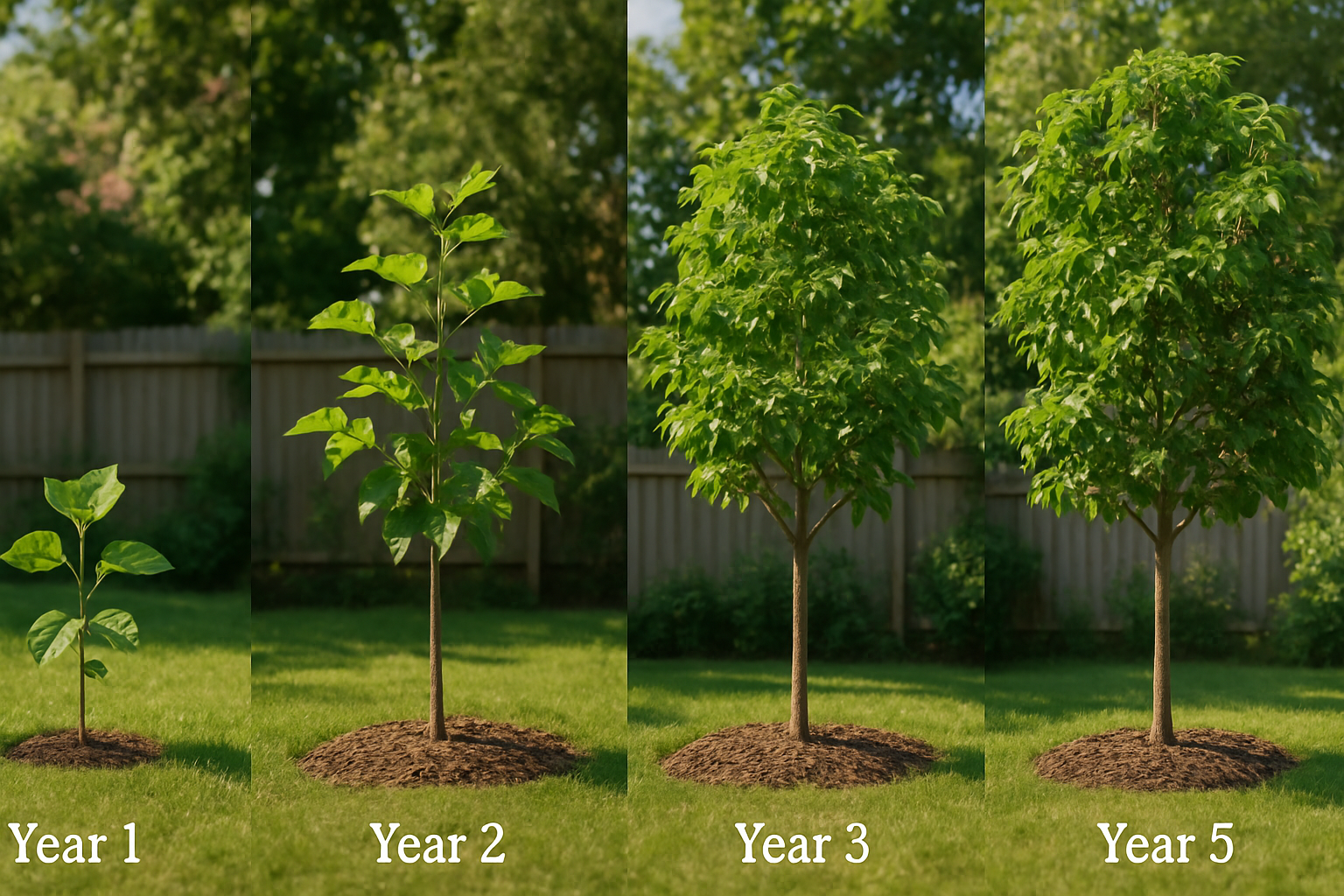
In the first year, don’t expect much visible action. Your tree is channeling nearly all of its energy downward, establishing the root network it will depend on for decades. You might see 6 to 12 inches of new shoot growth if you’re lucky, or it might seem like nothing is happening at all. This is completely normal. Your job in year one is simple: water consistently, avoid over-fertilizing with high nitrogen (it can push weak, leggy top growth before the roots are ready), and trust the process. A root stimulator makes a real difference here — more on that in a moment.
Year Two: Things Start Getting Interesting
Year two is when most people fall back in love with their mulberry tree. Root establishment is mostly done, and now the tree redirects energy upward. Expect 1 to 2 feet of growth, sometimes more. The canopy starts to take shape, and if you have a fruiting variety, you might even see your first small crop. This is the year to introduce a balanced fertilizing routine and start thinking about any light structural pruning to encourage a good shape.
Years Three Through Five: Full Speed Ahead
This is the mulberry tree’s moment. Growth accelerates, fruiting becomes more reliable and more abundant, and the tree starts looking like the magnificent shade-and-berry machine you always imagined. Keep up with fertilizing, water during dry spells, and step back to admire what you’ve grown. By year five, a well-tended mulberry can easily be 10 to 15 feet tall and producing enough fruit to stain your patio furniture, your children, and your neighbor’s white car. You’ll be thrilled about all of it.
What Actually Speeds Up Growth (And What Quietly Kills It)
After my near-funeral incident, I did a deep dive into what mulberry trees actually need to thrive, and a few things made a measurable difference for me.
- Consistent watering in year one — deep and infrequent watering encourages roots to go deep rather than staying shallow
- A phosphorus-rich fertilizer at planting time to support root development
- Nitrogen feeding in spring once the tree is established, to fuel that rapid new shoot growth
- Avoiding waterlogged soil — mulberries are surprisingly drought-tolerant once established, but sitting in wet feet early on can rot roots fast
- Full sun — at least 6 hours per day is non-negotiable for good growth and fruiting
The single biggest mistake I made in year one was not using a root stimulator. Once I started using one, the difference was genuinely visible within a few weeks. I went from composing tree eulogies to taking smug before-and-after photos.
Tools That Help: My Favorite Fertilizers for Mulberry Trees
I’ve tried a lot of products over the years, and these are the ones I actually keep repurchasing and recommending to friends who text me panicking about their trees.
For Root Development (Especially Year One)
A root stimulator formula is worth its weight in mulberries in that critical first season. I use the Fertilome Root Stimulator & Plant Starter Solution 4-10-3 (1 gallon) for larger applications — it’s a fantastic value if you’re planting multiple trees or doing big waterings. For smaller jobs, the Fertilome Root Stimulator in the 32 oz size is perfectly convenient and much easier to store.
For Fruit Tree Health and Overall Vitality
Once my tree was past year one, I switched focus to overall fruit tree health. The Farmer’s Secret Fruit Tree Booster Fertilizer (32oz) is my go-to — it’s super concentrated and phosphorus-rich, formulated specifically for fruit trees. A little goes a long way. If you want to try it before committing to the larger bottle, the Farmer’s Secret Fruit Tree Booster in the 8oz size is a great starting point.
For That Explosive Spring Growth Push
In early spring when my established trees are waking up hungry, I give them a nitrogen boost with this 5 lb. Urea Fertilizer 46-0-0. It promotes fast, lush green growth and you can literally