
- Yellowing leaves, especially lower on the tree
- Soft, mushy soil that stays wet for days
- Wilting despite wet soil (counterintuitive but very real — roots can’t function in waterlogged conditions)
- A sour or rotting smell near the root zone
- Young trees (years 1–2): Water deeply once or twice a week during warm months. You’re aiming for moisture 12–18 inches deep, not just the surface.
- Established trees (year 3+): Watering once every 7–10 days during dry spells is usually plenty. In mild weather or after rainfall, you may not need to water at all.
- Winter dormancy: Greatly reduce watering. Overwatering a dormant mulberry is one of the fastest ways to invite root rot.
- Yellowing leaves, especially lower on the tree
- Soft, mushy soil that stays wet for days
- Wilting despite wet soil (counterintuitive but very real — roots can’t function in waterlogged conditions)
- A sour or rotting smell near the root zone
I stood in my backyard last July staring at my two-year-old mulberry tree, and my stomach dropped. The leaves were yellowing, the branches looked limp, and the whole tree just had that unmistakable “something is very wrong” look. I’d been so proud of that tree. I’d spent two summers nursing it along, dreaming about the harvests to come — and now it looked like it was dying. Spoiler: it almost did. If you’re searching for a reliable mulberry tree watering guide because you’re worried you might be doing something wrong, I want you to know you’re in exactly the right place, and I genuinely wish I’d found something like this before I nearly drowned mine.
This post contains affiliate links. As an Amazon Associate, I earn from qualifying purchases. This comes at no extra cost to you, and it helps keep MagnificentMulberries.com running so I can keep sharing hard-won lessons like this one.
How I Accidentally Overwatered My Mulberry Tree (and What It Cost Me)
Here’s the embarrassing truth: I killed it with kindness. We had a stretch of hot, dry weeks that summer, and I panicked. I started watering my mulberry every single day — sometimes twice a day — convinced I was doing the responsible thing. The soil around the base always looked dry on top, so I kept adding more water. What I didn’t realize was that the deeper soil was completely waterlogged. The roots were sitting in standing moisture for days at a time.
By the time I noticed the yellowing leaves and called my local cooperative extension office, I’d already triggered the early stages of root rot. The agent I spoke with asked me one simple question: “Are you watering based on a schedule, or based on what the soil actually tells you?” That question changed everything for me. I’d been on a rigid daily routine, completely ignoring the tree itself. I lost about six weeks of good growing season nursing it back, and I honestly wasn’t sure it would make it. The whole experience was stressful, a little heartbreaking, and completely avoidable.
Mulberry Tree Watering Guide: How Much Water Do They Actually Need?
Let’s get into the practical stuff, because this is what I desperately needed and couldn’t find in one clear place.
Young Trees vs. Established Trees
Mulberry trees are surprisingly drought-tolerant once they’re established — usually after two to three years in the ground. But young trees are a different story. For the first year especially, consistent moisture is critical for root development. The key word there is consistent, not constant.
The Finger Test (and Why I Swear by It Now)
After my near-disaster, this became my golden rule. Before you water, push your finger two to three inches into the soil near the drip line of the tree (not right against the trunk). If it feels moist, wait. If it feels dry at that depth, it’s time to water. It sounds almost too simple, but it saved my tree and it will save yours.
Deep Watering vs. Shallow Watering
This is the piece I was missing entirely. Frequent shallow watering encourages roots to stay near the surface, making the tree weaker and more drought-stressed over time. Deep, infrequent watering pushes roots down into the soil where they belong, building a stronger, more resilient tree. Aim to water slowly and deeply, letting water penetrate well below the surface rather than running off.
Tools That Help (and the Ones I Actually Use)
Once I understood the deep-watering principle, I wanted tools that would make it easier to do consistently. Here’s what I’ve found genuinely helpful.
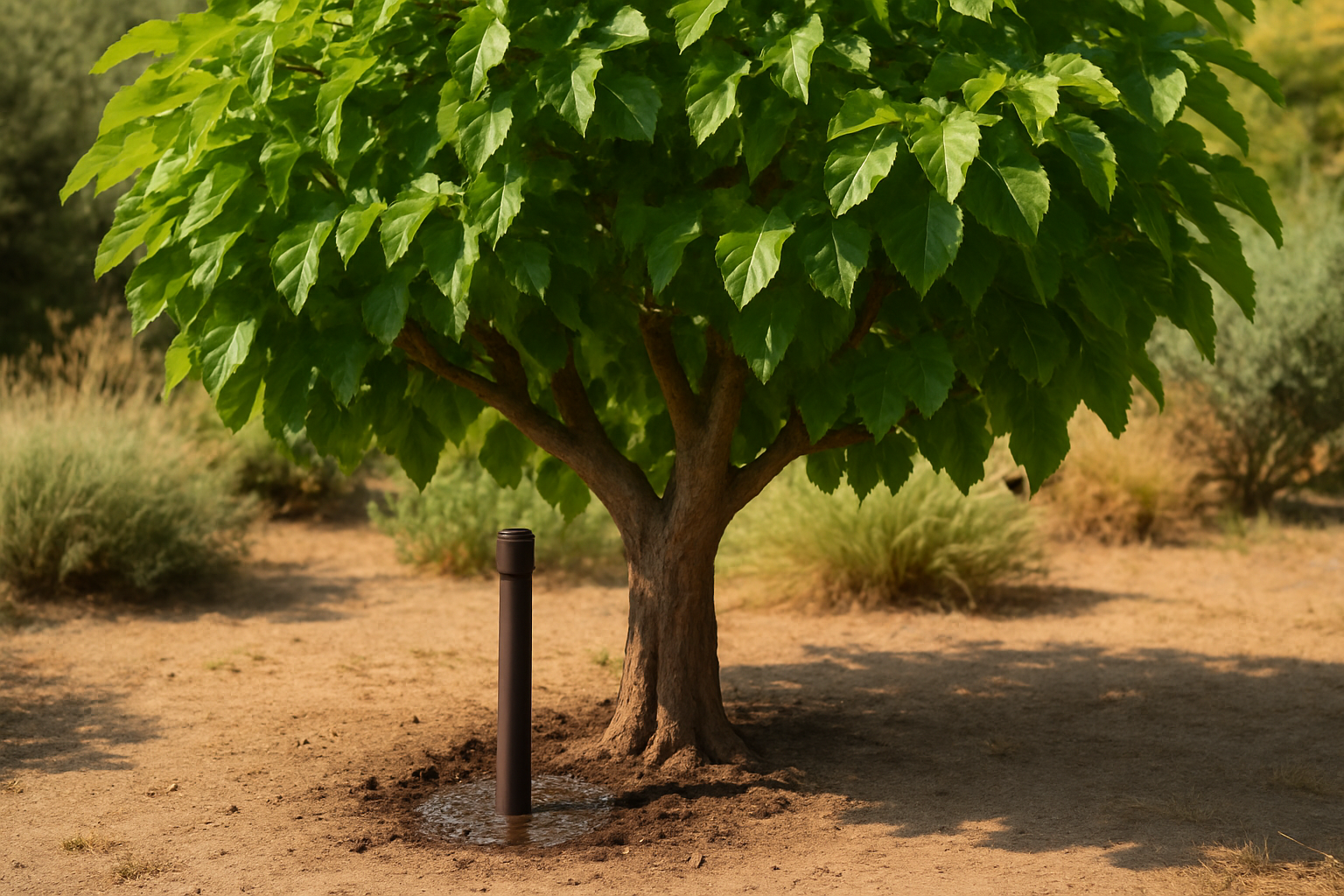
The simplest upgrade I made was switching to watering stakes. The DEEP DRIP 24-inch Tree Watering Stakes (3 Pack) are UV-protected, push right into the soil near your tree’s drip line, and slowly deliver water directly to the root zone. No more surface watering. No more guessing. These were a genuine game-changer for me.
If you want something with a bit more control and the ability to add fertilizer at the same time, the Caulimo Deep Root Watering Tool with Fertilizer Bottle is a great option. It has a brass valve and T-handle that make it easy to regulate flow, and the stainless steel construction holds up well outdoors. There’s also a very similar Stainless Steel Deep Root Watering Wand that works on the same principle and is worth a look if you’re comparing options.
For anyone with multiple trees or a larger garden setup, a drip irrigation system takes the guesswork out entirely. The Maotong 240FT Drip Irrigation System Kit covers a lot of ground and works beautifully for orchards or multi-tree setups. If you’d prefer a more established brand with flexible emitter options, the Rain Bird LNDDRIPKIT Drip Irrigation Kit includes drippers, micro-bubblers, and micro-sprays so you can customize coverage for each tree.
Signs You’re Overwatering (or Underwatering) Your Mulberry
Learning to read your tree is the most important skill you can develop. Here’s a quick reference I wish I’d had from the start.