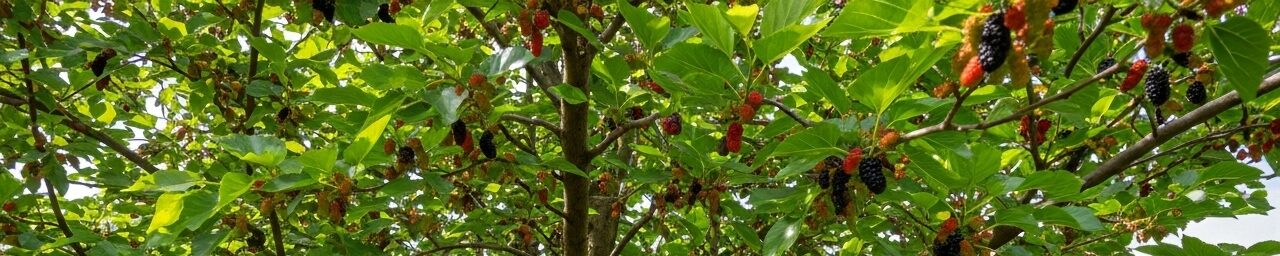
Mulberries are a rewarding crop to grow, with popular cultivars including Black Beauty, Chinook, Illini Star, and Ozark Premier, each offering its own unique flavor and growing characteristics. Understanding realistic expectations for mulberry development helps growers nurture these trees confidently. If you’re wondering about your young mulberry trees’ progress, this guide walks through what typical development looks like so you can enjoy the growing season without unnecessary worry.
If you’ve recently planted a young mulberry and are checking on it every day, wondering when it will burst into life, this guide is for you. Take a moment to relax, maybe brew a cup of your favorite tea, and let me walk you through the growth timeline — month by month, year by year — so you won’t mistake a thriving tree in its quiet phase for a failed investment like I almost did.
Understanding the Mulberry Tree Growth Rate: The Real Numbers
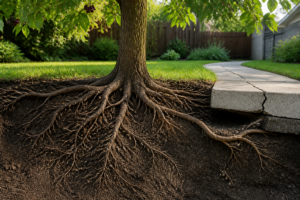
The real story about mulberry development comes down to this: these trees genuinely do accelerate their growth once they’re settled. Most types will produce somewhere between 1 and 2 feet of fresh growth annually, and some of the most vigorous selections can push toward 3 feet when conditions are right. That performance is genuinely remarkable among fruit trees. The catch — and nurseries are oddly quiet about this — is that this rapid expansion doesn’t begin until the underground infrastructure is solid, and that infrastructure-building phase can consume an entire calendar year.
Take my Pakistan mulberry, for instance. In its early days, it looked like it was on the brink of death — pale leaves, stunted growth, and hardly any flowers. I was ready to blame myself for somehow ruining it. But, after a moment of reflection, I realized I hadn’t even checked if it had rooted properly. Once I understood that it was simply focusing on building its root system, everything changed. When I finally started nourishing it correctly, it took off like a rocket!
Year One: Underground Is Where the Real Work Happens
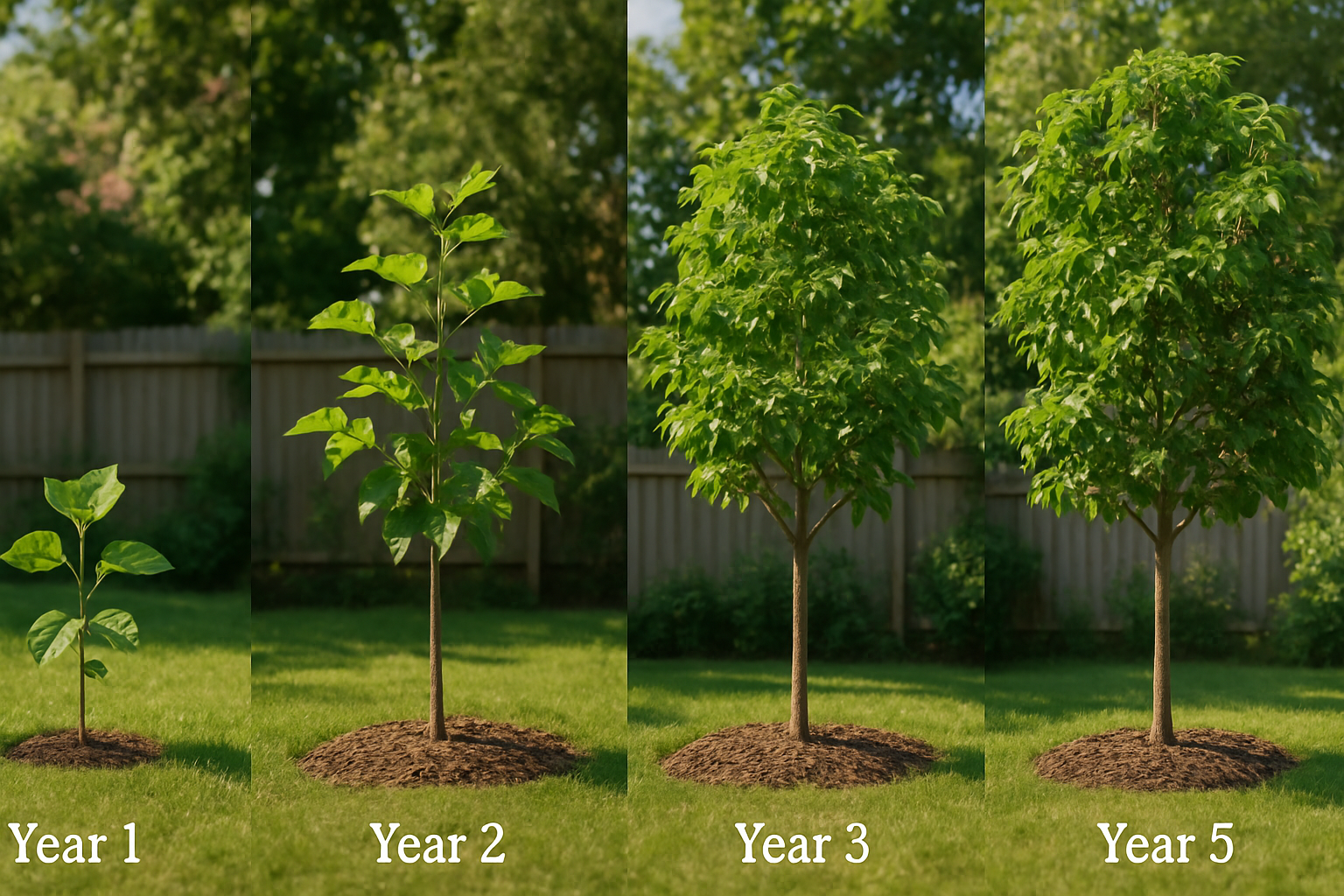
During your tree’s debut season, expect minimal visible expansion. Almost all resources go into establishing the root matrix that will sustain the tree for years to come. You might see only half a foot to a foot of growth, or even none at all, and that’s perfectly normal. Your job is simple: provide regular hydration, avoid over-using nitrogen fertilizer (which can lead to weak branches), and let nature take its course. I found that applying a root activator during this time can make a big difference — I’ll dive into that strategy shortly.
Year Two: Momentum Builds
The second growing season is when the excitement really starts to build. The root establishment phase wraps up, and energy shifts toward above-ground growth. You might see 1 to 2 feet of growth, occasionally even more. If you’ve planted a fruit-bearing cultivar, you might even catch those first glimpses of fruit forming. This is also the year to incorporate balanced nutrient applications and consider some light shaping cuts to guide your tree’s growth.
Years Three Through Five: The Tree Comes Into Its Own
By this stage, your mulberry tree should really be hitting its stride. Growth rates soar, fruiting becomes reliable, and your tree transforms into the lush, productive beauty you envisioned when you first planted it. Keep up with your fertilizing regimen, provide extra water during dry spells, and take joy in watching your tree flourish. By year five, a well-cared-for mulberry can easily reach heights of 10 to 15 feet and produce enough fruit to create lasting memories — just be prepared for juice stains on your deck and maybe even your neighbor’s car!
Triggers That Accelerate Growth (And Silent Killers That Prevent It)
After nearly losing that Pakistan tree, I took a deep dive into mulberry care and discovered several key factors that can significantly accelerate growth.
- Deliberate hydration during year one — getting water deep into the soil profile encourages roots to grow down instead of wide.
- Phosphorus-dominant amendment at installation — this can boost underground development significantly.
- Spring nitrogen application after the tree is established, to fuel that rapid growth phase.
- Protecting against waterlogging — while mature mulberries handle drought well, young ones can suffer quickly in soggy soil.
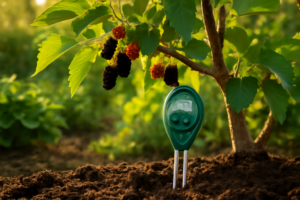
- Unobstructed sunlight — aim for at least 6 hours of direct sunlight per day for strong growth and flowering.
One of my biggest regrets in those early days was not using a root development activator sooner. Once I added it to my routine, I saw a transformation in just a few weeks. I went from thinking about giving up to proudly documenting the turnaround!
Catalyzing Underground Growth on Sluggish Cultivars—Sustaining Development Without Nitrogen Excess
Even with the right conditions, some mulberry cultivars—especially those grafted or newly planted—can seem to stall. Using a root-focused additive with lower nitrogen content can promote steady growth without spurring excessive leaf development that might delay fruiting.
What delivers results
- A 4-10-3 nutrient ratio supports underground root development during the establishment period, with results often visible within eight weeks of treatment as root branching becomes more extensive.
- Diluted to 50 percent concentration during the root stabilization period, it helps prevent aggressive canopy elongation that can make young trees leggy and prone to winter dieback.
- A gallon was more than enough to cover my entire collection with regular applications every three weeks, making it a straightforward part of my routine without becoming a headache.
What underperforms
- The liquid formulation requires careful measuring, and I’ve definitely had moments where I didn’t mix it well enough before using it. This inconsistency can affect the effectiveness of each application.
- When soil phosphorus and potassium levels are already adequate, you might not see immediate above-ground changes; the real progress often happens below the surface first.
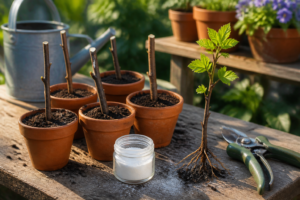
Young grafted mulberries may show little visible change in their first weeks, but inspection of the root zone often reveals active white root tips developing underground. Fertilome Root Stimulator & Plant Starter Solution 4-10-3 (1 gallon)
Frequently Asked Questions
Why is my newly planted mulberry not growing at all?
That is normal for a first-season tree. During the debut season almost all resources go into establishing the root matrix, so you may see only half a foot to a foot of growth, or none at all. My Pakistan mulberry looked nearly dead with pale leaves before I realized it was simply building roots underground.
How much sun does a young mulberry need to grow well?
Aim for at least 6 hours of direct sunlight per day for strong growth and flowering. Unobstructed sunlight, deep watering in year one, phosphorus-dominant amendment at planting, spring nitrogen once established, and protection from soggy, waterlogged soil all support vigorous growth.
Should I use nitrogen fertilizer on a first-year mulberry tree?
I avoid over-using nitrogen fertilizer in year one because it can lead to weak branches. During that first season my job is simply regular hydration and letting the roots establish. Once the tree is established, a spring nitrogen application helps fuel the rapid growth phase that follows in year two.
How often did you apply the 4-10-3 root stimulator to saplings?
Half-strength dilution during the root stabilization period, applied every three weeks, can help prevent aggressive canopy elongation that makes young trees leggy and prone to winter dieback. A gallon typically covers a small collection with regular applications.
Keep Reading
About This Article
Written by Ruth Nakamura. Ruth Nakamura is a backyard orchardist in the Pacific Northwest who has grown mulberries for fifteen years, cultivating twelve different varieties in her own backyard. Not a horticulturist by formal training - she shares what she has learned through hands-on growing, workshops, and connecting with nurseries and growers across the country. More about this site.
Scope and limits. Ruth is a backyard orchardist without formal horticultural training. Growing conditions vary enormously by region, so confirm variety, timing, and pest guidance with your local extension service.
Verify this against a primary source
Specifics change, and your situation may differ from the one described here. These are the authorities worth checking directly:
- USDA Plant Hardiness Zone Map — zone verification for your location
- Oregon State University Extension — fruit growing and pruning research
- USDA PLANTS Database — species range and identification