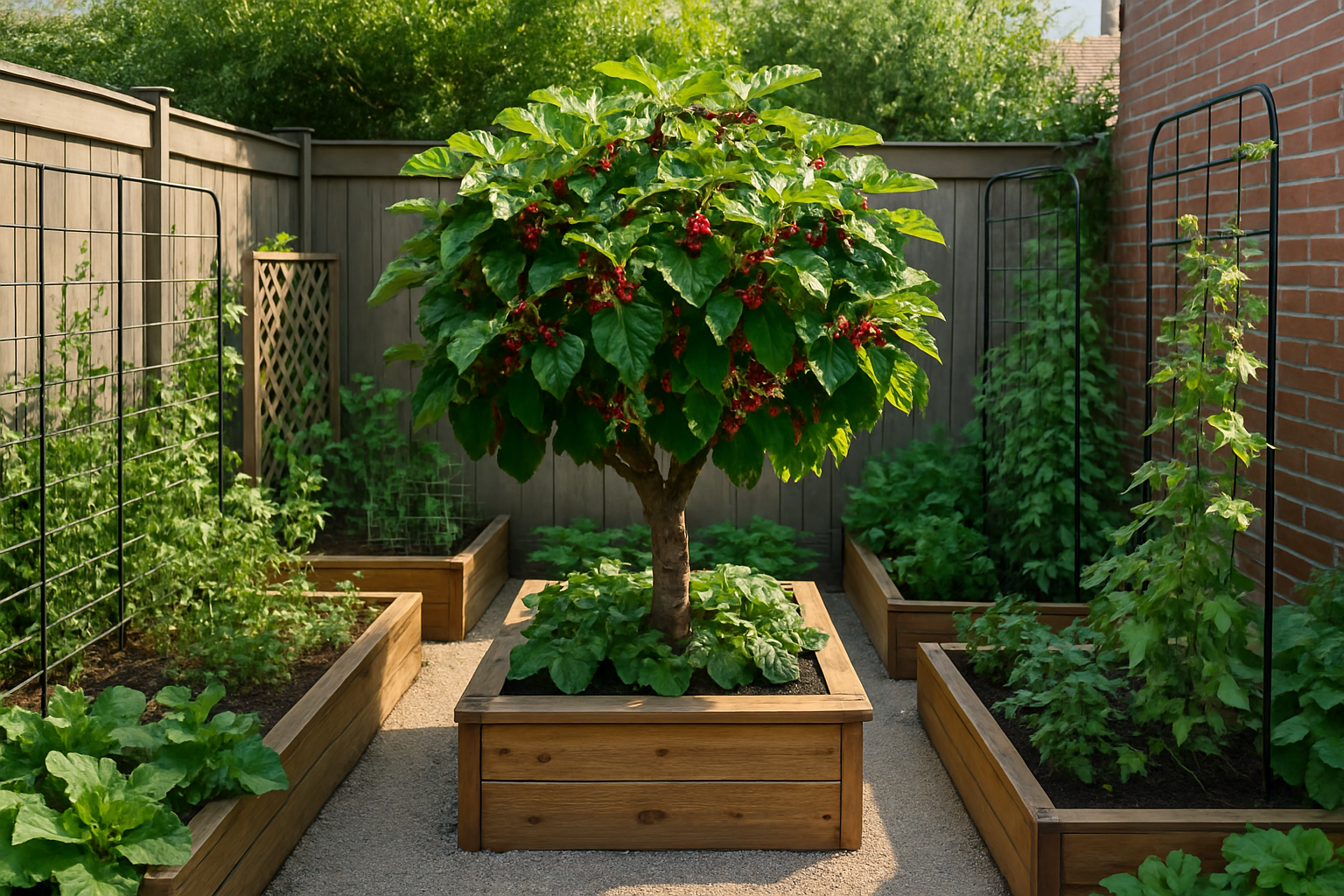
- Utopia Home Galvanized Raised Garden Bed Kit (4x2x1ft, Silver) — This compact size is perfect for a single dwarf mulberry with some companion herbs or strawberries tucked around the base. Galvanized steel is durable, looks tidy, and doesn’t leach chemicals into your soil the way
I cried in my backyard on a Tuesday afternoon in October. Not a quiet, dignified cry — an ugly, defeated one, standing next to a dead mulberry sapling I’d spent $60 and an entire weekend planting. The soil was wrong, the spot was wrong, and honestly, I was starting to think the whole idea of growing a mulberry tree in a small yard was just a fantasy I needed to let go of.
I didn’t let it go. And I’m so glad I didn’t.
This post contains affiliate links. As an Amazon Associate, I earn from qualifying purchases. This means I may earn a small commission if you click through and buy something — at no extra cost to you. I only recommend products I’ve actually used or researched thoroughly for my own garden.
Why I Was Convinced a Mulberry Tree Small Yard Situation Was Impossible
My backyard is generous by city standards and laughable by any other measure. It’s roughly 480 square feet of fenced-in space behind a 1940s row house. When I moved in three years ago, I inherited two overgrown shrubs, a crumbling brick path, and about six inches of clay-heavy soil that drains like a bathtub with the stopper in.
I’d been obsessed with mulberries since my grandmother had one growing up — that sprawling, staining, magnificent tree that fed us, the birds, and half the neighborhood every summer. I wanted that. I wanted a piece of that memory. But every article I read seemed to be written for people with half an acre minimum. Standard mulberry trees can reach 30 to 50 feet tall with a canopy spread to match. My yard is barely 20 feet wide.
So I did what any stubborn optimist does: I bought a standard variety sapling from a local nursery, dug a hole in the corner with the most sun, and crossed my fingers. By late October, it was brown, brittle, and very much gone. The clay soil had stayed waterlogged after a rainy stretch, and the roots had essentially drowned. Sixty dollars, one weekend of labor, and one very humbling Tuesday afternoon later, I was back to square one.
What I Learned (the Hard Way) About Mulberries and Small Spaces
After the Great Mulberry Disaster, I did what I should have done first: I actually researched. Here’s what changed everything for me, and what I wish someone had just told me plainly from the start.
Dwarf varieties exist, and they’re genuinely wonderful
This was my biggest revelation. Dwarf everbearing mulberry trees — sometimes called Morus nigra dwarf cultivars or dwarf everbearing varieties — typically max out between 6 and 10 feet tall, even without aggressive pruning. They produce the same sweet, dark berries as their towering cousins, just on a scale that actually fits a small yard, a raised bed, or even a large container on a patio. They’re also faster to fruit than standard trees, often producing in their first or second season.
Soil drainage is non-negotiable
Mulberries are surprisingly adaptable trees, but they do not tolerate standing water around their roots. If you have clay-heavy soil like mine, you have two real options: amend heavily before planting, or go raised. I went raised, and I’ll never look back. Raising the planting area even 10 to 12 inches gives roots the drainage they need and gives you full control over your soil composition.
Sun placement matters more than square footage
Mulberries need at least six hours of direct sunlight daily to fruit well. In a small yard, this means being strategic — don’t just plant where there’s space, plant where there’s light. I spent a full week tracking sun patterns across my yard before I committed to a new location. That hour of observation saved me another failed attempt.
Container growing is a legitimate long-term strategy
Dwarf mulberries do beautifully in large containers — we’re talking 15-gallon or larger. This gives you mobility (move them to follow the sun or protect them in harsh winters), complete soil control, and a way to grow mulberries even if your outdoor space is mostly hardscape. I keep one in a container on my small back patio and it fruits every single year.
My Setup Now — and the Tools That Actually Made It Work
After my failed first attempt, I rebuilt my approach around raised beds and dwarf varieties. Here’s exactly what I did and what I used.
I set up two raised beds along the sunniest fence line — a spot I’d previously ignored because it was awkward and narrow. Those beds sit where the dead sapling once stood, and they’ve transformed that corner of the yard entirely.
Products I Recommend
For the dwarf mulberry plants themselves, I’ve had great results with a few options I’d confidently point you toward:
- Mulberry Dwarf Everbearing Plant (4 Pack) — This four-pack is a fantastic way to start, giving you multiple plants to experiment with placement, containers, and raised beds at once. Everbearing varieties fruit over a longer season rather than all at once, which I love for a small-yard setup where you want to enjoy berries over weeks, not days.
- Mulberry Dwarf Everbearing (Four Plants with Hello Organics Tags) — Another reliable four-plant option that comes with helpful identification tags. Great for gifting to a neighbor or splitting a planting project with a friend.
- Dwarf Mulberry Tree Live Plant, Hardy Well Rooted 4–8″ Tall — If you want to start with a single well-rooted starter plant for a container or a test spot, this one ships in good shape and establishes quickly. It’s a great confidence-builder for first-timers who want to start smaller.
For raised beds, I’ve tried both of these and can recommend them for a small-yard setup:
- Utopia Home Galvanized Raised Garden Bed Kit (4x2x1ft, Silver) — This compact size is perfect for a single dwarf mulberry with some companion herbs or strawberries tucked around the base. Galvanized steel is durable, looks tidy, and doesn’t leach chemicals into your soil the way