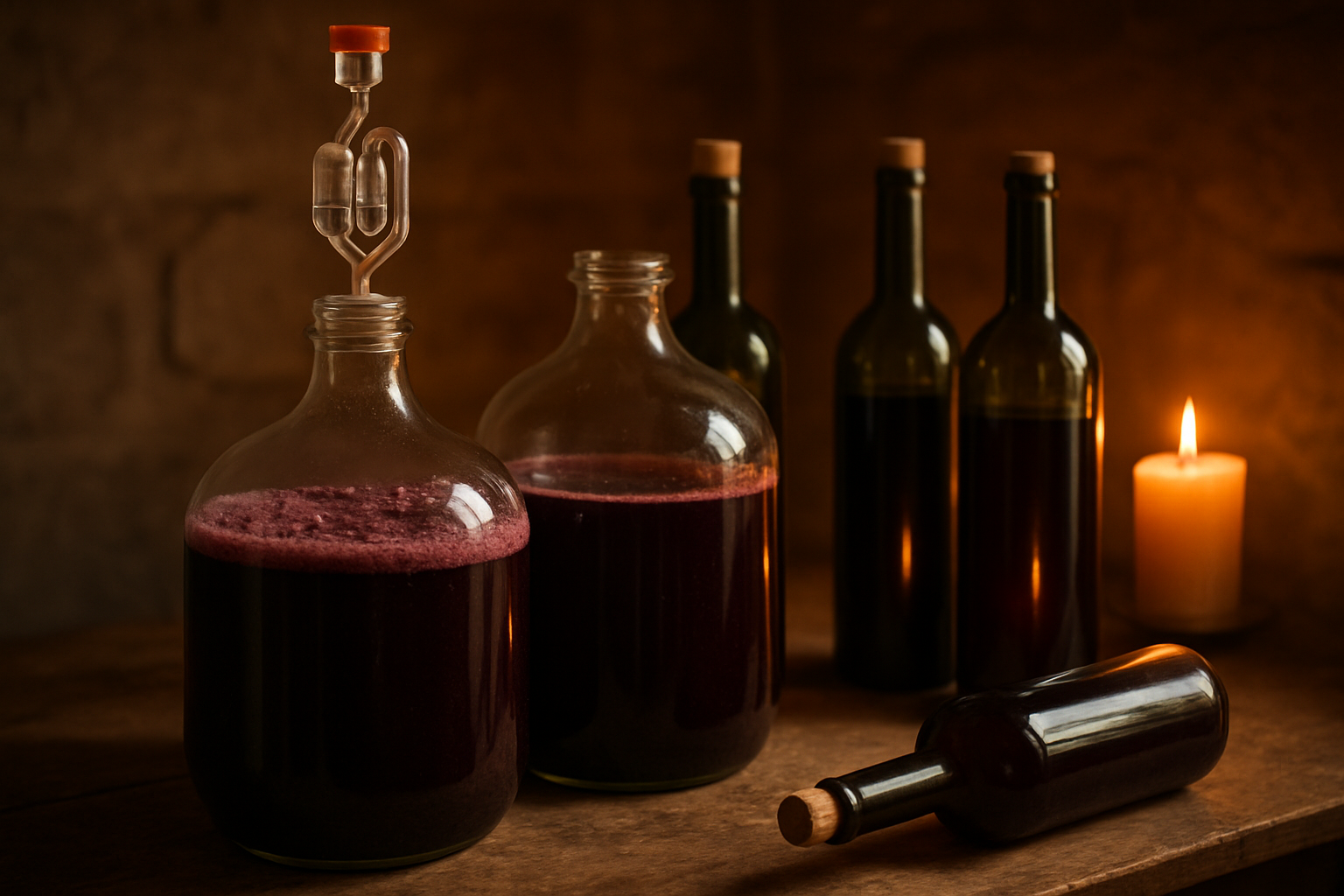
- Freeze your berries first. Freezing breaks down the cell walls and helps extract more juice and flavor. It also makes pressing much easier.
- Use pectic enzyme.
There was a moment last August when I stood in my kitchen, staring at a gallon jug of what I can only describe as murky purple swamp water, and genuinely considered pouring the whole thing down the drain. I’d spent weeks collecting mulberries, researching recipes, and dragging my husband to three different homebrew shops — and my first attempt at homemade mulberry wine looked like a science experiment gone badly wrong. Spoiler: it didn’t go down the drain. But getting from that moment of despair to a bottle of something genuinely beautiful and drinkable? That story is worth telling.
This post contains affiliate links. As an Amazon Associate, I earn from qualifying purchases. This means if you click a link and buy something, I may earn a small commission at no extra cost to you. I only recommend products I’ve personally used or thoroughly researched.
How My Homemade Mulberry Wine Disaster Actually Started
It started, as most of my chaotic projects do, with an abundance problem. Our Illinois Everbearing mulberry tree had an absolutely ridiculous harvest this year — we’re talking buckets and buckets of deep purple fruit ripening faster than we could eat, freeze, or jam them. I’d already made mulberry preserves, mulberry syrup, and mulberry smoothie packs for the freezer. Then I thought: wine. How hard could it be?
Pretty hard, as it turns out. At least when you skip the prep work and dive in headfirst with zero equipment and misplaced confidence.
I watched exactly two YouTube videos, grabbed a big mason jar, mashed up some berries with sugar, added a pinch of bread yeast (yes, bread yeast — please don’t do this), covered it loosely with a cloth, and waited for magic. What I got instead was an aggressively foamy overflow that stained my counter, a smell that made my daughter gag, and by day five, visible fuzzy mold floating on top like a tiny disgusting island. I threw the whole batch out and sat with my failure for a solid week.
What Actually Goes Wrong (And Why)
After my kitchen catastrophe, I actually did the research I should have done first. Talking to an experienced home winemaker at my local homebrew store was genuinely humbling — she pointed out about four things I’d done wrong simultaneously. Here’s what I learned, and what I’d tell any beginner before they make the same mess:
- Bread yeast is not wine yeast. It ferments aggressively and unpredictably, produces off-flavors, and can’t tolerate the alcohol levels that wine needs to reach. Use a dedicated wine yeast like Lalvin EC-1118 or Red Star Premier Classique.
- You need an airlock, not a cloth cover. An airlock lets CO2 escape without letting wild yeast and bacteria in. A cloth cover does neither reliably. This is likely what allowed mold to colonize my batch.
- Mulberries are low in tannins and acid. Unlike grapes, they need a little help. Adding a small amount of acid blend and wine tannin powder keeps the fermentation balanced and gives your finished wine structure.
- Sanitizing everything is non-negotiable. Every jar, spoon, and funnel needs to be sanitized with a proper no-rinse sanitizer like Star San. Wild bacteria love sweet, fruity environments.
- Straining matters more than you think. Mulberry seeds and pulp left too long in your must can make the wine bitter and overly tannic over time. Strain thoroughly after the first few days of primary fermentation.
Armed with actual knowledge this time, I went back to the freezer, pulled out four pounds of frozen mulberries I’d saved, and started over properly.
Tools That Help: My Recommended Equipment for Beginners
Having the right equipment made all the difference between batch one (disaster) and batch two (genuinely good wine). You don’t need to spend a fortune to get started, but cutting corners on the basics will cost you more in frustration than the gear ever would. Here’s what I actually use and recommend:
For Complete Beginners: One-Gallon Starter Kits
Starting with one gallon is smart — it’s a manageable amount, the investment is low, and you’ll learn the process without committing six gallons to a recipe you might want to tweak. The Home Brew Ohio Upgraded 1 Gallon Wine from Fruit Kit includes a mini auto-siphon, which is genuinely one of the most useful tools in beginner winemaking. The auto-siphon makes racking (transferring wine off the sediment) so much cleaner and less stressful. Alternatively, the Home Brew Ohio 15 Piece One Gallon Wine Making Equipment Kit is another solid all-in-one option that covers nearly everything you need out of the box.
For Bigger Batches: Glass Carboy Kit
Once you’ve made one successful gallon and you’re ready to scale up — and trust me, you will be — the Ultimate Wine Making Equipment Starter Kit with 6 Gallon Glass Carboy is worth every penny. Glass carboys don’t absorb odors or stains the way plastic can, and six gallons is a serious harvest-worthy batch size for anyone with a productive mulberry tree.
Airlocks: The Piece I Was Missing
I cannot overstate how much difference proper airlocks make. My mold disaster was entirely an airlock problem. The Fastrack Twin Bubble Airlock and Carboy Bung 2-Pack is a reliable, simple option that fits standard carboys and jugs. If you want to stock up — and I always have extras on hand now — the Bubble Airlock Set with 4 Airlocks, Stoppers, and Grommets gives you enough to run multiple fermentation vessels at once, which is exactly what happens once this hobby takes hold of you.
A Few Tips Specific to Mulberry Wine
Mulberries are magical for winemaking, but they do have quirks that are worth knowing going in:
- Freeze your berries first. Freezing breaks down the cell walls and helps extract more juice and flavor. It also makes pressing much easier.
- Use pectic enzyme.