
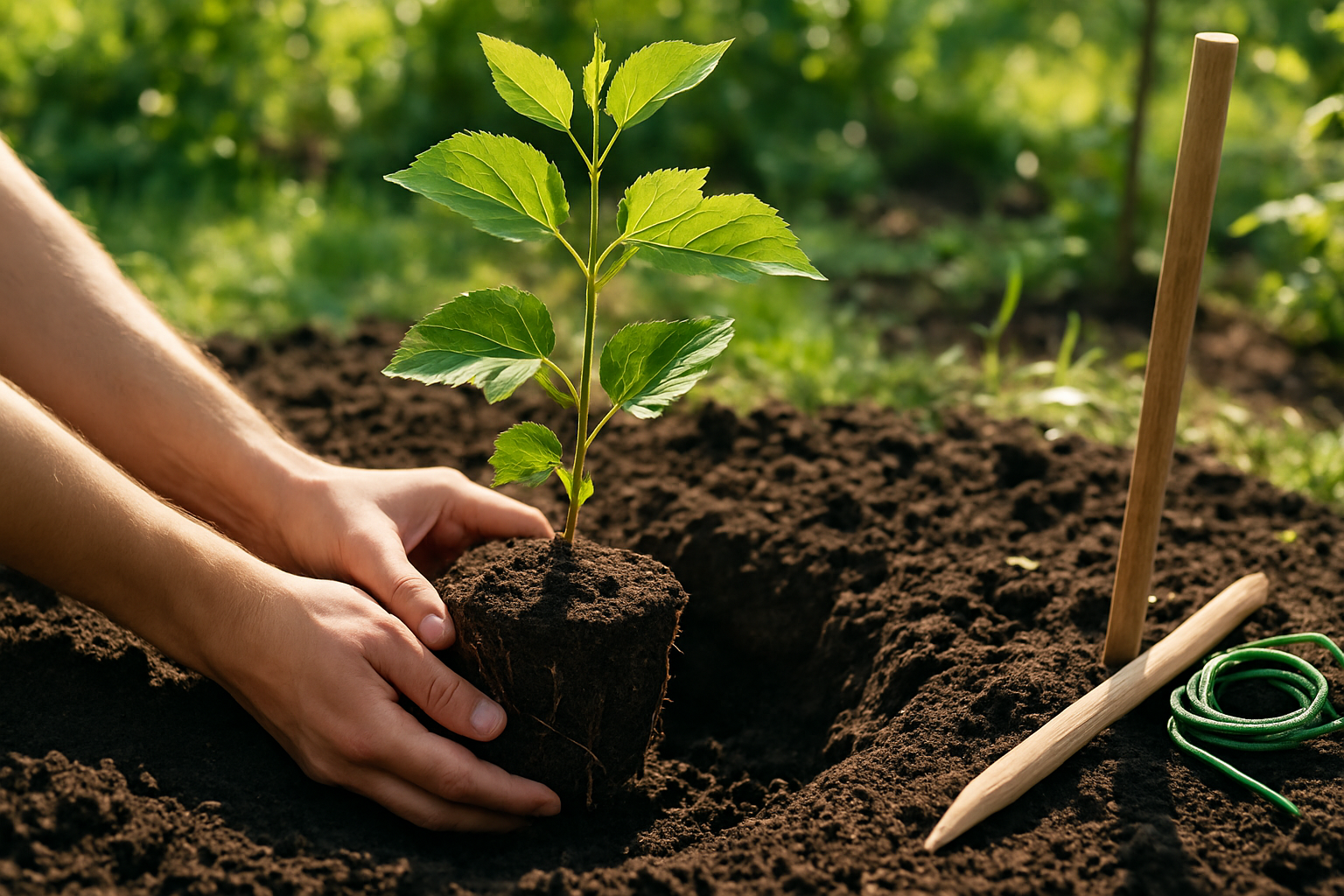
I lost my first mulberry tree eleven days after planting it. I’d spent weeks researching varieties, drove forty minutes to a specialty nursery, paid good money for a beautiful bare-root Illinois Everbearing, and dug what I was sure was a perfectly fine hole. Eleven days later, it was leaning sideways after a storm, and within a month, the roots had rotted from sitting in pooled water I never knew was there. I was heartbroken — and honestly, a little embarrassed. That failure is exactly why I put together this planting mulberry tree guide. Because nobody should lose a tree they were so excited about over a few things they simply didn’t know yet.
This post contains affiliate links. As an Amazon Associate, I earn from qualifying purchases. If you buy something through my links, it costs you nothing extra and helps keep this little corner of the internet growing — pun absolutely intended.
Why Mulberry Planting Goes Wrong (And How to Make Sure It Doesn’t)
Here’s what I’ve learned after that first disaster and several very successful plantings since: mulberry trees are genuinely forgiving, adaptable, and vigorous — but only once they’re established. In that first year, especially those first few weeks, they’re surprisingly vulnerable. The mistakes that kill young mulberries aren’t dramatic. They’re quiet. Wrong hole depth, poor drainage you didn’t notice, no support in a windy spot, or planting too close to a fence because you guessed at spacing. Any one of those can end a tree before it ever gets a real start.
So let’s go through this carefully — spacing, depth, drainage, and staking — so your tree gets every possible advantage from day one.
Spacing: Give Your Mulberry Room to Become What It Actually Is
One of the most common mistakes I see is underestimating how large mulberries grow. Even dwarf varieties spread significantly, and standard varieties like Illinois Everbearing or Pakistan Mulberry can reach 30 feet wide at maturity. When you’re looking at a skinny little bare-root whip in your backyard, 30 feet feels absurd. It isn’t.
- Standard varieties: Space at least 25–30 feet from structures, other trees, and underground utilities.
- Dwarf or semi-dwarf varieties: A minimum of 10–15 feet is realistic, though 15 feet is always the safer choice.
- Sidewalks and driveways: Keep at least 10 feet of clearance. Mulberry roots are enthusiastic and surface roots can heave pavement over time.
- Fruiting-season cleanup zones: Think about where berries will fall. Don’t plant directly over a patio or parking area unless you love purple stains.
When I planted my replacement tree after losing the first, I flagged my spacing with stakes before I touched a shovel. It felt overly cautious. Three years later, looking at how wide the canopy has spread, I’m glad I did it.
The Complete Planting Mulberry Tree Guide: Depth, Drainage, and Doing It Right
Digging the Right Hole
The golden rule: dig wide, not deep. Your hole should be two to three times the width of the root ball or root spread, but only as deep as the root ball itself. Planting too deep is one of the top killers of young trees. The root flare — that widened area at the base of the trunk where it transitions to roots — must sit at or just slightly above the soil surface. If it’s buried, you’re setting the tree up for crown rot and slow decline.
For bare-root trees, spread the roots naturally outward in the hole. Don’t curl them to fit. If the hole isn’t wide enough, make it wider. For this kind of digging work, especially in compacted or clay-heavy soil, I reach for the HANTOP Drain Spade Root Saw Shovel — the serrated blade cuts through roots and clay-packed ground without the brutal effort of a standard flat spade. It’s made a real difference in how clean and precise my planting holes come out.
For rocky or extremely hard soil, I’ve also used the Lasnten Heavy Duty Dibble Bar to break through the initial compaction before switching to a shovel. The T-handle gives you serious leverage in tough conditions. And if you want one do-everything tool for digging, root-cutting, and general garden excavation, the Root Slayer Garden Shovel is what lives permanently in my shed. The serrated V-shaped blade handles roots that would stop a regular spade cold.
Drainage Is Non-Negotiable
This is exactly what killed my first tree. Before you dig your planting hole, do a simple drainage test: dig down about 12 inches and fill the hole with water. If it hasn’t drained within an hour, you have a drainage problem. Mulberries are adaptable to many soil types, but they cannot tolerate waterlogged roots. In poorly draining spots, either choose a different location or build a raised planting mound 8–12 inches above grade to keep the roots above the water table.
Backfilling and Watering In
Backfill with the native soil you removed — don’t amend heavily with compost or potting mix. Counter-intuitively, overly rich backfill can discourage roots from spreading outward into surrounding native soil. Firm the soil gently as you fill to eliminate air pockets, water deeply once, and then mulch 3–4 inches around the base, keeping mulch a few inches away from the trunk itself.
Staking: The Step Most People Skip (And Regret)
Young mulberry trees, especially bare-root whips, are top-heavy relative to their undeveloped root systems. A single windstorm in the first few weeks can rock the root ball enough to tear developing feeder roots — and you’ll never see the damage until the tree fails to thrive weeks later. That’s what happened to my first tree. The storm tilted it, I straightened it, thought everything was fine. It wasn’t.
Stake your tree at planting, but do it loosely. The goal is stability against wind, not rigidity. The tree needs some movement to develop trunk strength. I’ve had great results with the Kingsyard Heavy Duty Tree Stake Kit, which includes anchoring ropes, straps, and steel stakes — everything in one kit. The Lasnten Spiral Tree Stake Kit is another excellent option, particularly for softer or loamy soils where the spiral