- 16 Mil Greenhouse Cover Clear Plastic Tarp (10x20FT) — My top pick for large, mature trees. Thick, durable, and reusable for years.
- Aluf Plastics 6 MIL Heavy Duty Clear Drop Cloth (10x25ft) — Great for medium trees or tighter spaces. Very easy to funnel berries on the smooth surface.
- Farm Plastic Supply Black Plastic Sheeting (10 mil, 5x100ft) — Excellent if you want to cut custom sizes for oddly shaped planting areas or multiple trees. The black color also makes it very easy to spot debris.
- byMall Berry Picking Basket with Adjustable Strap — Hands-free collection is a game-changer when you’re also managing a tarp and shaking branches.
- Natural Pulp Fiber Berry Baskets (30 pack) —
I want to tell you about the morning I spread a brand-new white bedsheet under my mulberry tree, stepped back to admire my cleverness, and then watched my dog sprint directly through the center of it, sending two pounds of freshly fallen berries into the air like a purple fireworks display. She came inside looking like she’d survived a paintball ambush. I looked like I’d lost my mind. And yet — that ridiculous morning is exactly how I discovered that the mulberry harvest sheet method is the single most efficient way to collect an enormous haul of ripe berries in almost no time at all. I just needed to iron out a few, uh, logistical details.
This post contains affiliate links. As an Amazon Associate, I earn from qualifying purchases. This means I may earn a small commission if you purchase through my links, at no extra cost to you. I only recommend products I genuinely use and love.
Why the Mulberry Harvest Sheet Method Changed Everything for Me
Before I found my groove with this method, mulberry season was a beautiful, exhausting, finger-staining disaster. I’d stand under the tree for an hour, picking individual berries one by one, eating about a third of them, and ending up with maybe four or five pounds in a bucket. Meanwhile, the ground beneath the tree looked like a crime scene — perfectly ripe berries falling and going to waste by the hundreds. There had to be a better way. And there was. I just had to humiliate myself a couple of times before I figured it out properly.
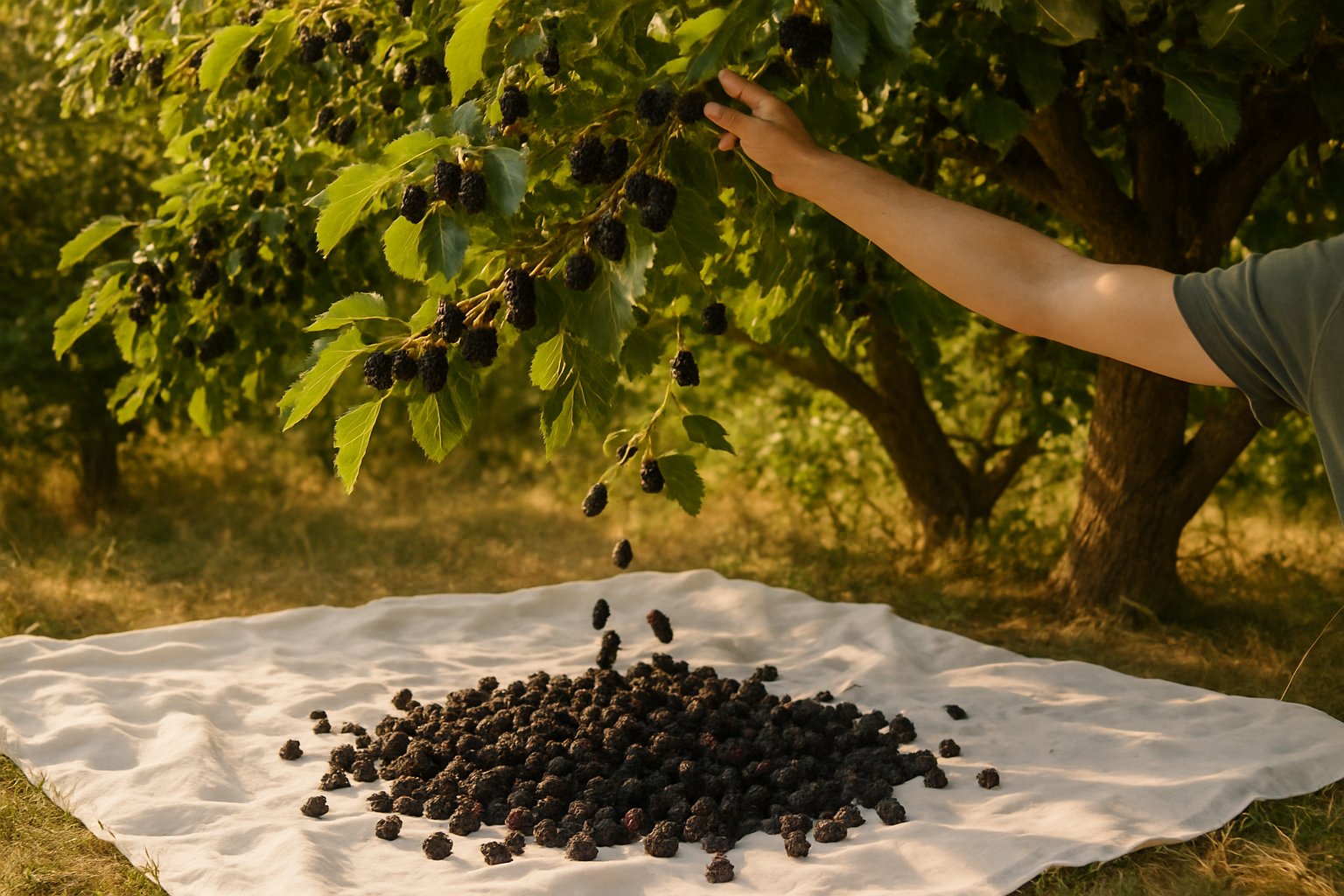
The core idea is beautifully simple: spread a large sheet or tarp on the ground beneath your mulberry tree, give the branches a good shake, and let gravity do the heavy lifting. Ripe mulberries — and only the ripe ones — will fall freely. Unripe berries hold on tight. This means you’re essentially getting a pre-sorted harvest with almost zero effort. Once you collect the fallen berries, you funnel them into containers and repeat. On a productive tree in peak season, twenty pounds in under an hour is genuinely achievable. I’ve done it. Minus the dog interruptions.
How to Do It Right: Step-by-Step Tips for Sheet Harvesting Mulberries
Pick the Right Moment
Timing matters enormously. The sheet method works best when the tree is at peak ripeness — when berries are falling on their own with the slightest breeze. Early morning is ideal. The berries are cool, firm, and less likely to get crushed when they drop. Harvesting on a hot afternoon means softer fruit and more mess. Check your tree every day once berries start changing color, and plan your big harvest day for when you see significant natural drop happening on its own.
Choose the Right Sheet Material
This is where my original mistake lives. A fabric bedsheet sounds poetic, but mulberry juice soaks right into cloth fibers and never, ever comes out. Ask my husband, who still grieves a set of Egyptian cotton pillowcases. You want a smooth, non-porous surface that lets you funnel berries easily and wipe clean afterward. Heavy-duty plastic sheeting is your best friend here.
I now use the 16 Mil Greenhouse Cover Clear Plastic Tarp (10x20FT) for my largest tree. It’s thick, UV-resistant, and has grommets along the edges that make it easy to stake down or weigh with rocks so it doesn’t fold over on itself mid-harvest. For a smaller tree or a tighter space, the Aluf Plastics 6 MIL Heavy Duty Clear Drop Cloth (10x25ft) is a fantastic option — clear enough that you can see if something has rolled under the edge, and tough enough to reuse season after season.
The Shake Technique
Don’t just grab a branch and rattle it like you’re furious at the tree. Use a smooth, deliberate side-to-side motion on individual branches. Work from the outer canopy inward. Give each section three or four firm shakes, then move on. For taller branches out of reach, a long wooden pole or even a broom handle tapped gently against the branch works beautifully. You’ll hear and see the berries raining down, and it is — I’m not exaggerating — one of the most satisfying sounds in the gardening world.
Collecting and Sorting
Once you’ve shaken a section, gather the corners of your tarp and funnel the berries toward the center, then transfer them to your collection containers. I like to do a quick visual sort at this stage — remove any leaves, twigs, or berries that look damaged. For transferring, I love the byMall Berry Picking Basket with Adjustable Strap, which keeps my hands free while I sort. For packaging the final harvest, these Natural Pulp Fiber Berry Baskets (30 pack) are adorable and practical — perfect if you’re sharing with neighbors or selling at a farmers market.
Tools That Help: My Recommended Gear for the Sheet Method
- 16 Mil Greenhouse Cover Clear Plastic Tarp (10x20FT) — My top pick for large, mature trees. Thick, durable, and reusable for years.
- Aluf Plastics 6 MIL Heavy Duty Clear Drop Cloth (10x25ft) — Great for medium trees or tighter spaces. Very easy to funnel berries on the smooth surface.
- Farm Plastic Supply Black Plastic Sheeting (10 mil, 5x100ft) — Excellent if you want to cut custom sizes for oddly shaped planting areas or multiple trees. The black color also makes it very easy to spot debris.
- byMall Berry Picking Basket with Adjustable Strap — Hands-free collection is a game-changer when you’re also managing a tarp and shaking branches.
- Natural Pulp Fiber Berry Baskets (30 pack) —