
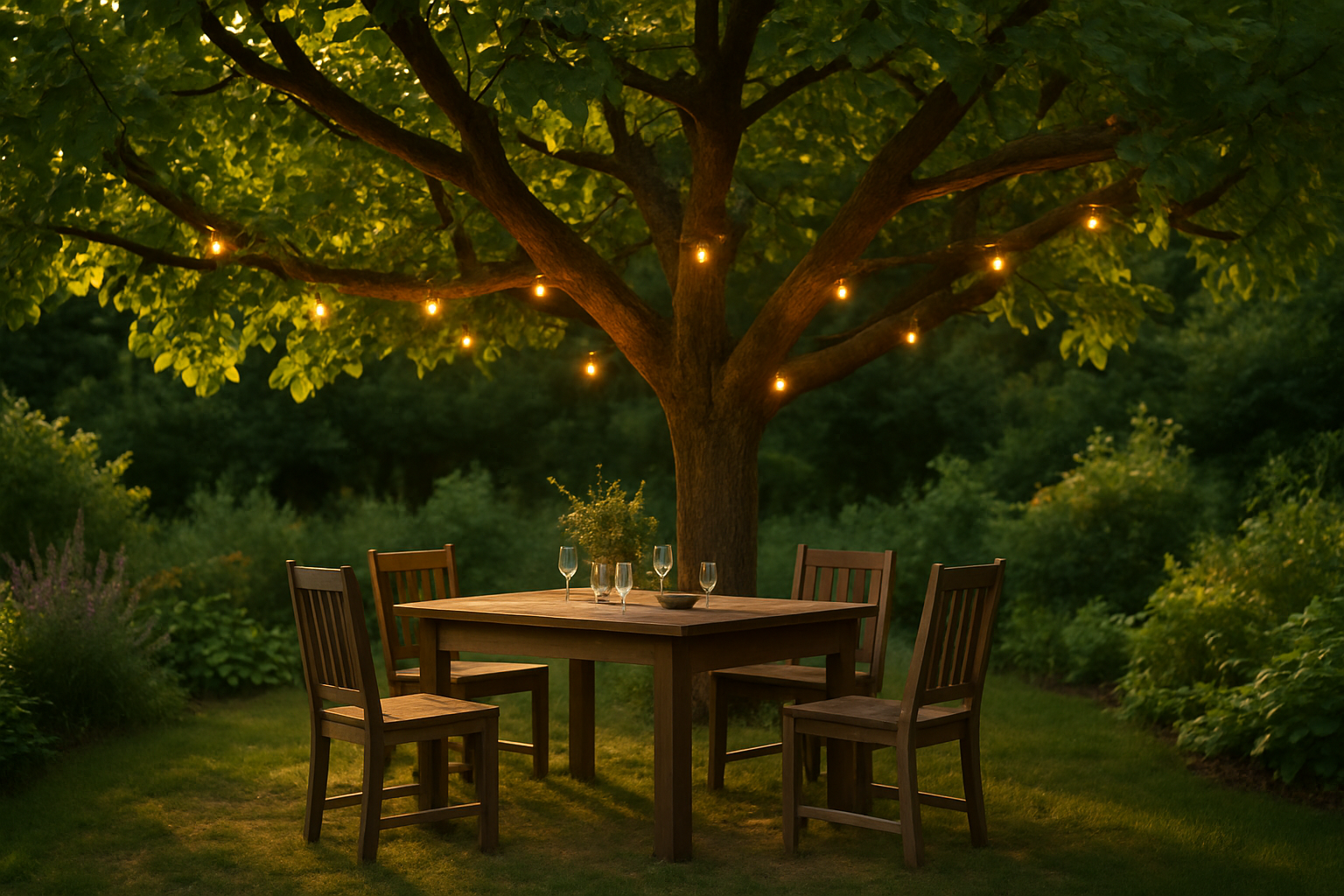
I once spent an entire Saturday afternoon sitting in my backyard, sweating through my shirt, completely baffled as to why my beautiful new patio set felt like it was positioned directly on the surface of the sun. I had done everything “right” — nice furniture, cute umbrella, cold lemonade. What I had not done, apparently, was look up. Right above me was a gloriously full, mature mulberry tree shade tree that I had somehow managed to plant my seating area completely perpendicular to. The tree’s canopy was casting a perfect, gorgeous pool of shade roughly four feet to my left. I had built my entire outdoor living space next to the shade instead of under it. My husband found me standing there, hands on hips, staring at my patio furniture like it had personally wronged me.
This post contains affiliate links. As an Amazon Associate, I earn from qualifying purchases. If you click a link and make a purchase, I may earn a small commission at no extra cost to you. I only recommend products I genuinely love and think you’ll find useful!
That ridiculous afternoon turned out to be one of the best things that ever happened to my yard — because it forced me to actually think about how to design around my mulberry tree intentionally. And once I did? Everything changed. If you’re sitting on a mulberry tree and not using it as the showstopping shade anchor your yard deserves, let me save you from my very sweaty mistake.
Why a Mulberry Tree Shade Tree Is a Landscaping Superstar
Here’s the thing about mulberries that people often overlook: they’re not just fruit trees. They’re some of the most effective natural shade producers you can grow in a home landscape. A mature mulberry develops a broad, spreading canopy — often 30 to 45 feet wide depending on the variety — with dense, heart-shaped leaves that overlap beautifully to block direct sun. We’re talking serious, deep, honest-to-goodness shade. Not the dappled kind that still gets you sunburned.
They also grow fast. Compared to oaks or maples, mulberries establish shade-worthy canopies in just a few years. If you’re planting from a young tree, you could be sitting comfortably beneath its branches within three to five growing seasons. That’s a landscape win most trees simply can’t offer.
A few mulberry varieties that work especially well for shade landscaping include:
- Illinois Everbearing Mulberry — Large, vigorous grower with an excellent spreading canopy. One of the most popular for backyard shade.
- Weeping Mulberry (Morus alba ‘Pendula’) — Smaller and more ornamental, perfect for creating a shady nook in a tighter space.
- Pakistani Mulberry — Impressive canopy, extremely productive, does well in warmer climates.
- Fruitless Mulberry (Morus alba) — If you want all the shade with none of the berry cleanup, this is your tree.
For most backyard shade setups, I recommend planting your mulberry on the south or west side of your outdoor living area. That positions the canopy to block the harshest afternoon sun — exactly where you need relief the most during summer.
Design Ideas for Building Your Outdoor Space Around a Mulberry Canopy
Once I moved my patio furniture to actually sit under my tree (revolutionary, I know), I started thinking about how to make the space feel intentional rather than accidental. Here’s what worked for us — and what I’d recommend to anyone designing around an established mulberry.
Create a Defined Dining or Gathering Zone
The canopy of a mature mulberry creates a natural “room” in your yard. Lean into that. Place a dining table and chairs directly under the center of the canopy, where shade coverage is deepest. Use pavers, a simple gravel pad, or even a weather-resistant outdoor rug to define the space and signal that this is a destination, not just a corner of the lawn.
For outdoor dining furniture that holds up beautifully under a tree canopy, I love these options:
- The Shintenchi 6 Piece Patio Dining Set with Umbrella is a fantastic all-in-one setup. The tempered glass top is easy to wipe clean (hello, mulberry droppings), and the folding chairs make it simple to reconfigure when the tree’s shade shifts throughout the day.
- If you want something with a bit more charm, the Andehomy 5-Piece Patio Dining Set features wicker swivel chairs with cushions and a gorgeous woodgrain table — it looks like it belongs under a tree canopy. The cushioned swivel chairs are a dream for long summer evenings outside.
- For a more compact setup or a smaller yard, the Vongrasig 6 Piece Folding Patio Dining Set is lightweight, budget-friendly, and easy to move if you’re still figuring out where your canopy provides the best coverage.
Add Lighting to Extend the Magic Into the Evening
Here’s where things get truly dreamy. Once the sun goes down and the heat breaks, a space under a mulberry tree is absolutely magical — especially with the right lighting strung through the branches. String lights through a tree canopy create an effect that no patio cover or pergola can replicate. The organic, uneven branching of a mulberry gives you natural anchor points and creates a soft, layered glow that feels like something out of a storybook.
- The addlon 50FT LED Outdoor String Lights are a top pick — commercial grade, weatherproof, and the Edison-style shatterproof bulbs give off that warm amber glow that makes every outdoor dinner feel like a special occasion.
- If you prefer a rounder, globe-style bulb, the Brightown 50FT G40 Outdoor String Lights are IP65 waterproof and dimmable — perfect for those evenings when you want soft ambiance rather than full brightness.
Pro tip: when stringing lights through your mulberry, use small S-hooks or branch clips rather than stapling or tying tightly. Mulberry branches grow quickly, and you don’t want wire digging into the bark over time.