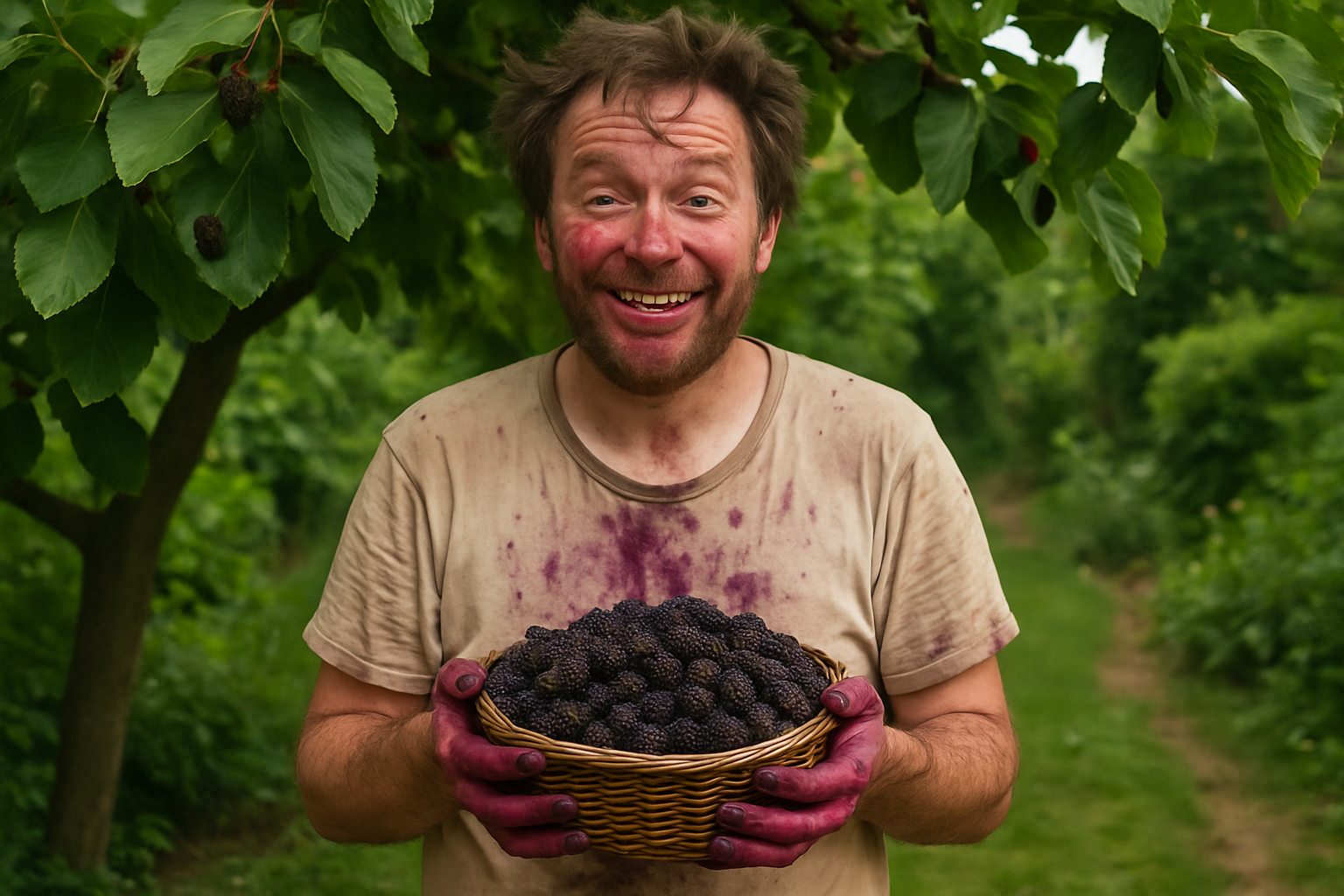
Everything in my kitchen starts with the question: what’s the most shelf-stable, most nutritious form I can preserve this in? With mulberries, that question led me deep into fermentation — wines, vinegars, and lacto-fermented preserves that outlast any jam by months and develop flavor profiles I never expected from backyard fruit. But getting to that point meant making nearly every rookie harvesting mistake imaginable in my first year: mistiming the ripeness window, losing whole days of fruit to birds, and letting pounds of perfectly good berries oxidize on the counter because I hadn’t prepped my fermentation vessels in advance. Mulberries are brutally unforgiving of poor planning — they ripen fast, drop faster, and stain everything in between — but once you learn to work with that urgency instead of against it, you unlock one of the most productive and preservation-friendly fruits you can grow in an urban homestead. This guide covers the ten mistakes that cost me the most fruit, flavor, and time in that first season, so you can skip straight to the part where your shelves are lined with bottles of mulberry wine and your freezer isn’t doing all the heavy lifting.
That first summer with my young Illinois Everbearing mulberry tree felt like a comedy of errors. I’d done my research — or so I thought. But there’s a big gap between reading about mulberries and actually harvesting them successfully, and I fell into nearly every trap. By the end of that season, I’d lost pounds of fruit, stained half my wardrobe, and seriously questioned whether mulberry growing was worth the effort. Spoiler: it absolutely is. But let me walk you through what went wrong so your first harvest goes a whole lot smoother than mine.
The Biggest Mulberry Harvesting Mistakes I Made (And How to Avoid Them)
1. I Didn’t Know When Mulberries Were Actually Ripe
I picked too early. A lot. Black mulberries don’t turn red, then black, and immediately become sweet — there’s still a few more days needed after they go dark before they reach peak flavor. Press one gently; a truly ripe mulberry releases from the stem with almost zero resistance and has a rich, deep sweetness with no astringency. I wasted an entire bowl of tart, underripe berries before I figured this out.
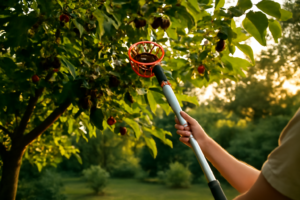
2. I Picked by Hand Into an Open Bowl
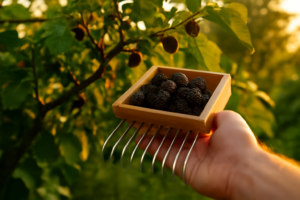
The Berry Picker That Stopped Me From Crushing My Entire Harvest
Mulberries are so delicate that hand-picking into a regular bowl leaves you with bruised, oxidizing mush before you even reach the kitchen. I learned this the hard way after losing entire harvests to my own clumsy fingers and stacked berry weight.
What works
- The wide mouth and shallow scoop design lets ripe berries roll gently in without compression — I can actually fill it halfway without the bottom berries turning to juice.
- The wooden construction feels less aggressive than metal scoops, and the tactile feedback helps you sense ripeness through a gentle squeeze without accidentally applying thumb pressure.
- Harvesting time drops dramatically because you’re not constantly transferring berries between containers — you pick directly into something you can pour from into your fermentation vessel or freezer tray.
What doesn’t
- The scoop’s width makes it awkward to navigate dense inner branches where the sweetest mulberries hide — you’ll still need your fingers for those tight spaces, which defeats half the purpose.
- Wooden surfaces absorb mulberry stain permanently, so after a few harvests it looks permanently dyed purple and slightly grimy no matter how thoroughly you wash it.
I almost abandoned this tool after my second harvest when I misjudged the scoop angle and still managed to bruise a full load — but then I realized I was gripping the handle too tight. Once I loosened up and let gravity do the work, it became genuinely indispensable. Get the PinzqTrading Wooden Berry Picker Scoop if you’re serious about preserving mulberry quality from tree to jar.
This post contains affiliate links. As an Amazon Associate, I earn from qualifying purchases at no extra cost to you.