
The pruning conversations I have with home growers are almost always the same: they’ve either done nothing for years and the tree is a tangled mess, or they’ve been too aggressive and shocked it into a non-productive sulk. Mulberries have their own timing and their own logic — once you understand the growth pattern, pruning stops being guesswork. That same principle carries into every part of working with this plant, including something I’ve seen increasingly in my extension consultations: people harvesting leaves for tea without any real understanding of what they’re consuming or how their body might respond. In my variety trials, I’ve grown and studied Morus alba, Morus rubra, and several hybrids, and I can tell you that mulberry leaf tea has genuinely useful properties — but like any bioactive preparation, it deserves more than enthusiasm before you brew your first cup. This guide covers the real side effects, the populations who should be especially cautious, and the practical steps that let you enjoy mulberry tea with confidence rather than guesswork.
This post contains affiliate links. As an Amazon Associate I earn from qualifying purchases at no extra cost to you.
Here is the thing about mulberry tea — most of the content out there is either breathlessly enthusiastic about its benefits or, on the other end, vaguely alarming in that generic “consult your doctor” way that tells you almost nothing useful. I want to give you something better than both of those. This is a real, balanced look at what you should know before you start drinking mulberry tea regularly. The good news is that for most people, this is a wonderfully gentle and well-tolerated herb. But there are a few specific situations where you genuinely need to pay attention, and I am going to walk you through all of them.
Mulberry Tea Side Effects: The Common Ones First
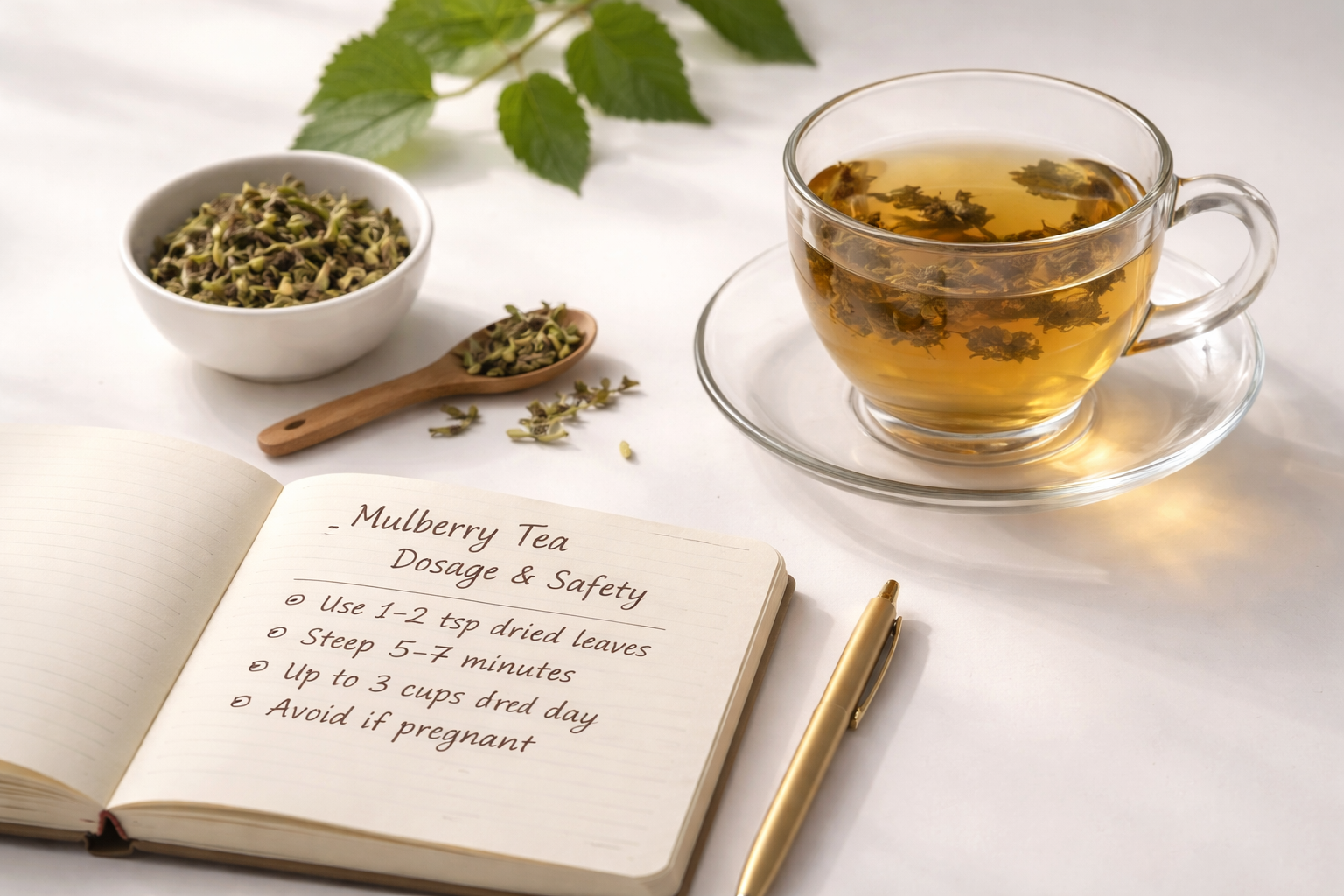
Let me start with what happened to me, because I think it is the most relatable scenario for new drinkers. Mulberry leaf tea at standard amounts — one or two cups a day — is considered generally safe for most healthy adults. The National Center for Complementary and Integrative Health (NCCIH) notes that white mulberry leaf is well-tolerated in amounts typically used in food and beverage form, and that side effects are uncommon. When they do occur, they tend to be mild digestive discomfort, and they tend to be dose-related.
My mistake was purely enthusiastic overconsumption. Two large mugs on an empty stomach, brewed strong, with freshly dried leaves I had not yet figured out how to portion correctly. My digestive system was not amused. Once I dialed back to one normal-strength cup with food, everything was completely fine. So the first lesson is an easy one: start low, go slow, and drink it with or after a meal rather than on an empty stomach.
A 2022 safety evaluation published on PubMed (PMID 35089999) looked specifically at mulberry leaf beverages consumed at standard levels and found the drink was well-tolerated, with no significant adverse events reported among participants. That is genuinely reassuring. It lines up with what most experienced mulberry tea drinkers will tell you — this is not a harsh herb. It is quite mild when used sensibly.
The Blood Sugar Effect: A Real Consideration for Some People
This is the section I want you to read carefully if you or anyone in your household manages blood sugar with medication. Mulberry leaf contains compounds — most notably 1-deoxynojirimycin (DNJ) — that actively slow the absorption of sugars in the digestive tract. This is actually one of the reasons people drink mulberry tea in the first place, and it is a genuinely interesting and well-studied mechanism. But it also means the tea has a real, measurable effect on blood glucose levels.
If you are taking diabetes medications such as metformin, insulin, or glipizide, drinking mulberry tea on top of those medications can compound the blood sugar-lowering effect. That could potentially push your glucose lower than intended. This is not a reason to panic — it is a reason to have a conversation with your doctor or pharmacist before adding mulberry tea to your regular routine. They may simply want to monitor your levels more closely while you introduce it, which is completely manageable. Please do not skip this step if it applies to you.
For healthy adults without blood sugar conditions or medications, this same effect is generally mild and not a concern at typical consumption levels. But awareness is everything here.
Allergy Concerns and Who Should Be Extra Cautious
Fig and Latex Allergies
Here is one that surprises a lot of people. Mulberry belongs to the Moraceae plant family — the same family as figs. If you have a known allergy to figs, or if you have latex allergy (which can sometimes cross-react with plants in this family), you should approach mulberry tea with real caution and ideally check with an allergist before trying it. Cross-reactive plant allergies are a legitimate phenomenon, and while mulberry allergies are not common, they are not unheard of either. Start with a very small amount and pay attention to any unusual reactions — itching, tingling, swelling, or digestive upset that feels different from normal.
Pregnancy and Breastfeeding
If you are pregnant or breastfeeding, this is a straightforward one: please talk to your healthcare provider before drinking mulberry tea regularly. The honest answer is that there simply is not enough safety data for these specific situations to give you a confident all-clear. That is not a warning that the tea is dangerous — it is a reflection of the fact that herbal research during pregnancy is an area where we just do not have robust clinical evidence yet. Your provider can help you weigh that uncertainty against your individual circumstances.
Products I Recommend for a Great First Experience
One of the things that genuinely helps with side effect prevention is starting with a quality, properly processed tea rather than going rogue with homegrown leaves at full strength (learn from my mistakes, friends). Here are the mulberry teas I feel good about recommending — all ones I have personally tried or carefully researched.
- Bravo Tea Absolute White Mulberry Leaf Tea Bags — This is my go-to recommendation for beginners. The bags are conveniently portioned, which completely removes the guesswork about how much leaf you are using. It brews into a clean, light, pleasant cup.
- FullChea USDA Organic White Mulberry Tea — If you care about organic certification (and honestly, with any leaf tea I think it matters), this is a beautiful option. The USDA organic label gives me extra confidence about what is and is not in the leaf.
- Bio Nutrition White Mulberry Tea 30 Bags — Great value for a 30-bag count, and Bio Nutrition is a brand with a solid reputation in the herbal supplement space. A good everyday option once you know mulberry tea agrees with you.
- Malwa White Mulberry Herbal Tea Bags — A lovely option if you enjoy exploring different herbal blends. Malwa puts care into their sourcing, and this one makes a particularly cozy afternoon cup.
Starting with tea bags rather than loose bulk leaf is genuinely smart when you are new to mulberry tea. The portions are controlled, the processing is standardized, and you can easily work your way up from one cup a day to see how your body responds before going further.
My Honest Bottom Line on Mulberry Tea Side Effects
After everything I have researched and experienced firsthand, here is where I genuinely land: mulberry tea side effects are real but uncommon, usually mild, and almost entirely avoidable with a sensible approach. Start with one cup a day, drink it with food, choose a quality pre-portioned product, and pay attention to how you feel. For the vast majority of healthy adults, this is a gentle, enjoyable, and genuinely interesting herbal tea with a lovely history and a growing body of supportive research behind it.
The situations that deserve real care — blood sugar medications, fig or latex allergies, pregnancy and breastfeeding — are specific and manageable with the right conversations. None of them mean mulberry tea is off the table forever; they just mean you bring a healthcare provider into the decision. That is good sense with any herb, honestly, not just this one.
I so badly wish I had known even half of this before my enthusiastic two-mug afternoon experiment. But here we are, and now you know, and I think that puts you in a genuinely great position to enjoy mulberry tea the way it deserves to be enjoyed — with curiosity, confidence, and maybe just a little more patience than I had. Go brew yourself a careful, thoughtful first cup. I think you are going to love it.
Have you tried mulberry tea yet? Drop a comment below and tell me about your experience — I read every single one and I love hearing from this community more than I can say.