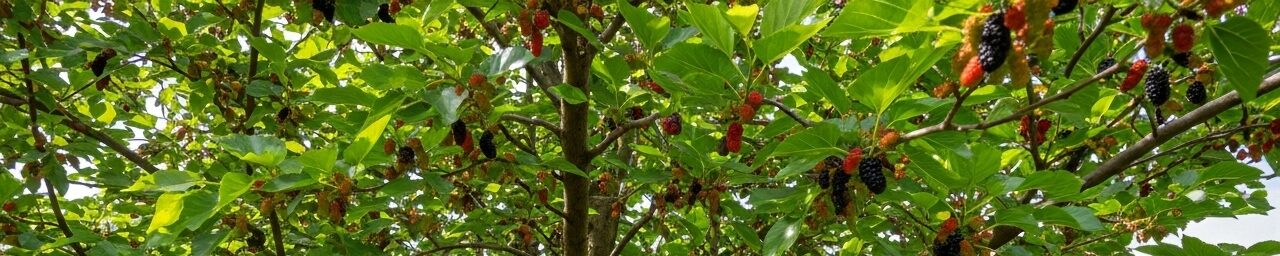
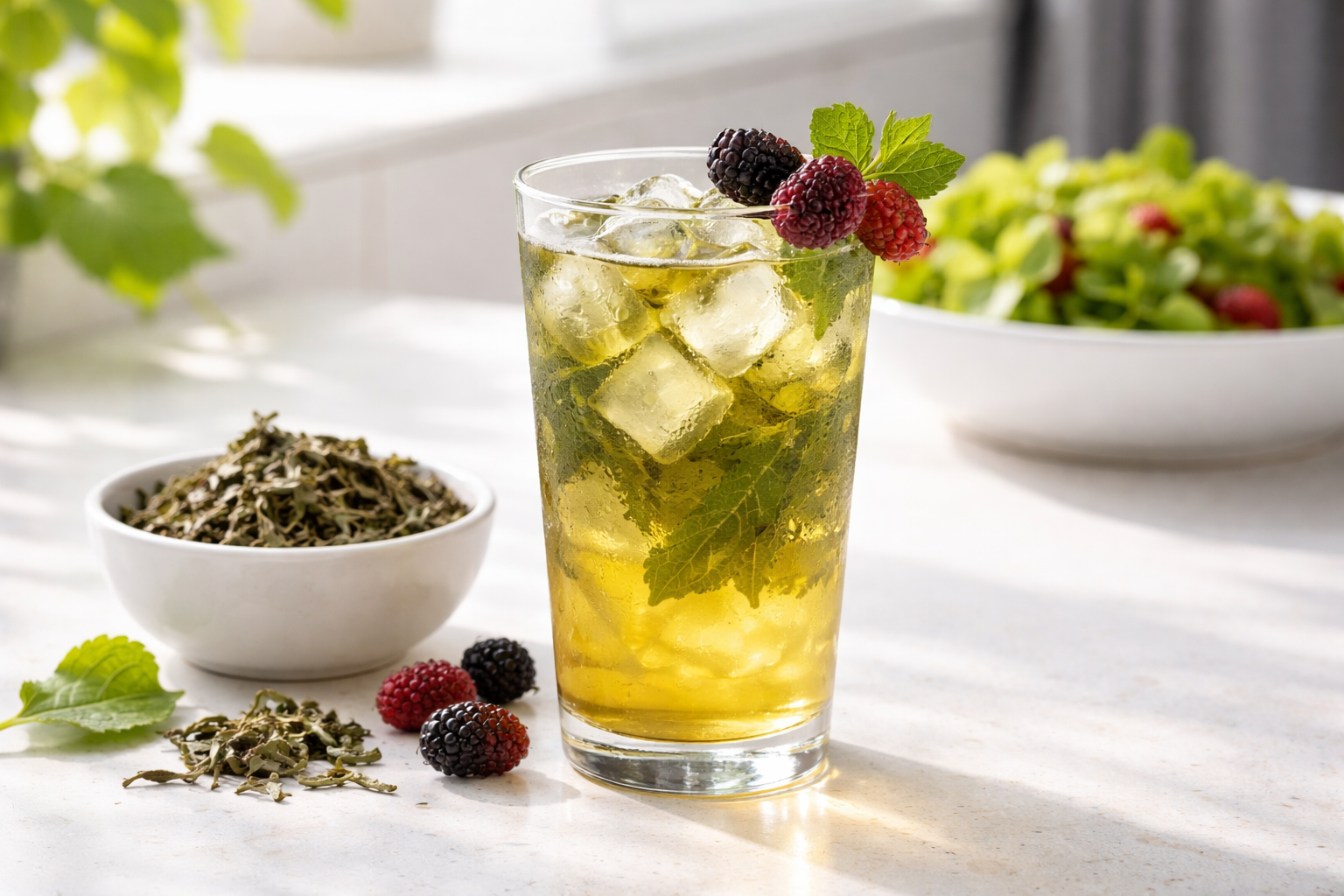
Back in my third year managing these trees, I brought in a massive harvest one August and got so caught up in processing fruit for jam that I let an entire canopy of leaves yellow and drop before it occurred to me they might be worth something beyond compost. That one oversight — watching perfectly good leaf material hit the ground — set me on a path toward understanding what grows on a mulberry tree beyond just the berries. A homestead mulberry becomes a shared resource pretty quickly: birds claim their share, pollinators work the flowers, and somehow a squad of neighborhood squirrels materializes the moment fruit ripens. Learning to coexist with that wildlife circus without surrendering your entire crop is one of the harder lessons the tree will teach you. But once harvest actually lands in your hands, a new puzzle emerges: how do you use everything, including those leaves and the fruit that won’t cooperate with jam-making or fermentation plans? That wondering led me down a genuine dive into the literature on mulberry leaf tea as a potential weight-management tool — because the notion that something I’d been routinely pruning and composting could turn into an actual, evidence-supported functional beverage felt like a zero-waste win waiting to happen. I’ve sorted through the published studies, separated marketing noise from legitimate findings, and dug into what matters specifically for growers trying to harvest and brew leaves properly.
Why I Went Looking for Mulberry Tea Weight Loss Research in the First Place
I should tell you upfront where my interest in this came from: it’s personal. After a stretch of particularly ambitious baking over two winters — mulberry hand pies are genuinely my weakness, and I stand by every one — I was looking for some modest ways to adjust my habits. I’d already built mulberry leaf tea into my daily routine simply because I grow the trees and actually prefer it to most other herbal options. When someone reading the blog asked if it could be useful for weight management, I took that as a sign to go actually dig into what the science demonstrates.
I did the work. Here’s what research actually supports — no marketing spin, no overselling, just what the evidence really indicates.
The Research on Mulberry Tea and Body Composition: Separating Mechanism From Marketing
Brown Adipose Tissue Activation (The Finding That Caught Me Off Guard)
Something unexpected showed up when I was reviewing recent research: a 2024 paper in Frontiers in Clinical Diabetes documented that bioactive compounds derived from Morus alba — white mulberry, which is what most leaf tea comes from — have the capacity to trigger brown adipose tissue into activity. If brown fat isn’t familiar to you, here’s the distinction: white fat accumulates calories as stored energy, but brown fat consumes energy by producing heat. Activating brown fat drives up whole-body calorie expenditure, meaning your cells work harder to burn fuel even when you’re stationary.
The biology here is genuinely compelling. These researchers demonstrated fat loss occurred via this thermogenic route — not through hunger reduction or bowel stimulation or the other questionable pathways peddled by dubious supplements. Your own metabolic engine gets a subtle push in a beneficial direction. I want to stay grounded though: this research is recent and the field is still building evidence. Yet it’s a genuine, peer-reviewed finding that gives mulberry tea an actual biological explanation beyond mere coincidence.
Starch Digestion Inhibition (Timing Your Tea Matters)
I’d caught hints of this mechanism circulating before, but wanted to see what the actual data showed. The polyphenols present in mulberry leaves — those beneficial plant molecules responsible for the tea’s health profile — demonstrate activity against alpha-glucosidase, an enzyme that fragments complex starches into absorbable sugars. Block that enzyme, and fewer carbohydrate calories actually get pulled into your bloodstream.
Applied to everyday eating, this translates to: having mulberry tea alongside a carb-heavy meal — whether that’s risotto, potatoes, bread, or yes, those mulberry hand pies I mentioned — could reduce how much caloric energy your gut absorbs from what you’re eating. The same basic approach appears in certain prescription diabetes treatments, which demonstrates the medical establishment takes it seriously. Does this permission you to eat carbs consequence-free? Not remotely. But it’s a legitimate, studied effect that transforms sipping mulberry tea during meals from a wishful habit into a genuinely rational choice.
The Animal Model Study: What to Believe and What to Stay Skeptical About
A paper in the Nutrients journal (reference PMC9521161 for anyone wanting to dig deeper) showed that mulberry leaf polyphenols delivered striking reductions in weight, adipose tissue mass, and obesity-related metabolic markers when given to mice on a calorie-dense diet.
Time for the blunt truth: mice are not humans. Animal models serve as a starting point in the research pipeline, but results from rodent studies don’t automatically translate to people. I’d be steering you wrong if I led with “mulberry tea reversed obesity in this study!” while glossing over the fact that the subjects had four legs and whiskers. What this does establish is that the compounds in mulberry leaf create real, measurable shifts in fat metabolism — substantial enough that the research community continues investing in further trials. That signals something worth paying attention to.
Evidence From Actual People: Promising, Though the Numbers Stay Grounded
Let me cut straight to it with genuine candor. Human trials involving mulberry tea and weight management exist and show encouraging patterns — but effects remain modest. Published research tracking actual people shows weight reductions averaging 2 to 4 pounds over 8 to 12-week periods, and this consistently happens when mulberry tea accompanies a calorie-conscious eating approach.
A 2–4 pound shift doesn’t grab headlines. It’s not a transformation. But consider this angle: mulberry tea isn’t a cure-all, yet it functions as a practical supporting component. If it reduces carb calories absorbed, stimulates brown fat thermogenesis, and replaces a higher-calorie drink in your day-to-day routine — those incremental changes accumulate. Scale that up: four pounds over twelve weeks, repeated four times annually, equals sixteen pounds yearly. That compounds into something meaningful.
The critical term throughout this body of research is combined. Mulberry tea functioning as part of an overall health-conscious approach yields genuine results. Mulberry tea plus unlimited pizza and sedentary living? The research—and basic mathematics—don’t support that equation.
Preparing Your Own Leaves: Managing a Harvest That Outpaces Your Tea Strainer
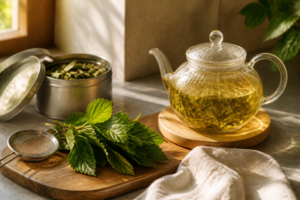
Once you commit to harvesting mulberry foliage deliberately—whether clearing gluts from your own specimens or using up leaves before they brown and fall—you discover that shelf-stable dried leaf tea becomes your most practical approach. Testing commercial dried mulberry leaf products gives you a baseline for flavor and quality without demanding hours of dehydrator time.
The advantages
- Organic designation means you’re getting a reliable reference standard for comparison—useful when you’re gauging whether your own drying methods deliver equivalent flavor and texture.
- Whole leaves (not bags) brew more uniformly and faster, which helps considerably when you’re evaluating a new batch of your own leaves to determine whether large-scale processing is worth the effort.
- White mulberry varieties yield milder, less mouth-puckering leaf tea, making them an excellent reference point if you’re working with a cultivar you haven’t tasted before.
The drawbacks
- Whole leaves require a fine-mesh infuser or strainer—manageable, but an additional tool to track down if you’re just beginning to experiment with leaf-based brewing.
- A store-bought package won’t teach you much about harvest timing or processing technique for your own leaves, particularly if your cultivars produce foliage with varying taste depending on season or moisture conditions.
I was skeptical that store-bought would actually help me dial in my own drying process—I kept thinking it would just taste “off” compared to fresh—but having a reliable baseline to compare against actually saved me from wasting half a summer’s leaf harvest on an over-dried batch. FullChea USDA Organic White Mulberry Tea
Sources and Citations
The health claims discussed on this page come from published research. Every study below has been checked against its PubMed or PubMed Central record, and each entry links to the source so you can read it yourself.
- Parklak W et al. (2024) — “Nutraceutical Properties of Thai Mulberry (Morus alba L.) and Their Effects on Metabolic and Cardiovascular Risk Factors in Individuals with Obesity: A Randomized, Single-Blind Crossover Trial.” Nutrients, 16(24). (randomised controlled trial) PMC11678609 →
Randomised single-blind crossover pilot in 12 adults with obesity drinking 100 g of a concentrated mulberry drink daily for 6 weeks. Blood pressure, triglycerides and CRP improved, but body composition did not change. - Chen X et al. (2022) — “Impact of mulberry consumption on cardiometabolic risk factors: A systematic review and meta-analysis of randomized-controlled trials.” J Clin Pharm Ther, 47(12), 1982-1993. (meta-analysis) PubMed 36509962 →
Meta-analysis of 12 randomised trials. Mulberry consumption lowered HbA1c, total cholesterol (-13.1 mg/dL), LDL (-8.8 mg/dL), triglycerides (-19.7 mg/dL) and CRP. Note this disagrees with the Phimarn meta-analysis on lipids. - Cui W et al. (2023) — “Effect of mulberry leaf or mulberry leaf extract on glycemic traits: a systematic review and meta-analysis.” Food Funct, 14(3), 1277-1289. (meta-analysis) PubMed 36644880 →
Meta-analysis of 12 clinical trials (615 participants). Mulberry leaf or extract reduced fasting glucose by 0.47 mmol/L, HbA1c by 2.92 mmol/mol and fasting insulin, with larger effects after 8 or more weeks and in people who were not metabolically healthy at baseline.
Note: study results are not guaranteed for individual users. Dose, preparation method, and individual physiology all affect outcomes, and most of these trials are small. Consult your healthcare provider before making changes to your treatment plan.
Frequently Asked Questions
Is mulberry leaf tea safe to drink if I have diabetes?
That’s a question for your healthcare provider, not me — I’m a backyard grower, not a physician or registered dietitian. The article is clear that if you’re managing diabetes, heart disease, pregnancy, or any health condition, you should consult your provider before using mulberry products as part of your treatment plan. Dosage, extraction method, and individual physiology all affect outcomes.
Which mulberry species makes the mildest leaf tea?
White mulberry, Morus alba, which is what most leaf tea comes from. White mulberry varieties yield milder, less mouth-puckering leaf tea, which makes them a useful reference point if you’re working with a cultivar you haven’t tasted before. I compare my own dried leaves against a known baseline to confirm my processing actually improves flavor and texture.
Will mulberry tea alone make me lose weight without dieting?
No, the research doesn’t support that. Published human trials show weight reductions averaging 2 to 4 pounds over 8 to 12-week periods, and that consistently happens when mulberry tea accompanies a calorie-conscious eating approach. The critical word throughout this body of research is combined. Mulberry tea plus unlimited pizza and sedentary living isn’t an equation the evidence backs.
Do I need special equipment to brew whole mulberry leaves?
Whole leaves require a fine-mesh infuser or strainer — manageable, but an additional tool to track down if you’re just beginning to experiment with leaf-based brewing. The tradeoff is worth it, since whole leaves brew more uniformly and faster than bags, which helps considerably when you’re evaluating a new batch of your own dried leaves.
Keep Reading
About This Article
Written by Ruth Nakamura. Ruth Nakamura is a backyard orchardist in the Pacific Northwest who has grown mulberries for fifteen years, cultivating twelve different varieties in her own backyard. Not a horticulturist by formal training - she shares what she has learned through hands-on growing, workshops, and connecting with nurseries and growers across the country. More about this site.
Scope and limits. Ruth is a backyard orchardist without formal horticultural training. Growing conditions vary enormously by region, so confirm variety, timing, and pest guidance with your local extension service.
Verify this against a primary source
Specifics change, and your situation may differ from the one described here. These are the authorities worth checking directly:
- USDA Plant Hardiness Zone Map — zone verification for your location
- Oregon State University Extension — fruit growing and pruning research
- USDA PLANTS Database — species range and identification