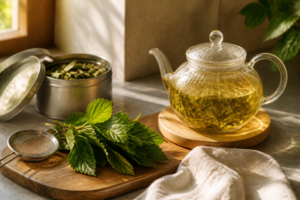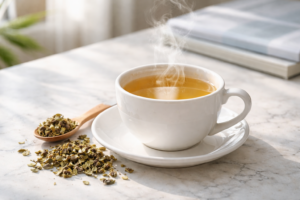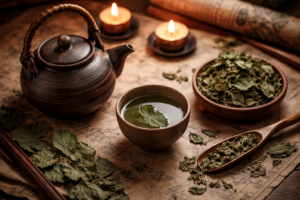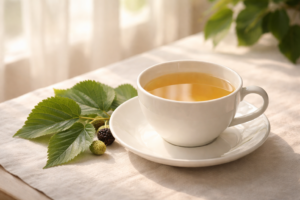
Many people considering mulberry leaf powder as a supplement experience questions about whether this form is worth trying. Some have previously been satisfied with steeping mulberry leaf tea or taking extract capsules, then became curious about whether whole powder might offer advantages. This curiosity has led some to purchase mulberry leaf powder and incorporate it into their diet in various ways over extended periods to evaluate whether the format delivers meaningful benefits.
What emerged from that experiment threw me for a loop. Not merely because the powder delivered results, but because learning how to actually integrate it into my life shifted everything dramatically. I moved from a hazy awareness that mulberry leaves contained something called DNJ and contained “antioxidants” to actually grasping why mulberry leaf powder benefits reach so far beyond what the tea or capsules had accomplished for me. If you’re thinking about switching to powder yourself, I want to take you through precisely what I discovered—plus the stumbling blocks I encountered and how to sidestep them.
Why I Switched From Tea and Capsules to Powder
I genuinely savored my mulberry leaf tea habit, I’ll admit that. Something deeply restorative happens when you watch hot water transform pale leaves into golden liquid, then settle in with that warm cup while handling your morning tasks. And those capsules? Undeniably convenient—toss one back with water, no prep, no mess, no fuss.
Yet challenges exist with standardization across formats. Using tea, it’s difficult to know the actual quantity of beneficial compounds—the DNJ, the polyphenols—making it into your body. Variations in steeping time, water temperature, and brand all shift the composition significantly. With capsules, standardization improves matters (most prepared extracts deliver roughly 1% DNJ), though capsules have their own constraints: they must be taken with water, and whole leaf powder may supply a richer array of nutrients that standardized capsules cannot match.
So I took the plunge like any mulberry devotee with too much time on their hands and a Prime account: I bought powder and made myself the unwitting participant in my own nutritional investigation.
Understanding Mulberry Leaf Powder Benefits at the Science Level
Before diving into the specifics of how I put the powder to use, it proved invaluable to understand what I was actually consuming. This is where things get legitimately fascinating.
The leaves of white mulberry trees carry a naturally occurring molecule called 1-deoxynojirimycin—acronym DNJ—if you prefer terminology that sounds knowledgeable when discussing this at dinner. This natural alpha-glucosidase inhibitor basically puts the brakes on the rate at which your body breaks down and takes up carbohydrates. To put it in everyday language? It dampens the blood sugar elevation that occurs after consuming a carbohydrate-focused meal.
Research conducted in 2016, published through the National Center for Biotechnology Information (PMC5321430) as a randomized controlled trial, demonstrated that mulberry leaf extract lowered postprandial blood glucose and insulin responses in healthy study participants. Here’s the critical part—that experiment used extract, which concentrates specific compounds. Powder represents the entire leaf, meaning you receive all the beneficial substances present, such as anthocyanins, flavonoids, and chlorogenic acid. These plant polyphenols bring their own well-documented antioxidant and inflammation-reducing capabilities beyond mere glucose regulation.
Across more than two millennia, practitioners of Traditional Chinese Medicine have relied on Sang Ye (mulberry leaf) as a therapeutic agent for clearing heat from the lungs, diminishing inflammatory reactions, and stabilizing glucose metabolism. What healers simply understood through practice is now backed up by contemporary research confirming the biochemical reasons behind their intuitive knowledge. There’s genuine comfort in choosing to integrate something when both historical use and modern investigation align.
My Three-Month Experiment: How I Actually Used the Powder
During the initial month, I was essentially learning through trial and error. I was spectacularly unsuccessful. I’d scoop half a teaspoon into boiling water and get a bitter, grass-like concoction. I attempted to blend it with cold coffee and ended up with sediment that stubbornly refused to dissolve. I stirred a full tablespoon into plain yogurt and my mouth immediately staged a rebellion.
By the time that first month wrapped up, though, I’d cracked the code.
Strategy 1: Smoothies (The Clear Winner)
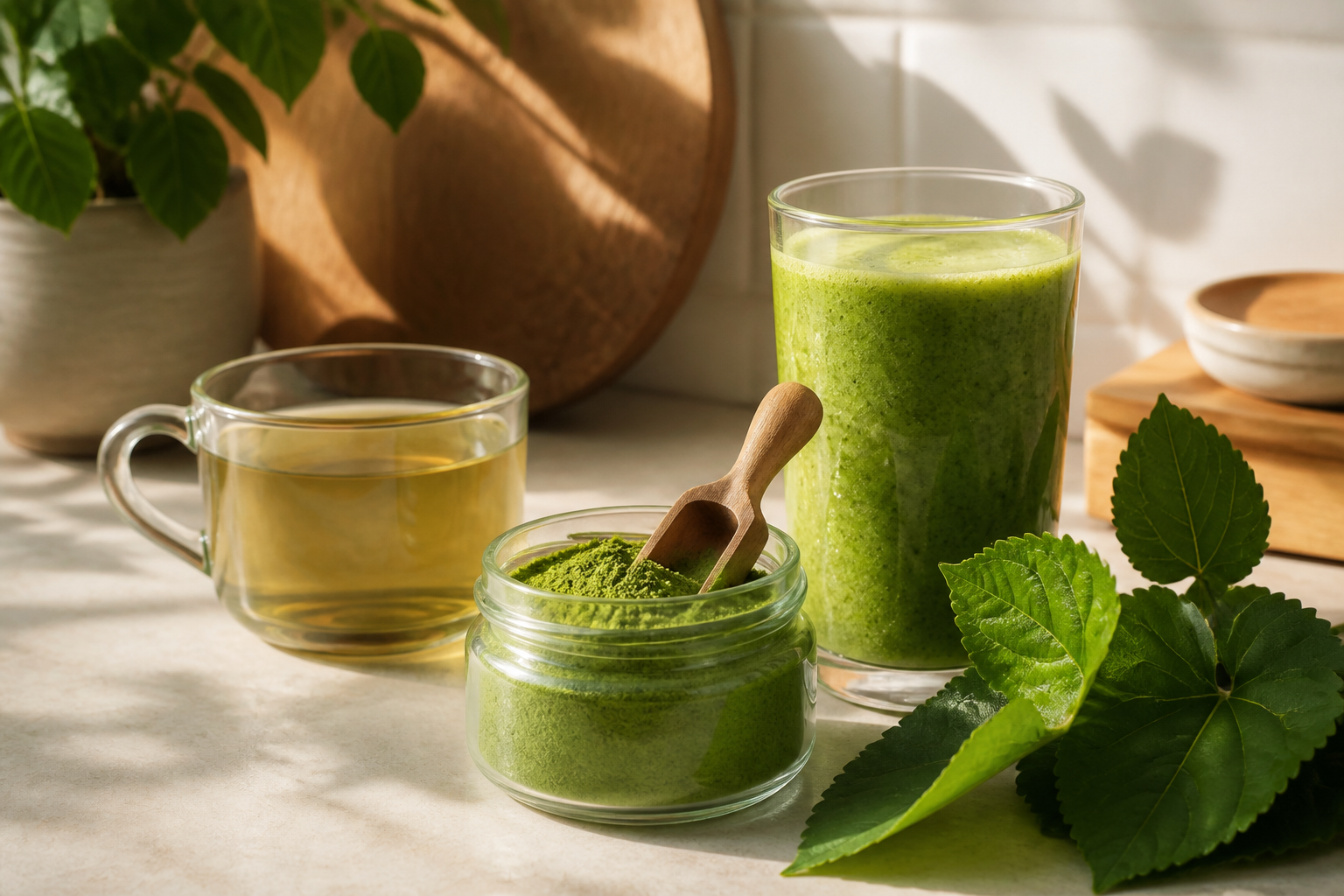
This turned into my primary approach within days. Half a teaspoon of mulberry leaf powder swirled into a blender with banana, mixed berries, Greek yogurt, plus almond milk produces something I genuinely look forward to drinking. The powder vanishes into the mixture, the taste meshes naturally with other flavors, and there’s zero graininess. I’d incorporate this four or five times weekly, and it rapidly became my favorite ritual.
Strategy 2: Oatmeal and Breakfast Bowls
During the second month, I began whisking a quarter teaspoon straight into cooked oatmeal. This approach felt particularly fitting—blending mulberry leaf powder with a grain-heavy breakfast aligned with its blood sugar-modulating properties. I also experimented by combining it with granola preparations and acai bowl bases. Once more, half a teaspoon integrated seamlessly into the matrix without introducing undesirable flavor notes.
Strategy 3: Warm “Tea” That Actually Tastes Good
I discovered a different approach: combine half a teaspoon with hot water, a drizzle of raw honey, and just a hint of vanilla extract. Run an immersion blender through it for about thirty seconds to fully incorporate all the particles, and the result is a silky, pleasant-tasting beverage rather than a grainy, unpleasant one. This proved especially valuable when evening arrived and I wanted warmth and comfort without the caffeine jolt.
Three months in, I’d landed on a predictable schedule. Most days involved getting mulberry leaf powder into my system roughly four or five occasions per week, predominantly through smoothies, with scattered instances of powdered beverages and oatmeal preparation. The regularity of this approach produced observable results.
What I Actually Noticed (The Honest Version)
Let me speak plainly here, because I believe straightforwardness matters more than marketing language.
Day thirty-one didn’t bring a sudden transformation into a healthier version of myself. This isn’t some miraculous cure-all. However, I did observe tangible, repeatable shifts:
- Throughout my waking hours, my stamina remained more uniform. The typical afternoon slump that used to hit around three o’clock largely disappeared. When blood glucose stays level, energy naturally follows suit.
- My complexion showed visible improvement—fewer breakouts, reduced redness overall, which tracks with what we understand about these polyphenols’ capacity to fight inflammation.
- Following meals, I experienced noticeably less abdominal distension, particularly on mornings when powder had been mixed with carb-heavy breakfast foods.
- My nighttime rest appeared to deepen somewhat, though I’m cautious about making sweeping statements (life contains too many influences to confidently point to a single factor).
Things that did NOT happen: troubling physical reactions, gastrointestinal disturbances, or motivation to discontinue the practice. The powder behaves gently in the body. Plus, its remarkable capacity for flexible incorporation is something that deserves more recognition than it typically receives. Small, consistent actions compound, and powder makes that consistency genuinely achievable.
Powder vs. Capsules vs. Tea: What I Learned
These three formats deserve acknowledgment as distinct options with separate advantages and limitations, not mere alternative delivery vehicles for identical substances.
Capsules that contain standardized extract (typically delivering 1% DNJ) provide you with exact, consistent quantities and perform excellently when precision is your priority. They excel during travel or when flavor preferences don’t factor in. The downside: you’re receiving a refined, concentrated fraction rather than the complete plant matrix.
Leaf infusions bring ceremonial value and genuine pleasure to consumption, however absorption rates drop and achieving replicable results becomes challenging. Without meticulous attention to parameters like water temperature and contact duration, you cannot reliably quantify the DNJ you’ve extracted.
Powder occupies the middle territory—delivering higher bioavailability than infusion while providing more adaptability compared to capsules. The compromise? Standardization becomes harder. You receive complete leaf material, which theoretically surpasses isolated compounds nutritionally, yet batch-to-batch DNJ concentrations won’t be identical. For my circumstances, that tradeoff felt reasonable because I could genuinely relish the process of consuming it daily.
The Powder That Actually Stays Mixed (Unlike My Early Batches)
Once I began growing, harvesting, and processing leaves from my own trees, I discovered the frustrating reality that homemade powder tends toward clumping, separation, and that unpleasant gritty sensation when stirred into liquids. Ground particles from a reputable commercial supplier with appropriate fineness make the difference between something you’ll consume consistently and something destined for the back of your pantry after one week.
What works
- Incorporates uniformly when you pour hot water over it, without that stubborn residue I battled with my hand-ground leaves—something you’ll genuinely want to consume regularly.
- Particle dimensions are sufficiently small for mixing into smoothies and baked goods without compromising taste or leaving that mouth-coating sensation my homemade batches created.
- Maintains its integrity throughout storage and doesn’t degrade as rapidly as my homemade product did, which meant I could actually finish that kilogram while it retained its fresh, pleasant flavor.
What doesn’t
- Weighs more heavily on your wallet compared to harvesting and processing from your own trees, which undermines that self-sufficiency appeal many growers treasure.
- Carries a more uniform, predictable taste profile rather than the depth and nuance present in powder made from leaves you personally picked during their optimal season, assuming that distinction matters to you.
I almost gave up on the powder habit entirely after wasting those early homemade batches, but switching to a properly manufactured product completely changed my three-month experiment. If you’re serious about daily mulberry leaf consumption, grab the ONDAMGO Korean Mulberry Leaf Powder for Teas, Smoothies & Culinary Use (200g).
Sources and Citations
The health claims discussed on this page come from published research. Every study below has been checked against its PubMed or PubMed Central record, and each entry links to the source so you can read it yourself.
- Kimura T et al. (2007) — “Food-grade mulberry powder enriched with 1-deoxynojirimycin suppresses the elevation of postprandial blood glucose in humans.” J Agric Food Chem, 55(14), 5869-74. (randomised controlled trial) PubMed 17555327 →
Dose-ranging trial in healthy volunteers given 0, 0.4, 0.8 or 1.2 g of DNJ-enriched mulberry powder (0-18 mg DNJ) before 50 g of sucrose. Only the 0.8 g and 1.2 g doses significantly suppressed the glucose and insulin rise. This is the relevant study when the product is a powder rather than a brewed tea. - Banu S et al. (2015) — “Reduction of post-prandial hyperglycemia by mulberry tea in type-2 diabetes patients.” Saudi J Biol Sci, 22(1), 32-6. PMC4281624 →
Follow-up study in 48 people with type 2 diabetes: 28 were given mulberry tea and 20 plain tea, and post-meal glucose measured 90 minutes later was markedly lower in the mulberry group. Not randomised or blinded. - Cui W et al. (2023) — “Effect of mulberry leaf or mulberry leaf extract on glycemic traits: a systematic review and meta-analysis.” Food Funct, 14(3), 1277-1289. (meta-analysis) PubMed 36644880 →
Meta-analysis of 12 clinical trials (615 participants). Mulberry leaf or extract reduced fasting glucose by 0.47 mmol/L, HbA1c by 2.92 mmol/mol and fasting insulin, with larger effects after 8 or more weeks and in people who were not metabolically healthy at baseline.
Note: study results are not guaranteed for individual users. Dose, preparation method, and individual physiology all affect outcomes, and most of these trials are small. Consult your healthcare provider before making changes to your treatment plan.
Frequently Asked Questions
How much mulberry leaf powder should I use daily?
I used roughly half a teaspoon four or five times weekly, primarily mixed into smoothies. I also experimented with a quarter teaspoon stirred into oatmeal and half a teaspoon blended into warm beverages. The amount I found workable depended on how I incorporated it—smoothies masked the flavor best, so half a teaspoon disappeared seamlessly there.
What’s the difference between mulberry powder and capsules?
Capsules deliver standardized extract, typically containing roughly 1% DNJ, providing exact doses and convenience during travel. Powder gives you the complete leaf with higher bioavailability but less standardization between batches. Powder can be mixed into foods, making consistent daily intake more achievable than capsules for those who prefer that approach.
Does homemade mulberry leaf powder work as well as commercial?
Commercial powder with proper particle fineness mixes uniformly into smoothies and beverages without grittiness. My hand-ground leaves clumped, separated, and left an unpleasant mouth-coating sensation. Reputable commercial suppliers maintain better storage integrity, so powder stays fresh longer and actually gets consumed rather than abandoned.
Can I mix mulberry leaf powder into hot water?
Yes, but blending matters. I discovered that half a teaspoon combined with hot water, raw honey, and a hint of vanilla extract, then run through an immersion blender for about thirty seconds, produces a silky pleasant-tasting beverage. Stirring alone leaves grainy, bitter results, but blending fully incorporates the particles.
Keep Reading
About This Article

Written by Ruth Nakamura. Ruth Nakamura is a backyard orchardist in the Pacific Northwest who has grown mulberries for fifteen years, cultivating twelve different varieties in her own backyard. Not a horticulturist by formal training - she shares what she has learned through hands-on growing, workshops, and connecting with nurseries and growers across the country. More about this site.
Scope and limits. Ruth is a backyard orchardist without formal horticultural training. Growing conditions vary enormously by region, so confirm variety, timing, and pest guidance with your local extension service.
Verify this against a primary source
Specifics change, and your situation may differ from the one described here. These are the authorities worth checking directly:
- USDA Plant Hardiness Zone Map — zone verification for your location
- Oregon State University Extension — fruit growing and pruning research
- USDA PLANTS Database — species range and identification