I went down a mulberry rabbit hole on YouTube that led me to three forum threads, two conflicting blog posts, and a lot of contradictory advice. Eventually I just started testing things myself and documenting what actually worked in my yard, in my climate, with my soil. That hands-on trial-and-error is what this guide is built on — and nowhere did I find more confusion and misinformation than when I started experimenting with mulberry leaf tea, a practice that turns out to have a genuinely fascinating history stretching back thousands of years. Understanding that history didn’t just satisfy my curiosity; it actually changed how I harvest leaves, which ones I pick, and when — and it’ll do the same for you. If you’ve got a mulberry tree in your backyard and you’ve never thought about what those leaves are capable of, you’re sitting on something a lot more interesting than you might realize.
The Mulberry Leaf Tea History That Begins in a Silk Farm
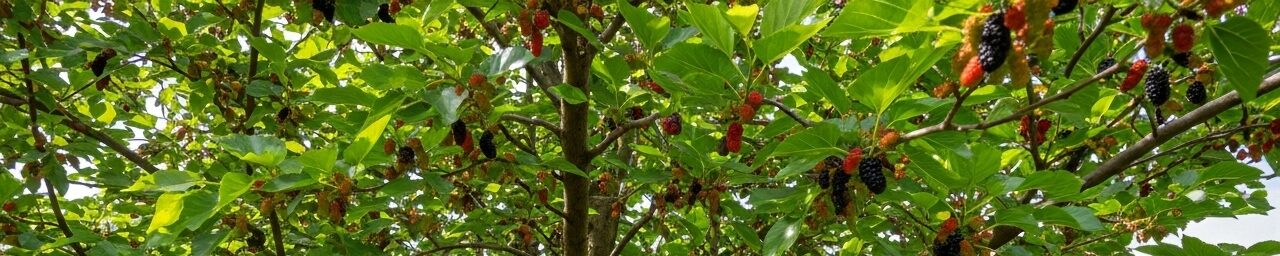
To understand mulberry leaf tea, you first have to understand silk — because the two are completely inseparable. The mulberry tree, specifically Morus alba (white mulberry), was the backbone of ancient China’s silk industry. Silkworm farmers cultivated enormous groves of these trees, harvesting the leaves by the basketful to feed their precious silkworms. It was the original agricultural monoculture, and it made China extraordinarily wealthy for centuries.
But here’s the thing about farmers: they’re observant people. Somewhere along the way — during the Han Dynasty, which ran from 206 BC to 220 AD — the people tending those mulberry groves started noticing that the leaves themselves had useful properties. Maybe someone brewed a simple tea when they were feeling feverish and found it helped. Maybe a healer started experimenting deliberately. However it happened, the medicinal reputation of the mulberry leaf was born right alongside the silk trade, rooted in the same fields, the same trees, the same daily labor.
I find this connection genuinely moving. The same leaf that clothed emperors and funded the Silk Road was also quietly being tucked into medicine bundles and boiled into healing drinks by ordinary people. There’s something beautifully egalitarian about that.
Sang Ye: How Ancient Chinese Medicine Wrote It Into the Record Books
The formal documentation of mulberry leaf as medicine goes back to one of the oldest and most important texts in Traditional Chinese Medicine: the Shennong Ben Cao Jing, or the Divine Farmer’s Classic of Materia Medica. Compiled around 200 AD, this remarkable text catalogued hundreds of medicinal substances — and mulberry leaf, known as Sang Ye (桑葉), earned its place among them.
According to the classical TCM framework, Sang Ye was used primarily for three purposes: cooling the lungs, clearing heat from the liver, and treating coughs and respiratory irritation. If you’re reading that through a modern lens and thinking it sounds oddly specific, you’re not wrong — and here’s where it gets really interesting. Contemporary research has now confirmed genuine anti-inflammatory properties in mulberry leaves, properties that are entirely consistent with those ancient therapeutic categories. The old healers didn’t have clinical trials or molecular biology. They had careful observation over generations, and they got remarkably close to the truth.
I’ll be honest — when I first read that, I got a little chills. Two thousand years of empirical folk wisdom, and modern science keeps finding reasons to nod along. That’s not nothing. That’s actually extraordinary.
A Cup Crosses the Sea: Mulberry Leaf Arrives in Japan
China didn’t keep mulberry leaf medicine to itself for long. Around the 7th century AD, Japanese monks traveling to and from China began bringing back knowledge of herbal preparations, including mulberry leaf. These practices were absorbed into what would become kampo — the Japanese adaptation of Chinese herbal medicine that is still formally practiced and even partially covered by health insurance in Japan today. (Honestly, Japan, I respect you so much for that.)
What’s particularly striking is what Japanese practitioners used mulberry leaf for: blood sugar regulation. Centuries before the word “diabetes” existed in any language they spoke, and centuries before the mechanism of insulin was understood by anyone on earth, kampo practitioners were prescribing mulberry leaf preparations to people with what we would now recognize as diabetic symptoms. It was only in recent decades that modern pharmacology identified the compounds — particularly 1-deoxynojirimycin, or DNJ — that actually do inhibit certain sugar-absorption enzymes in the gut. The monks were right. They just didn’t know exactly why yet.
This is the part of the story that really stops me in my tracks every time I think about it. Imagine being a patient in 8th-century Japan, drinking this tea on your healer’s advice, having no idea you’re participating in a tradition that would eventually be validated by peer-reviewed science over a thousand years later. History is wild.
Harvesting and Storing Fresh Mulberry Leaves Before They Oxidize
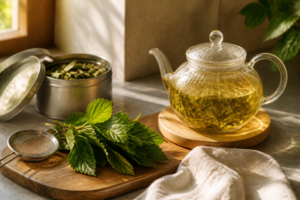
If you’re going to make mulberry leaf tea from your own trees, timing the harvest and keeping those leaves fresh until you’re ready to dry them is critical—oxidation kills the delicate compounds that make the tea worth brewing in the first place. I learned this the hard way after leaving a bucket of leaves in the sun for two hours and watching the color (and half the flavor) disappear.
What works
- Loose-leaf format lets you inspect exactly what you’re getting—no hidden stems, dust, or broken fragments like you sometimes find in tea bags.
- The leaf pieces dry more evenly than whole leaves, which means faster rehydration and more consistent flavor cup to cup when you brew.
- Starting with a quality commercial loose-leaf tea gave me a benchmark for what my own homegrown harvest should taste like, which actually helped me figure out my drying temperature was too high.
What doesn’t
- You need an infuser basket or strainer—loose leaf in a mug directly is a sediment mess and tastes gritty if you drink to the bottom.
- It’s more expensive than bagged tea, and if your storage canister isn’t airtight, the leaves go stale or pick up fridge odors within a week.
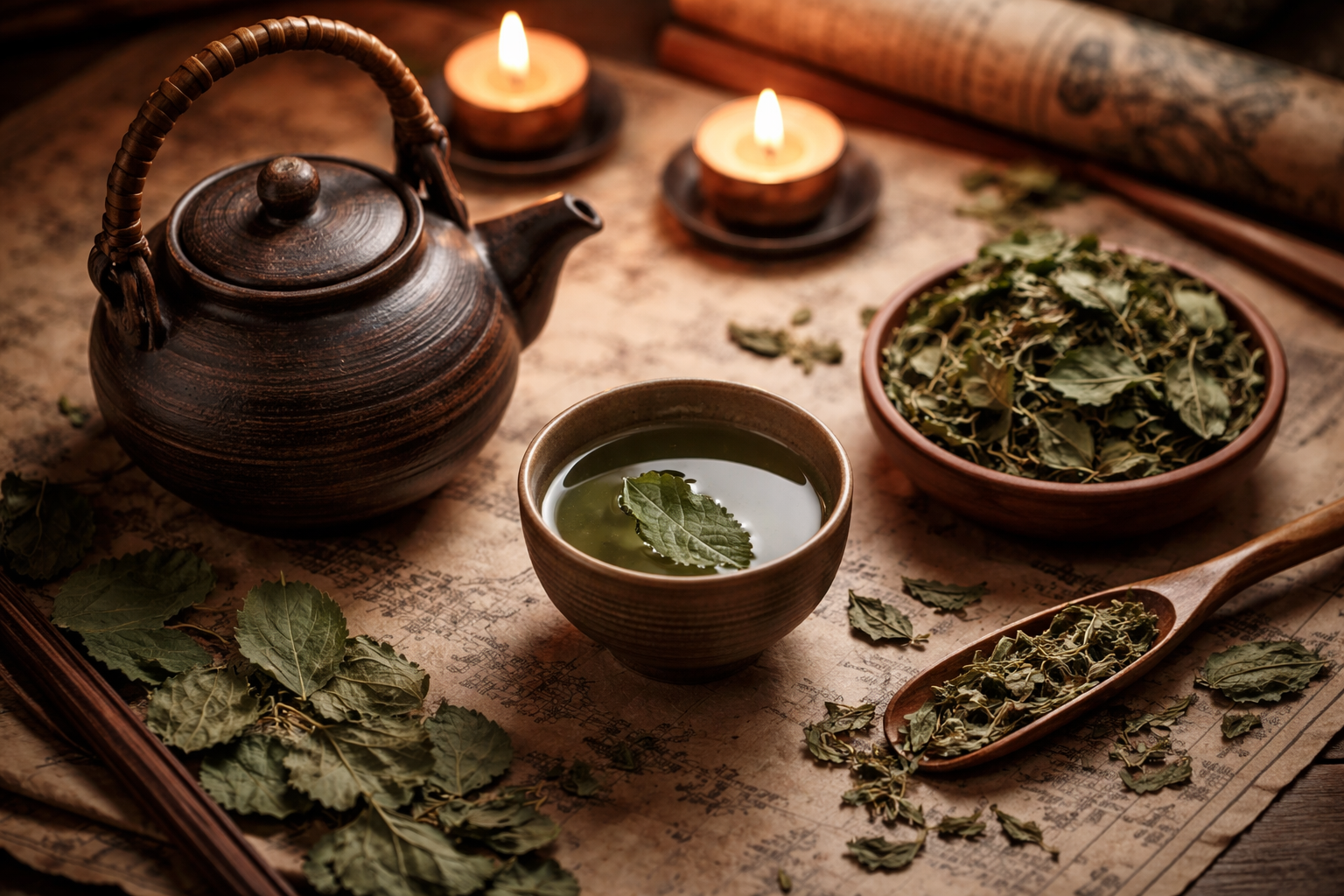
I almost gave up on making my own tea after my first batch tasted flat compared to what I was brewing from store-bought leaves, then realized I was comparing fresh-dried to six-month-old oxidized commercial stock. TooGet Natural Mulberry Leaf Loose Tea became my control sample, and it completely reset my expectations.
This post contains affiliate links. As an Amazon Associate, I earn from qualifying purchases at no extra cost to you.