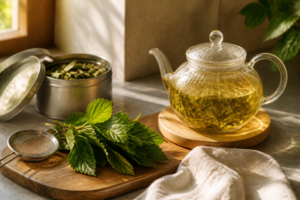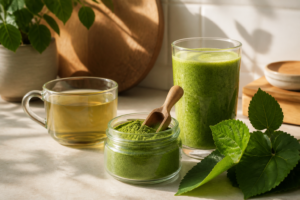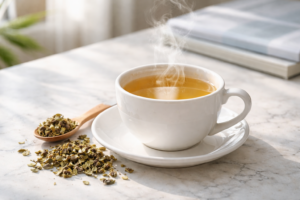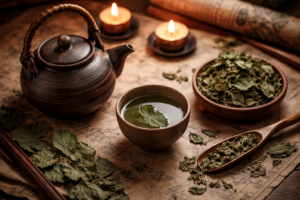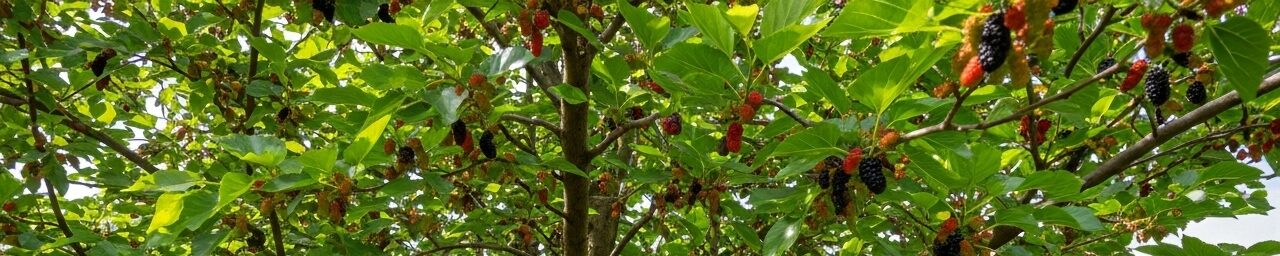
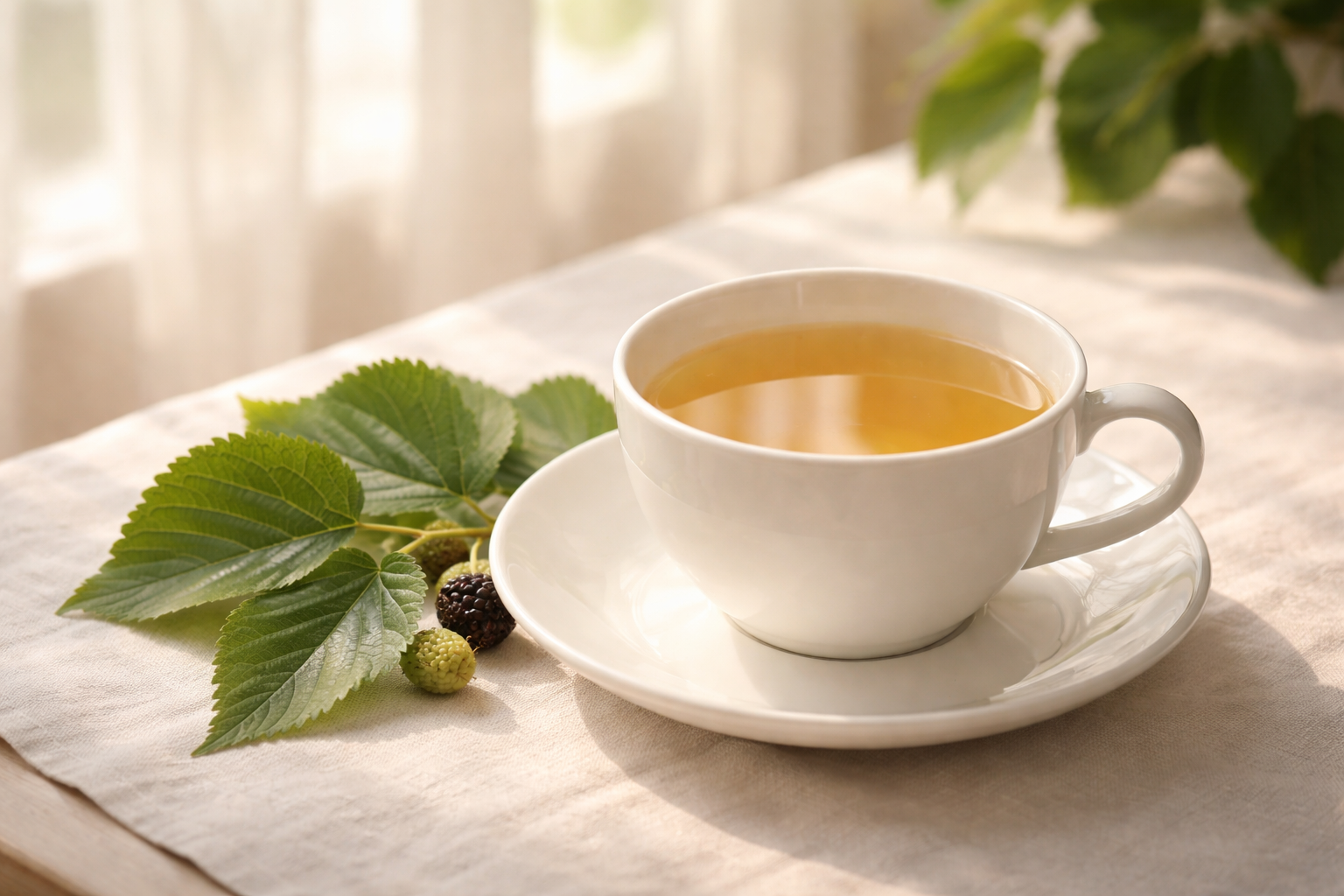
I’m elbow-deep in my drying racks on a Wednesday afternoon in late August, turning over last week’s leaf harvest, when the question hits me sideways: a friend texts asking whether mulberry leaf tea is okay to drink now that she’s six months along. I set down the leaves I’m sorting and realize I don’t have a quick answer — which bothers me, because I’ve been growing mulberries for over a decade and I should. What follows is what I learned after digging into the actual evidence, rather than relying on the confident claims you see scattered across wellness blogs.
The answer turned out to be neither straightforward nor dismissible. You deserve to understand what the data actually shows — the gaps in it, the real concerns, and what that means for your own choice — rather than getting a one-liner in either direction. Let me walk you through what I found.
What the Research Actually Says About Mulberry Tea Pregnancy Safety
Here’s the uncomfortable truth: solid research on herbal teas during pregnancy is sparse, and mulberry leaf sits right in that gap. The National Center for Complementary and Integrative Health (NCCIH) — consistently one of my most reliable references — explicitly notes that safety data on white mulberry leaf during pregnancy and lactation is inadequate, and they recommend steering clear out of caution. That phrasing matters: this isn’t a warning based on documented harm. It’s an acknowledgment that we simply don’t have enough information yet. The gap itself is the concern.
WebMD takes a similar line. They classify white mulberry as possibly safe when used by nonpregnant adults in normal amounts, but they specifically flag pregnancy as a situation where avoidance makes sense — not because research has proven it harmful, but because the evidence to prove it safe simply doesn’t exist. That’s a crucial distinction to hold onto. “Unknown safety” isn’t identical to “proven unsafe.” Still, when you’re pregnant, that unknown territory carries consequences that matter differently than they do in ordinary circumstances.
What keeps nagging at me is this: mulberry leaf has fed and flavored food across Asia for centuries, with no major historical record of problems in small culinary quantities. That’s worth noting. But — and it’s a substantial but — brewing concentrated leaf tea as a supplement, consuming it daily in large amounts, bears almost no resemblance to eating a pinch of leaves in a soup or sauce. Dosage and concentration shift the entire question.
Why Blood Glucose Effects Can’t Be Overlooked
The research I found most persuasive centered on mulberry leaf’s documented ability to move blood glucose readings. That’s actually why so many people seek it out — and why it matters during pregnancy. The leaf contains 1-deoxynojirimycin (DNJ) and related compounds that genuinely do slow sugar absorption in the digestive tract.
Pregnancy flips blood sugar management into an extraordinarily sensitive state. Your body and your provider’s attention are both calibrated to monitor and manage glucose levels with precision — particularly as gestational diabetes screening and prevention happen. Introducing something that actively modulates blood sugar without your healthcare team’s knowledge or sign-off means you’re altering a variable in a system that’s already being carefully regulated. The effect itself might be benign or even favorable in some contexts. What matters is that it’s an effect, one that could ripple through a system that’s already under close watch.
That connection straightened out a lot of my thinking on this question.
What You Actually Need to Know (Practical, Not Panic)
So what’s the takeaway here? Here’s what I shared with my sister-in-law, and what I’d say to anyone pregnant who loves mulberry tea the way I do:
- Sipping a casual cup of lightly-steeped mulberry leaf tea carries no established risk profile, and traditional culinary doses have a centuries-long safety history behind them.
- Daily supplemental use or concentrated, high-volume consumption sits in a completely different risk category — that’s where genuine caution needs to apply.
- The missing safety research isn’t trivial. We can’t say harm has happened, but we also can’t say it won’t; in pregnancy, that uncertainty matters more than it usually does.
- Mulberry leaf’s capacity to shift blood glucose numbers is both real and documented — something worth bringing up directly with your healthcare provider.
- Your midwife, OB, or a licensed herbalist trained in prenatal care is who you want making this call for your individual circumstances, not the internet.
My sister-in-law ended up pausing her mulberry tea routine through the first three months and brought it up with her midwife at a checkup. Her midwife was glad she asked, reinforced the cautious approach, and said they could revisit the question postpartum. To my ear, that was exactly how it should have gone.
The Bagged Tea I Keep on Hand to Compare Against My Own Drying Work
Growing mulberries for your own dried tea teaches you fast that leaf quality swings dramatically depending on the year, precipitation patterns, harvest timing, and where on the tree you’re cutting from. Keeping a commercially-prepared reference on the shelf gives you a taste standard to measure your own production against — so you can tell when your batch tastes underwhelming whether it’s a picking decision, a drying mistake, or just variety selection.
Where these shine
- The leaves themselves remain visibly whole and recognizable, not ground into powder — meaning the commercial drying method was careful enough that you can recreate it at home without industrial machinery.
- Flavor consistency across different boxes of the same product gives you a dependable benchmark, so when your homegrown tea tastes thinner or grassier, you immediately know it’s a harvest or storage variable, not your cultivar.
- Brewing produces almost zero grit or sediment in the cup, telling you the leaves were cleaned and processed to strip out stem fragments and debris — useful information for refining your own screening step.
Where they fall short
- The cost per serving climbs fast relative to homegrown supply, making these impractical as your routine tea source once you have mature trees producing regularly.
- No cultivar or origin information appears on the packaging, so you can’t use the taste profile to figure out which mulberry variety might thrive in your growing zone.
I almost wrote these off as unnecessary until I brewed my own dried leaves side-by-side and realized how much oxidation I’d introduced by air-drying on screens in my garage. Bravo Tea Absolute White Mulberry Leaf Tea Bags became my reality check for what I should be aiming for.
Sources and Citations
The health claims discussed on this page come from published research. Every study below has been checked against its PubMed or PubMed Central record, and each entry links to the source so you can read it yourself.
- Yasumoto K et al. (2022) — “Safety evaluation of a beverage containing mulberry leaf extract.” Biosci Biotechnol Biochem, 86(4), 519-527. (randomised controlled trial) PubMed 35089999 →
Randomised, double-blind, placebo-controlled safety trial: 48 healthy adults drank a green tea containing 550 mg of mulberry leaf extract three times a day for 4 weeks. No adverse reactions occurred and there was no difference in adverse events versus the control beverage. - Li Y et al. (2018) — “Safety evaluation of mulberry leaf extract: Acute, subacute toxicity and genotoxicity studies.” Regul Toxicol Pharmacol, 95, 220-226. PubMed 29530616 →
Animal toxicology, not a human trial. Rats tolerated a single 15 g/kg dose with no deaths and 7.5 g/kg daily with no adverse findings, and the extract showed no mutagenic activity. Included because it is the source of most published safety margins for mulberry leaf extract.
Note on what is missing: a search of PubMed returns no clinical trials of mulberry leaf or mulberry leaf extract in pregnant or breastfeeding people. The safety studies above were conducted in non-pregnant adults and in animals, so they cannot be used to establish safety in pregnancy. Absence of evidence is not evidence of safety. Consult your healthcare provider.
Frequently Asked Questions
Is mulberry leaf tea safe while breastfeeding?
The NCCIH notes that safety data on white mulberry leaf during pregnancy and lactation is inadequate, and it recommends steering clear out of caution. I’m a backyard grower, not a physician, so I’d defer to your healthcare provider here. The absence of data isn’t documented harm, but it isn’t reassurance either.
Why does mulberry leaf tea affect blood sugar?
Mulberry leaf contains 1-deoxynojirimycin (DNJ) and related compounds that genuinely slow sugar absorption in the digestive tract, which is why many people seek it out. In pregnancy, glucose is already monitored closely, particularly around gestational diabetes screening, so introducing something that modulates blood sugar is worth raising directly with your healthcare team.
Is cooking with mulberry leaves the same as drinking concentrated tea?
No, and the difference matters. Mulberry leaf has fed and flavored food across Asia for centuries with no major historical record of problems in small culinary quantities. Brewing concentrated leaf tea as a daily supplement, consumed in large amounts, bears almost no resemblance to a pinch of leaves in a soup or sauce.
Who should I ask about drinking mulberry tea during pregnancy?
Your midwife, OB, or a licensed herbalist trained in prenatal care is who you want making this call for your circumstances, not the internet and not me. My sister-in-law paused her mulberry tea through the first three months and raised it at a checkup; her midwife was glad she asked and suggested revisiting postpartum.
Keep Reading
About This Article
Written by Ruth Nakamura. Ruth Nakamura is a backyard orchardist in the Pacific Northwest who has grown mulberries for fifteen years, cultivating twelve different varieties in her own backyard. Not a horticulturist by formal training - she shares what she has learned through hands-on growing, workshops, and connecting with nurseries and growers across the country. More about this site.
Scope and limits. Ruth is a backyard orchardist without formal horticultural training. Growing conditions vary enormously by region, so confirm variety, timing, and pest guidance with your local extension service.
Verify this against a primary source
Specifics change, and your situation may differ from the one described here. These are the authorities worth checking directly:
- USDA Plant Hardiness Zone Map — zone verification for your location
- Oregon State University Extension — fruit growing and pruning research
- USDA PLANTS Database — species range and identification