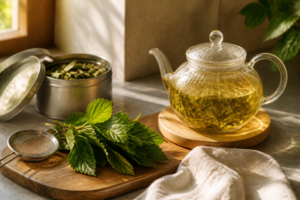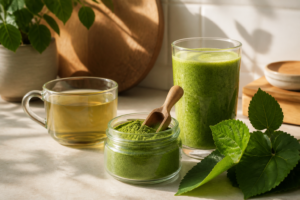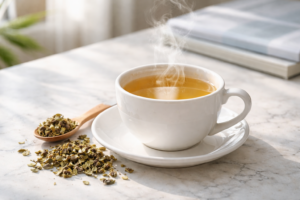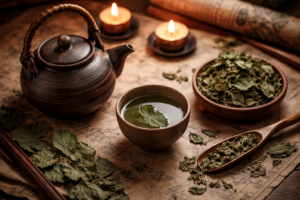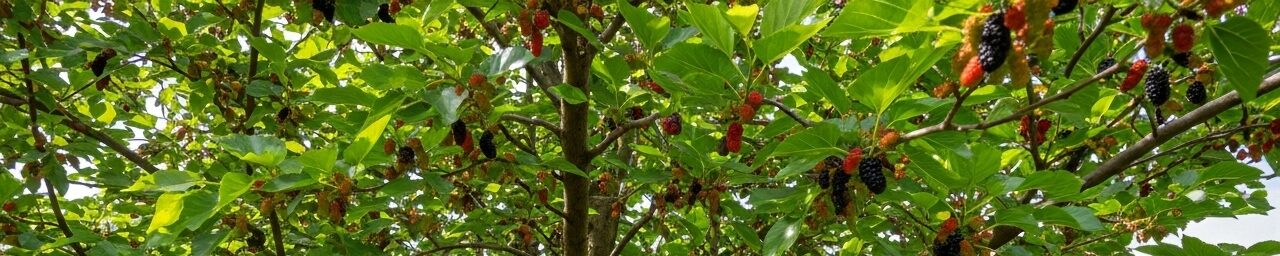
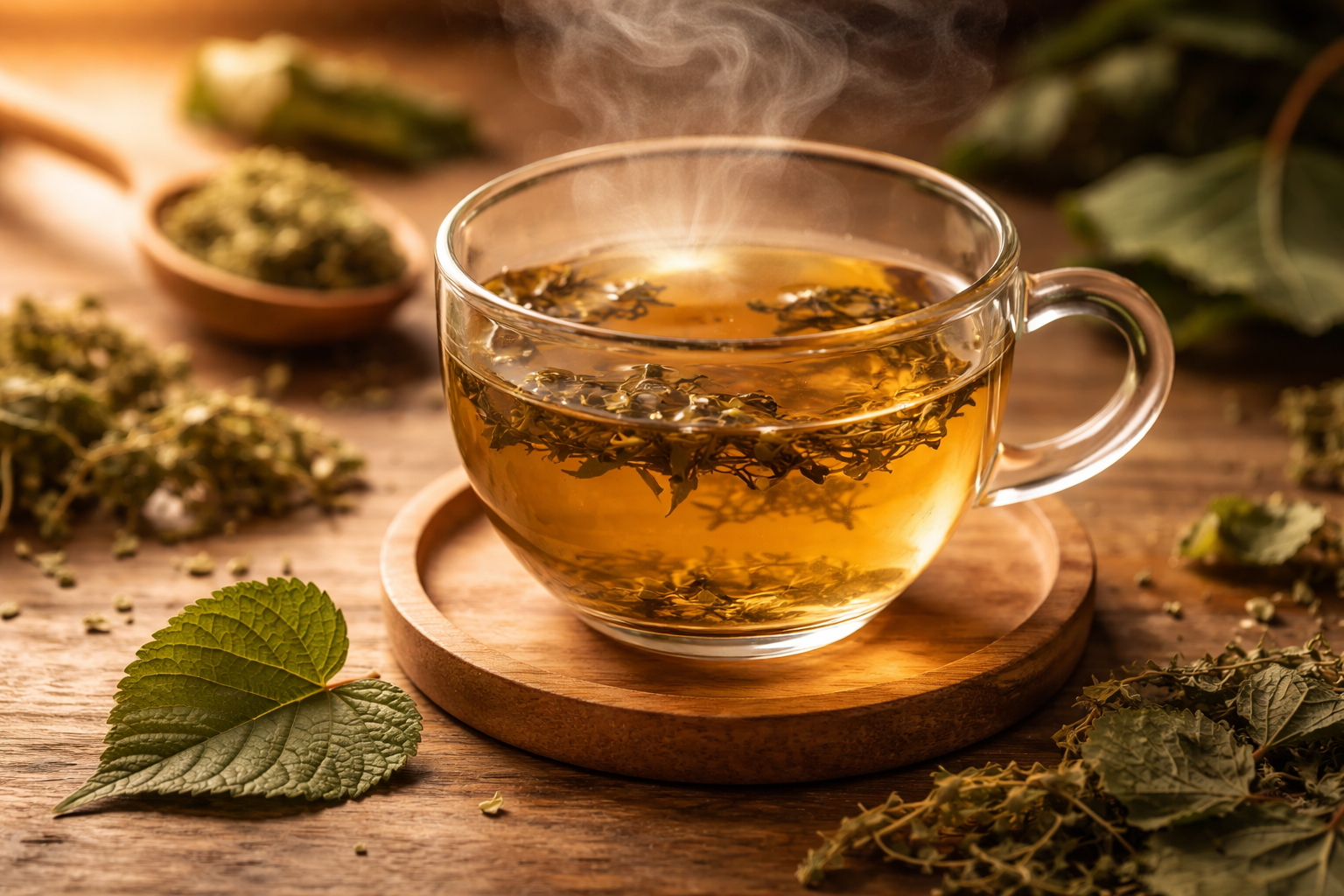
Mulberries offer wonderful gardening possibilities in backyard settings, whether you’re interested in fresh fruit or other uses. Different cultivars—like Black Beauty, Chinook, and Illini Star—each bring unique flavor profiles and growing characteristics to a home garden. What makes this plant particularly rewarding is its versatility, especially when it comes to preservation and processing. Mulberry leaves, in particular, have emerged as a fascinating area to explore, particularly for brewing mulberry leaf tea and other applications.
As I delved deeper into preservation methods, I found myself gravitating towards fermentation—wines, vinegars, and lacto-fermented preserves that seem to last forever and develop flavors that surprise me each time. But then something clicked for me while I was hanging dried mulberry leaves above my fruit-processing counter. I noticed that these same leaves were being highlighted in peer-reviewed studies regarding heart health and cholesterol levels. It dawned on me that here I was, growing and harvesting these leaves all along, and I hadn’t even considered their potential beyond composting or tossing them to the chickens. So, let’s explore what the research actually says about mulberry leaf tea and its connection to our cardiovascular system, shall we?
First and foremost, I want to be clear: I’m not a medical expert. I’ve learned everything I know about growing and preserving mulberries through years of trial and error, reading, and talking with fellow gardeners and nursery professionals. My dad takes his cholesterol medication, and that’s a conversation best left to him and his doctors—far away from my teacup. What truly surprised me while reading the research wasn’t just the existence of studies on mulberry leaves, but the solid methodology behind them. I want to share what I’ve found with you, so you can make informed decisions about whether to add mulberry leaf tea to your routine.
What the Research Actually Shows About Mulberry Tea and Cholesterol
Now, let’s dive into the research. It’s essential to approach this with a healthy dose of skepticism. Just because something is written in a study doesn’t automatically mean it’s a cure-all. However, the body of research surrounding mulberry leaves is impressively rigorous. One study that made me do a double take was a double-blind, placebo-controlled clinical trial involving individuals with existing coronary heart disease. They examined whether mulberry leaf extract could actually reverse atherosclerotic lesions, which means could it shrink the plaque buildup in arteries? The researchers identified a naturally occurring compound in mulberry leaves called DNJ (1-deoxynojirimycin) as the active player here. I had to read that part a few times—it was genuinely focused on heart patients and conducted with a solid experimental design.
A study followed 23 adults with slightly elevated blood lipids who consumed three 280 mg mulberry leaf tablets three times daily over 12 weeks. The results were noteworthy: LDL (the “bad” cholesterol) decreased by 5.6%, while HDL (the “good” cholesterol) rose by 19.7%. The rise in HDL is significant, as raising those levels is notoriously tricky. A 5.6% drop in LDL paired with a nearly 20% increase in HDL indicates a meaningful shift in cholesterol balance from a dietary change.
A systematic review of cardiometabolic outcomes further corroborated these findings. When participants consumed 6 grams of mulberry leaf tea daily for 12 weeks, total cholesterol decreased by 9.8%, and triglycerides—a type of fat that contributes to heart risk—declined by 14.9%. A drop in triglycerides that significant from simply brewing and drinking tea was impressive to me.
So, what’s going on in our bodies? The polyphenols in mulberry leaves—similar to those found in blueberries and green tea—seem to inhibit cholesterol absorption during digestion while simultaneously aiding lipid metabolism. Essentially, they help your body process fats more efficiently, preventing them from accumulating in arterial walls.
What Remains Unclear (And Why Transparency Requires Saying So)
While the findings are encouraging, it’s important to acknowledge the limitations of the research:
- Study sizes tend to be small. Twenty-three participants provide intriguing insights, but we need larger studies involving hundreds of individuals to draw broad conclusions.
- The dosages and forms used across different studies vary significantly—some use extracted concentrates, while others brew the whole dried leaves. The benefits seen in concentrated forms may not translate directly when brewing loose-leaf tea.
- We don’t yet know how long mulberry leaf’s effects last beyond the 12-week mark.
- Mulberry leaves might interact with diabetes medications, as they can also lower blood glucose levels. If you’re on prescribed medications, it’s essential to consult your doctor before adding this to your routine.
- No research currently suggests that mulberry tea can serve as a standalone treatment or substitute for prescribed medications. It might be a helpful addition, but that’s something to discuss with your healthcare provider.
I believe in sharing both the promising aspects of mulberry leaves and the limitations of what we understand. The wellness industry often oversells unproven remedies, and while there’s legitimate research supporting the cardiovascular benefits of mulberry leaves, it’s crucial to remember that tea isn’t a miracle cure, nor does it replace necessary medications.
The Food Dehydrator That Changed How I Preserve Mulberry Leaves
Preserving mulberries and their leaves is an art form, especially when aiming to enjoy them long after the harvest. Drying leaves for tea becomes a high-value use of plant material, but managing moisture—particularly in humid climates—can present challenges including mold risk, nutrient loss, and prolonged drying times with air-drying methods. A food dehydrator can help preserve leaves at their peak by controlling temperature and moisture removal reliably.
Where it delivers
- Leaves dry completely in 4–6 hours on a low dehydrator setting, compared to weeks required for air-drying. Low-temperature drying helps preserve chlorophyll and polyphenols at their most concentrated levels.
- The controlled temperature prevents the scorching and discoloration that plagued my earlier attempts at oven-drying. The finished product remains a vibrant green and has a clean taste, rather than a roasted one.
- With multiple trays, I can dry a massive harvest of leaves all at once when summer brings that explosive flush of growth—no more worrying about drying space!
Where it falls short
- This dehydrator takes up permanent counter space, so it’s not the most compact tool. You’ll want it accessible for use throughout the growing season.
- Your first attempts may lead to either over-dried, brittle leaves or slightly moist ones as you learn the ideal timing for different mulberry varieties and the thickness of the leaves. There’s definitely a learning curve, and it may cost you a few harvests along the way.
Drying mulberry leaves to the right crispness takes practice—the goal is leaves that crumble easily without becoming too brittle. Lowering the temperature slightly and checking at the 3-hour mark helps achieve the right texture.
Sources and Citations
The health claims discussed on this page come from published research. Every study below has been checked against its PubMed or PubMed Central record, and each entry links to the source so you can read it yourself.
- Kojima Y et al. (2010) — “Effects of mulberry leaf extract rich in 1-deoxynojirimycin on blood lipid profiles in humans.” J Clin Biochem Nutr, 47(2), 155-61. PMC2935155 →
Open-label, single-group study in only 10 people with triglycerides of 200 mg/dL or higher, taking 12 mg of DNJ-rich extract three times daily for 12 weeks. Triglycerides decreased modestly. There was no control group, so treat this as preliminary. - Phimarn W et al. (2017) — “A meta-analysis of efficacy of Morus alba Linn. to improve blood glucose and lipid profile.” Eur J Nutr, 56(4), 1509-1521. (meta-analysis) PubMed 26972284 →
Meta-analysis of 13 randomised trials. Morus alba significantly lowered post-meal glucose at 30, 60 and 90 minutes, but showed no significant effect on fasting glucose, HbA1c, or on any cholesterol or triglyceride measure. - Chen X et al. (2022) — “Impact of mulberry consumption on cardiometabolic risk factors: A systematic review and meta-analysis of randomized-controlled trials.” J Clin Pharm Ther, 47(12), 1982-1993. (meta-analysis) PubMed 36509962 →
Meta-analysis of 12 randomised trials. Mulberry consumption lowered HbA1c, total cholesterol (-13.1 mg/dL), LDL (-8.8 mg/dL), triglycerides (-19.7 mg/dL) and CRP. Note this disagrees with the Phimarn meta-analysis on lipids. - Parklak W et al. (2024) — “Nutraceutical Properties of Thai Mulberry (Morus alba L.) and Their Effects on Metabolic and Cardiovascular Risk Factors in Individuals with Obesity: A Randomized, Single-Blind Crossover Trial.” Nutrients, 16(24). (randomised controlled trial) PMC11678609 →
Randomised single-blind crossover pilot in 12 adults with obesity drinking 100 g of a concentrated mulberry drink daily for 6 weeks. Blood pressure, triglycerides and CRP improved, but body composition did not change.
Note: study results are not guaranteed for individual users. Dose, preparation method, and individual physiology all affect outcomes, and most of these trials are small. Consult your healthcare provider before making changes to your treatment plan.
Frequently Asked Questions
Can mulberry leaf tea replace my cholesterol medication?
No. No research currently suggests mulberry tea can serve as a standalone treatment or a substitute for prescribed medications. It might be a helpful addition, but that is a conversation for you and your healthcare provider. My own dad takes cholesterol medication, and I keep that discussion far away from my teacup. I’m a backyard grower, not a physician.
How much mulberry leaf tea did the studies use daily?
In the systematic review of cardiometabolic outcomes, participants consumed 6 grams of mulberry leaf tea daily for 12 weeks. Total cholesterol decreased by 9.8% and triglycerides declined by 14.9%. A separate trial used tablets rather than brewed tea, so the dosage forms across studies vary quite a bit and results aren’t directly comparable.
Is mulberry leaf tea safe with diabetes medications?
Mulberry leaves might interact with diabetes medications, since they can lower blood glucose levels. If you’re taking prescribed medications, it’s essential to consult your doctor before adding mulberry leaf tea to your routine. This is a question for your healthcare provider rather than a gardening resource.
How long should I dehydrate mulberry leaves for tea?
Leaves dry completely in 4–6 hours on a low dehydrator setting, instead of the weeks air-drying requires. Getting the right crispness takes adjustment—too high a temperature can make leaves too brittle to crumble properly. Lowering the temperature slightly and checking at the 3-hour mark helps achieve better results.
Keep Reading
About This Article

Written by Ruth Nakamura. Ruth Nakamura is a backyard orchardist in the Pacific Northwest who has grown mulberries for fifteen years, cultivating twelve different varieties in her own backyard. Not a horticulturist by formal training - she shares what she has learned through hands-on growing, workshops, and connecting with nurseries and growers across the country. More about this site.
Scope and limits. Ruth is a backyard orchardist without formal horticultural training. Growing conditions vary enormously by region, so confirm variety, timing, and pest guidance with your local extension service.
Verify this against a primary source
Specifics change, and your situation may differ from the one described here. These are the authorities worth checking directly:
- USDA Plant Hardiness Zone Map — zone verification for your location
- Oregon State University Extension — fruit growing and pruning research
- USDA PLANTS Database — species range and identification