
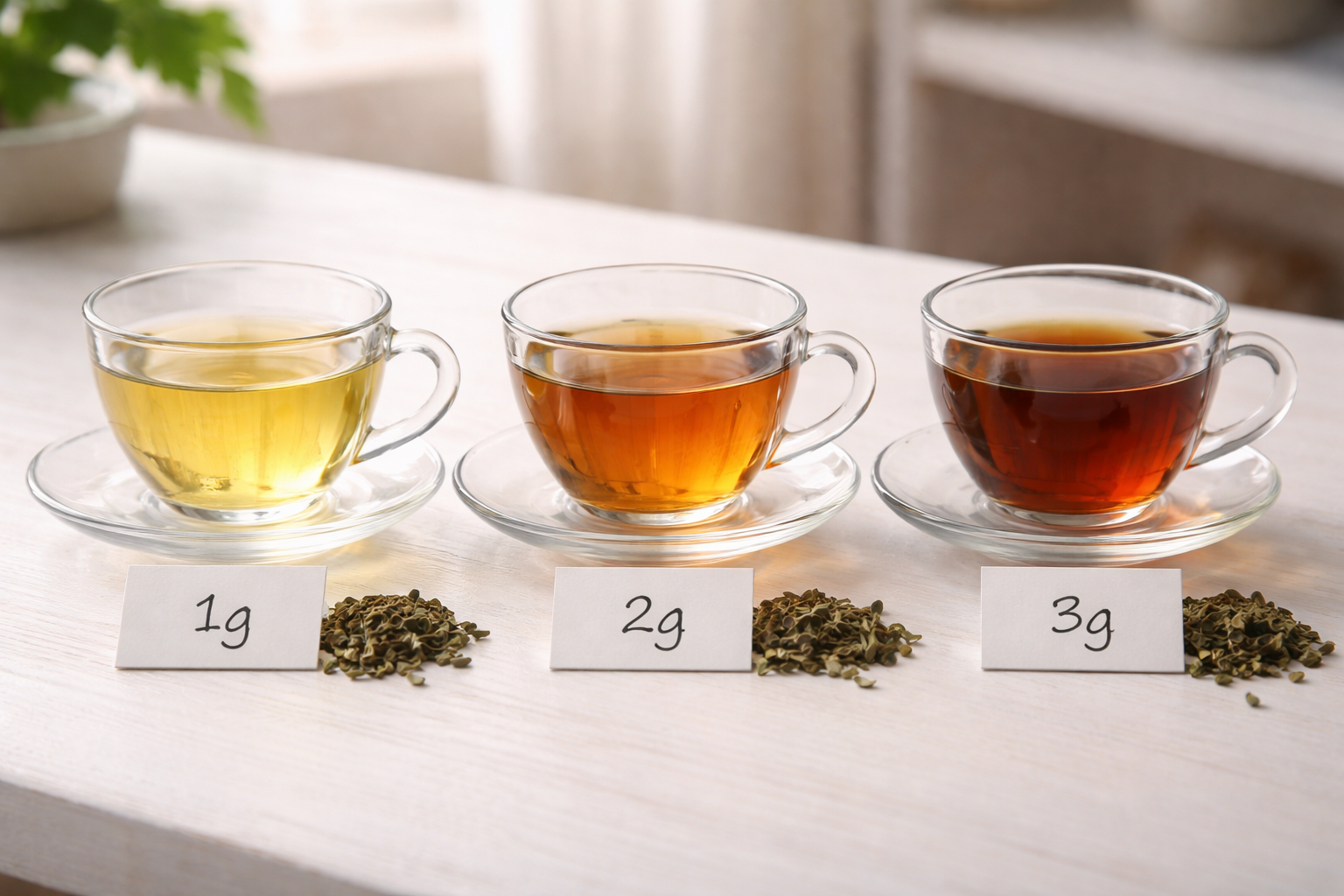
I still remember sitting at my kitchen table at 11pm, surrounded by printed journal abstracts and cold tea, absolutely determined to figure out the right mulberry tea dosage before I poured myself one more cup. My doctor had mentioned that mulberry leaf tea might help support healthier blood sugar levels, and — being the enthusiastic overresearcher that I am — I immediately went full detective mode. Sound familiar? If you’ve landed here, you’re probably asking the same question I was: how much mulberry leaf tea is actually safe to drink, and how much do you actually need? Good news: I did the digging so you don’t have to.
This post contains affiliate links. As an Amazon Associate I earn from qualifying purchases at no extra cost to you.
Why Mulberry Tea Dosage Actually Matters
Here’s the thing about mulberry leaf tea that surprised me most when I started researching: this isn’t just a gentle herbal tisane with no real activity in the body. Mulberry leaves contain compounds — most notably 1-deoxynojirimycin (DNJ) — that can meaningfully affect how your body processes carbohydrates and manages blood sugar. That’s exciting! But it also means that how much you drink matters in a way that, say, chamomile tea really doesn’t.
Drinking too little might mean you never experience the benefits you’re hoping for. Drinking too much — especially if you’re on certain medications — could create problems you weren’t expecting. So let’s treat this like the real, thoughtful question it is and walk through what the research actually says.
The Science-Backed Mulberry Tea Dosage Range
After reading every clinical study I could track down, here’s what the evidence actually points to for safe, effective mulberry leaf tea consumption.
The General Safe Range: 1 to 3 Cups Per Day
Clinical studies investigating the health effects of mulberry leaf tea have most commonly used between 1 and 3 cups per day, with each cup being approximately 250ml of standard-strength tea. This range appears consistently across the research and has shown a good safety profile in study participants. So if you’re starting out and wondering where to land, somewhere in that 1-to-3-cup window is a reasonable, evidence-informed target.
I personally started at one cup per day with my evening meal and worked up from there once I knew how my body responded. (Spoiler: I felt great. No drama. Very anticlimactic, in the best possible way.)
The Supplement-to-Tea Equivalency
Some of the clinical research has used standardized extracts rather than brewed tea, and understanding the equivalency is helpful. Trials have studied doses of 280mg of mulberry leaf extract taken three times daily — and this amount is roughly equivalent to about 2 cups of moderately steeped mulberry leaf tea per serving. That gives you a useful benchmark: if you’re brewing a moderate-strength cup (not a super light steep, not a very concentrated one), you’re likely in a sensible therapeutic range at 1 to 3 cups per day.
How Long Is It Safe to Keep Drinking It?
The National Center for Complementary and Integrative Health (NCCIH) notes that white mulberry leaf is generally considered safe for short-term use of up to 3 months in standard tea amounts. That’s reassuring and it’s worth knowing, but it also means that if you’re planning to make mulberry leaf tea a permanent daily ritual (like I have!), checking in with your healthcare provider is a genuinely smart move — not just a legal disclaimer I’m throwing in to cover myself.
Who Should Be Extra Careful — And Why
I want to pause here and be really direct with you, because I care about the people reading this blog and I don’t want anyone to have a bad experience.
If you are currently taking medication for diabetes or blood sugar management, please talk to your doctor before making mulberry leaf tea a regular part of your routine. The blood glucose-lowering effect of mulberry leaf is one of the things that makes it so interesting — but that same effect can interact with diabetes medications and potentially cause blood sugar to drop too low. This isn’t me being overly cautious. This is real pharmacology that deserves real attention.
Beyond diabetes medications, here are a few other situations where a conversation with your doctor first is the right call:
- You are pregnant or breastfeeding
- You have a known mulberry allergy (especially if you’re also allergic to figs or latex)
- You are taking any medications that affect blood sugar or blood pressure
- You have a liver condition (though evidence of concern here is limited, caution is wise)
Okay, I’ll step off my soapbox now — but only because I really mean it, not because I’ve run out of things to say about it.
How to Brew Mulberry Leaf Tea for Best Results
Getting the dosage right also means brewing the tea correctly. A super weak cup brewed for 30 seconds is a very different thing from a deeply steeped cup, and that difference matters when you’re trying to get consistent results.
Step-by-Step Brewing Guide
- Water temperature: Aim for around 85-90°C (185-194°F). Boiling water can damage some of the delicate compounds in the leaf. A variable temperature kettle makes this genuinely effortless.
- Amount of leaf: Use approximately 1 heaped teaspoon of loose leaf tea or 1 tea bag per 250ml cup.
- Steep time: 3 to 5 minutes for a moderate-strength brew. Closer to 5 minutes will give you a stronger, more active cup.
- When to drink it: Most clinical studies gave mulberry tea with or just before meals, which makes sense given its effect on carbohydrate digestion. Try having your cup 5 to 10 minutes before eating.
- Start low, go slow: Begin with one cup per day for the first week. If all feels well, add a second cup. This gives your body time to adjust and helps you notice any changes.
Products I Use and Recommend
I’m often asked what I actually use in my own mulberry tea practice, so here’s my honest lineup. These are things sitting on my actual kitchen counter right now.
The Teas
For tea bags, I love Bravo Tea Absolute White Mulberry Leaf Tea Bags — they’re consistent, easy to use, and brew up a lovely cup without any fuss. If you prefer certified organic, FullChea USDA Organic White Mulberry Tea is my go-to recommendation and the one I gifted to my mom when she got curious about mulberry leaf.
For loose leaf, I really enjoy TooGet Natural Mulberry Leaf Loose Tea. Loose leaf gives you a bit more control over your steep strength, which I appreciate now that I’ve got my routine dialed in.
The Brewing Gear
If you’re going the loose leaf route, a good infuser makes all the difference. I use a Stainless Steel Tea Infuser Basket that sits right in my mug — simple, no-fuss, and easy to clean. And for hitting that ideal water temperature without guesswork, I genuinely could not live without my Variable Temperature Electric Kettle. It sounds like a small thing but it genuinely changed how much I enjoy the whole ritual of making tea.
My Recommendation: Start Here and Build from This Foundation
After all my late-night research sessions, all the journal abstracts, and a couple of years of personal experience, here’s where I land on mulberry tea dosage: begin with one 250ml cup of moderately steeped mulberry leaf tea per day, taken before a meal, and work up to two or three cups if you feel well and your goals call for it. Stay within that 1-to-3-cup range that clinical studies have used, keep the NCCIH’s 3-month safety window in mind, and — I cannot say this warmly enough — please loop in your doctor if you’re managing blood sugar with medication.
Mulberry leaf tea is one of those genuinely exciting corners of the herbal world that has real science behind it, not just folklore. Getting your mulberry tea dosage right means you can enjoy it confidently, consistently, and with the best possible chance of experiencing the benefits you’re hoping for. You’ve got this — and honestly, the fact that you’re here doing the research already puts you miles ahead of where I was at 11pm with my cold tea and my stack of printouts.
Drop a comment below and let me know where you’re starting — I’d love to cheer you on!