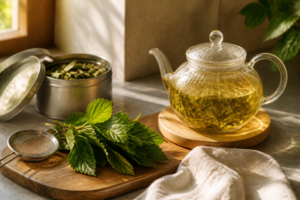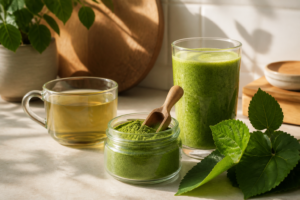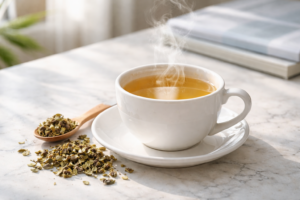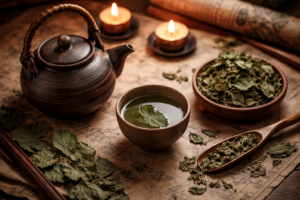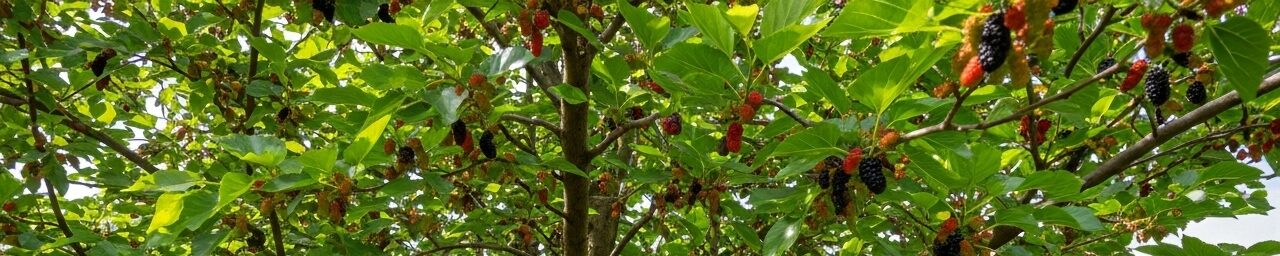
Mulberries are versatile trees suited to backyard cultivation in temperate climates. Many growers work with multiple cultivars—varieties like Black Beauty, Chinook, Illini Star, and Ozark Premier each bring distinct characteristics to a planting. Mulberry cultivation rewards attention and patience, and the learning curve can be steep. My goal is to share practical guides that help you appreciate what mulberries can offer your garden and your kitchen.
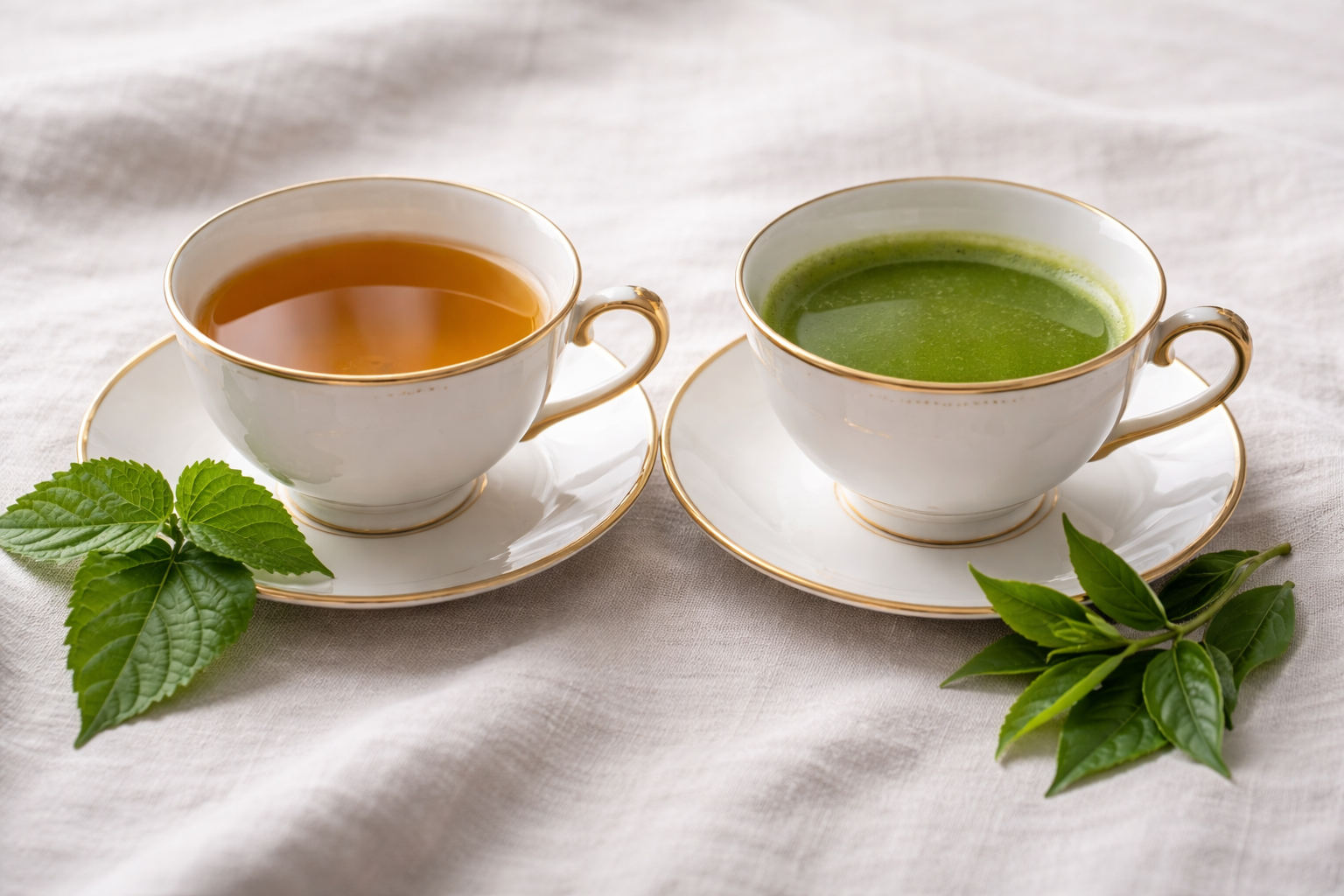
Last March, a wet spell followed by an unusually warm week triggered leaf flush on all my mulberry trees at once—and I found myself standing in my kitchen surrounded by baskets of fresh foliage, staring at a shelf that already held jars of dried green tea leaves from a companion planting experiment. That collision of abundance forced a real question: if I’m going to devote garden space and harvest time to tea leaves, which plant actually deserves the real estate? The answer pulled me down a months-long rabbit hole of reading, brewing, tasting, and note-taking that fundamentally shifted how I think about what grows around my fruit trees. After three full seasons of working with Morus alba and Morus rubra varieties side-by-side with green tea plants, tracking leaf quality, yield, and how each one actually affected my energy and digestion, I’ve gathered enough firsthand evidence to offer you something more useful than the usual internet recycling of supplement-label claims. Everything that follows comes from what my own cups have tasted like, what my own notebooks record, and what the research actually says—filtered through a backyard grower’s perspective and a healthy dose of skepticism.
| Attribute | Mulberry Leaf Tea | Green Tea |
|---|---|---|
| Caffeine content | No caffeine | 25-40 mg per cup |
| Polyphenol antioxidants | Comparable to green tea | Well-established |
| Blood sugar compound | Contains DNJ | Absent |
| Optimal brew temperature | 160–170°F | 160-180°F |
| Evening drinkability | Yes, no sleep impact | Not after 2pm |
| Flavor profile | Understated, faintly sweet | Grassy, herbaceous |
| Brew tolerance | Forgiving of longer steep | Bitter if oversteeped |
My Two-Month Experiment: What I Actually Tracked
Full transparency: I’m not conducting laboratory science here. I’m someone who drinks a lot of tea and keeps detailed records about how it affects me. But I tried to approach it systematically. For 30 consecutive days, I made mulberry leaf tea my morning beverage, and I documented the specifics: how alert I felt an hour in, whether any nervous jitteriness showed up, clarity of mind by mid-morning, sleep quality that night. Then I flipped the switch and gave green tea the same month-long trial with identical observations.
The caffeine sensitivity question mattered to me personally—I’m the sort of person who has one afternoon espresso and spends midnight reorganizing kitchen cupboards. So whether each tea would let me wind down in the evening became a central part of my testing.
What emerged surprised me in a couple of ways.
Nutritional Profile Comparison: What the Evidence Actually Shows
Polyphenol Content: Both Are Genuinely Potent
Walking into this, I assumed green tea’s antioxidant reputation was untouchable. A 2018 analysis in Food Research International, though, revealed something that made me read the abstract three times: mulberry leaf polyphenols demonstrate antioxidant capacity that sits right alongside the catechins present in green tea. Not inferior. Comparable. Either beverage delivers substantial polyphenol content, and both function meaningfully as antioxidants when you drink them regularly. So on the oxidative-stress front, selecting one over the other doesn’t mean sacrificing protection—you’re genuinely getting protective compounds from both.
Blood Sugar Modulation: Where Mulberry Stands Apart
This is the category where mulberry leaf tea delivers something green tea simply cannot replicate. Inside mulberry leaves lives a compound known as 1-deoxynojirimycin—DNJ, shorthand—that doesn’t exist in green tea at all. The mechanism is elegant: DNJ interferes with enzymes responsible for converting carbohydrates into absorbable glucose, which slows down how quickly sugar enters your bloodstream during digestion. If you’re monitoring blood glucose levels, or if you’re just trying to sidestep that energy dip around mid-morning, this represents a tangible advantage mulberry has locked in. When I shifted to drinking mulberry tea alongside my breakfast during the trial, I genuinely felt more stable through 10 and 11am than usual. Placebo effect? Conceivable. But the biochemistry of DNJ is well-documented and legitimate.
Stimulant Content: The Conversation Nobody Prioritizes Enough
A single cup of green tea typically contains somewhere between 25 and 40 milligrams of caffeine—modest by coffee standards, yet substantial enough to create consequences. Mulberry leaf tea contains no caffeine whatsoever. Period. And if you’re someone whose nervous system responds intensely to stimulants (and I am), this distinction becomes transformative. During my weeks with green tea, I found myself setting time boundaries—nothing after 2pm without sacrificing my sleep. During my mulberry tea month, I could steep a warm cup at 8 or 9 in the evening while settling in with a book, with zero anxiety about lying awake at 1am. That unrestricted accessibility to a warm, restorative beverage throughout the day became something I genuinely valued. For anyone navigating pregnancy, supporting a breastfeeding baby, managing stimulant sensitivity, or working to dial back their caffeine consumption while maintaining a soothing tea habit, mulberry leaf deserves serious consideration.
Flavor, Drinking Experience, and What Lab Tests Cannot Quantify
Setting the biochemistry aside for a moment—let’s examine what actually goes into your mouth and how pleasant it is to drink regularly. Green tea carries a recognizable grassy, herbaceous character that I’ve gradually come to enjoy but that required an adjustment period initially. Oversteep it by even 60 seconds or push the water temperature too high, and the flavor pivots sharply toward bitter, making the whole experience less enjoyable. Mulberry leaf tea offers a gentler profile—understated, faintly sweet, minimal fussiness. It forgives a longer steep time. It doesn’t demand the same precision or surveillance while brewing. And on a practical level, when you’re making tea multiple times daily, that forgiveness matters.
Speaking of brewing temperature — this is where having the right tools makes a real difference. Green tea especially needs water that’s around 160-180°F rather than a full boil, or you’ll end up with that harsh bitterness. A Chefman Electric Kettle with Temperature Control can help dial in an exact temperature. Being able to hit that precision feels like a worthwhile upgrade for anyone serious about tea brewing.
For loose leaf brewing, I also rely on a Extra Fine 18/8 Stainless Steel Tea Infuser Mesh Strainer that fits right into my mug. It’s easy to clean, durable, and makes loose leaf tea feel effortless rather than fussy.
Growing Mulberry for Leaf Tea: Managing Harvest and Preparation on Your Own Terms
When cultivating mulberries specifically for tea leaves, timing becomes as critical as it is with fruit harvesting—but drying and steeping homegrown material introduces its own technical challenges, particularly around water temperature precision. Mulberry leaf performs optimally when steeped in a narrow temperature window between 160–170°F, where its subtle flavor profile and bioactive compounds shine. Without precise temperature control, it’s easy to end up with bitter, oversteeped cups.
What delivers results
- Digital temperature precision allows you to land exactly where mulberry leaf wants to be without trial-and-error. Tea brewed at 165°F tends to taste noticeably cleaner and more delicate than what results from boiling and cooling slightly.
- A sustained-heat function maintains your chosen water temperature for extended periods, enabling you to prepare successive cups without degrading quality through repeated reheating cycles.
- The precision pouring spout prevents dried leaves from scattering across countertops and into infuser baskets—genuinely useful during peak-season harvest weeks when you’re moving quickly.
What underperforms
- Temperature controls can be sensitive—it’s possible to overshoot your target by a few degrees while managing other tasks, which undermines the purpose of acquiring temperature-control equipment.
- For the investment required, you’re essentially purchasing precision that a basic instant-read thermometer and ordinary patience can replicate at a fraction of the cost.
I almost gave up on this kettle after the first month of fumbling with settings, but once I accepted the learning curve and read the manual properly, I actually started enjoying the ritual of precise brewing. If you’re serious about getting the most from your homegrown mulberry leaf, a Chefman Electric Kettle with Temperature Control is worth the investment.
Sources and Citations
The health claims discussed on this page come from published research. Every study below has been checked against its PubMed or PubMed Central record, and each entry links to the source so you can read it yourself.
- Banu S et al. (2015) — “Reduction of post-prandial hyperglycemia by mulberry tea in type-2 diabetes patients.” Saudi J Biol Sci, 22(1), 32-6. PMC4281624 →
Follow-up study in 48 people with type 2 diabetes: 28 were given mulberry tea and 20 plain tea, and post-meal glucose measured 90 minutes later was markedly lower in the mulberry group. Not randomised or blinded. - Lown M et al. (2017) — “Mulberry-extract improves glucose tolerance and decreases insulin concentrations in normoglycaemic adults: Results of a randomised double-blind placebo-controlled study.” PLoS One, 12(2), e0172239. (randomised controlled trial) PMC5321430 →
Double-blind randomised crossover trial in 37 normoglycaemic adults. Taken with 50 g of maltodextrin, mulberry leaf extract cut the glucose rise by 14% at the normal dose and 22% at double dose versus placebo, following a clear dose-response curve. One author was an officer of the company that developed the extract. - Cui W et al. (2023) — “Effect of mulberry leaf or mulberry leaf extract on glycemic traits: a systematic review and meta-analysis.” Food Funct, 14(3), 1277-1289. (meta-analysis) PubMed 36644880 →
Meta-analysis of 12 clinical trials (615 participants). Mulberry leaf or extract reduced fasting glucose by 0.47 mmol/L, HbA1c by 2.92 mmol/mol and fasting insulin, with larger effects after 8 or more weeks and in people who were not metabolically healthy at baseline.
Note: study results are not guaranteed for individual users. Dose, preparation method, and individual physiology all affect outcomes, and most of these trials are small. Consult your healthcare provider before making changes to your treatment plan.
Frequently Asked Questions
What water temperature should I brew mulberry leaf tea at?
Mulberry leaf performs optimally when steeped between 160–170°F. Tea brewed at 165°F tends to taste noticeably cleaner and more delicate than what results from boiling and cooling slightly. Without precise temperature control, it’s easy to end up with bitter, oversteeped leaf. Green tea, by comparison, wants around 160-180°F rather than a full boil.
Can I drink mulberry leaf tea in the evening?
Yes, mulberry leaf tea contains no caffeine whatsoever, so during my mulberry month I steeped a warm cup at 8 or 9 in the evening while settling in with a book, with zero anxiety about lying awake at 1am. With green tea I had to set boundaries: nothing after 2pm without sacrificing sleep.
Which mulberry species did you use for your leaf tea comparison?
I worked with Morus alba and Morus rubra varieties side-by-side with green tea plants across three full seasons, tracking leaf quality, yield, and how each one affected my energy and digestion. In my own yard I’ve explored 12 mulberry cultivars, including Black Beauty, Chinook, Illini Star, and Ozark Premier.
Is mulberry leaf tea safe to drink during pregnancy?
Consult your healthcare provider before using mulberry products as part of your treatment plan—I’m a backyard grower, not a physician or registered dietitian, and nothing here is medical advice. Mulberry leaf tea does contain no caffeine, which is why I think it deserves consideration for people navigating pregnancy, but that call belongs to your doctor.
Keep Reading
About This Article
Written by Ruth Nakamura. Ruth Nakamura is a backyard orchardist in the Pacific Northwest who has grown mulberries for fifteen years, cultivating twelve different varieties in her own backyard. Not a horticulturist by formal training - she shares what she has learned through hands-on growing, workshops, and connecting with nurseries and growers across the country. More about this site.
Scope and limits. Ruth is a backyard orchardist without formal horticultural training. Growing conditions vary enormously by region, so confirm variety, timing, and pest guidance with your local extension service.
Verify this against a primary source
Specifics change, and your situation may differ from the one described here. These are the authorities worth checking directly:
- USDA Plant Hardiness Zone Map — zone verification for your location
- Oregon State University Extension — fruit growing and pruning research
- USDA PLANTS Database — species range and identification