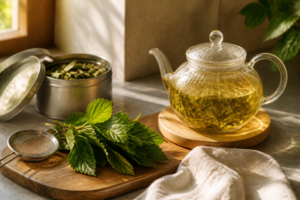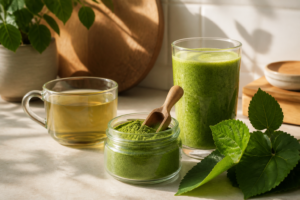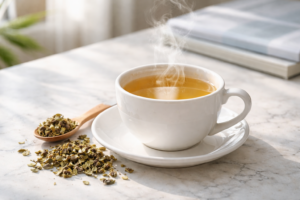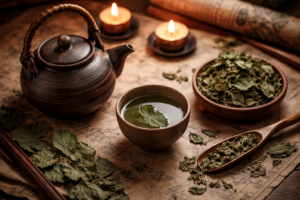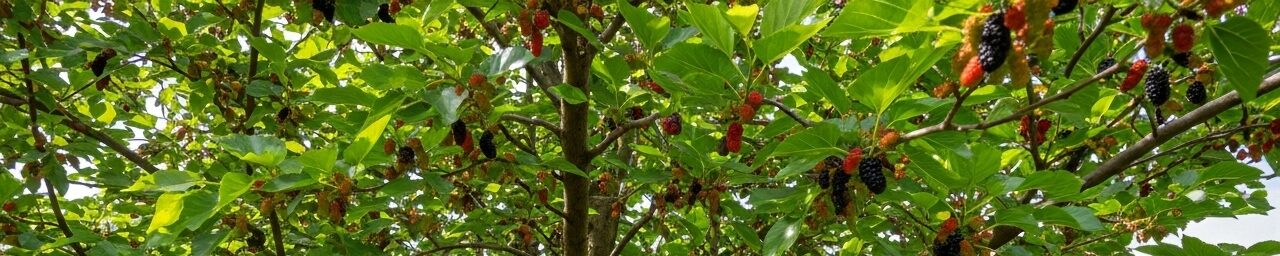
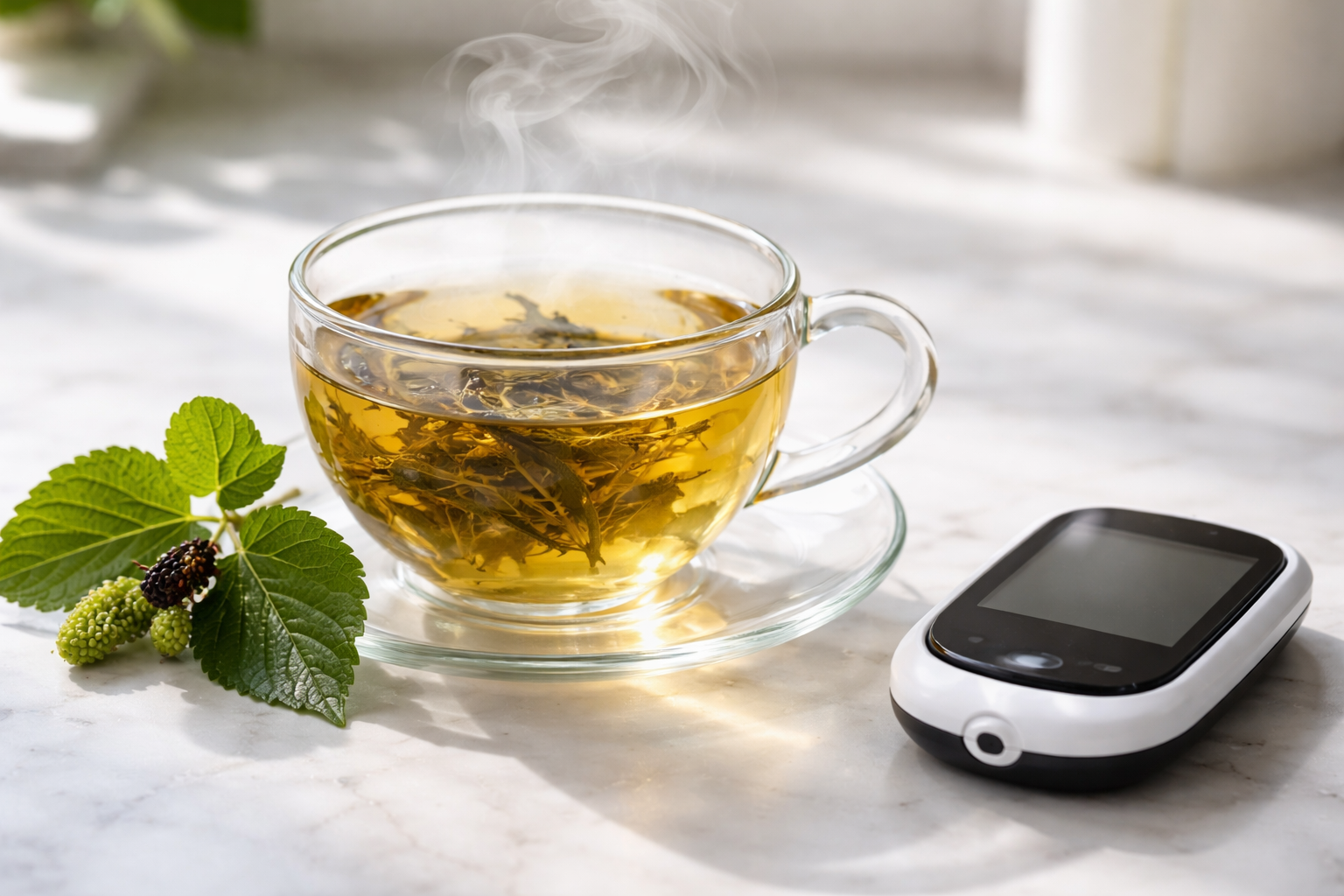
Mulberries are a versatile crop that can be grown in home orchards across temperate regions. Many backyard growers cultivate multiple cultivars—varieties like Black Beauty, Chinook, Illini Star, and Ozark Premier each offer distinct flavors and growth characteristics. Beyond the fruit harvest, mulberry leaves have attracted attention from researchers and home gardeners alike. Today, we’ll explore an aspect of mulberries that often gets overlooked: their leaves and the potential benefits of mulberry tea.
You know, nobody’s standard nursery care sheet mentions what happens when you start thinking about your mulberry leaves as a functional tea ingredient rather than just photosynthesis machinery. But once I spent a season harvesting, drying, and experimenting with what comes off those branches, my perspective shifted. Suddenly, the question wasn’t just “Can I use these leaves?” but “What’s actually in them, and does the science back up what traditional practitioners have been doing for centuries?” That’s where my curiosity took over. I had already committed to a zero-waste approach with my mulberries — drying the fruit for winter, fermenting the leaves, and finding a purpose for every scrap instead of tossing them into the compost pile. When I discovered that those leaves might carry genuine blood sugar benefits, I knew I had to dig deeper.
My pathway into this was pretty personal. I found myself facing a borderline pre-diabetic diagnosis, which, let me tell you, was a wake-up call. It made me take my habits seriously overnight. So, I did what felt natural — I opened PubMed one weekend, cleared an afternoon, and started pulling down actual published studies instead of relying on summaries from wellness influencers. I took pages of notes and really worked through the methodology sections. What emerged surprised me in ways I hadn’t anticipated. This post is my attempt to hand you that research unfiltered, so you can see what peer-reviewed science actually demonstrates versus what gets marketed as fact.
Why Mulberry Tea and Blood Sugar Became My Research Obsession
First off, let me be clear: I’m a backyard grower, not a physician, registered dietitian, or licensed healthcare provider. My background is in hands-on tree management and kitchen processing, not clinical medicine. So if you’re making decisions about managing your blood sugar, your doctor’s input matters far more than mine ever will. With that clear, here’s what the published research landscape currently tells us.
The molecule that shows up repeatedly in the literature is called 1-deoxynojirimycin — or DNJ for short. It’s an alkaloid naturally present in mulberry leaf tissue. Its mechanism works like this: DNJ functions as an alpha-glucosidase inhibitor, meaning it puts the brakes on your intestinal enzymes responsible for converting carbohydrates into glucose molecules. When enzyme activity slows, glucose absorption becomes more gradual, resulting in less dramatic blood sugar elevations during the post-meal window. Interestingly, the pharmaceutical class of diabetes medications called acarbose and miglitol operates through the exact same inhibitory pathway. Finding a botanical source of this compound isn’t folklore or speculation — it’s established biochemistry, documented across multiple enzyme kinetics studies.
The Clinical Evidence: What Researchers Actually Measured
There’s a substantial difference between knowing a compound exists in plant tissue and watching that compound produce measurable effects in human subjects under controlled conditions. Fortunately, several rigorous studies have now done exactly that work.
The 2016 Randomized Trial in Non-Diabetic Participants
A rigorously-designed 2016 trial published in the Journal of Functional Foods (PMC5321430 for reference) administered mulberry extract to healthy volunteers in a randomized, placebo-controlled framework — the research design gold standard for this work. Outcomes showed that groups receiving mulberry extract experienced noticeably suppressed post-meal blood glucose and post-meal insulin responses relative to placebo recipients. What matters here is that this signal emerged even among participants without diabetes, suggesting the biological mechanism isn’t just “rescuing” a broken system but altering glucose handling in generally healthy bodies too.
The 2015 Investigation of Brewed Leaf Tea in Type 2 Diabetics
A notable study published in the Saudi Journal of Biological Sciences (2015, volume 22, issue 1, pages 32–36, PMC4281624) examined brewed mulberry leaf tea—not concentrated capsules or proprietary extracts, but tea steeped from leaves—in participants with established type 2 diabetes. The measured outcome was post-prandial glucose, or blood sugar concentration after meals. The finding: mulberry tea consumption correlated with reductions in post-meal glucose spikes reaching as high as 27 percent, a magnitude worth noting given the consistency of the data.
The 2025 Study Targeting the In-Between Population
The most recent publication I located came out in 2025 (PMC11937486) and examined a mulberry-and-water-chestnut formulation in adults occupying that gray area — not quite diabetic but drifting toward it, often labeled pre-diabetic or borderline. Post-meal glucose reduction surfaced in this cohort as well. From my vantage point, this matters because borderline describes my own situation. Seeing clinical attention directed toward that population rather than only established-diabetes cases made the research feel immediately germane to my lived experience.
What Remains Unknown and Why Honesty Matters
Here’s where I think clarity beats enthusiasm every time. The body of research supporting mulberry tea’s effects on blood glucose is compelling — genuinely — but we’re still early in this investigation. The individual trials tend toward modest sample sizes. We don’t have multi-year longitudinal data demonstrating that sustained mulberry tea consumption produces lasting improvements in metabolic markers or long-term health outcomes. That 27-percent glucose reduction we saw in 2015? It’s a strong signal deserving further investigation, not a confirmed therapeutic endpoint.
Here’s what mulberry tea is not: it is not a medication substitute when your healthcare provider has prescribed one. It cannot displace dietary quality or physical activity. What mulberry tea might reasonably become — and what I’ve integrated into my own routine — is one component of a broader wellness strategy, something with enough research support that spending ten minutes daily steeping leaves feels like a sensible, low-stakes intervention. Think of it as a practice with genuine evidence behind it, not as a standalone solution.
There’s also a practical variability factor: DNJ concentration differs meaningfully across leaf cultivars, the timing of leaf harvest, and how you’ve processed everything afterward. This variability is precisely why I’ve become somewhat particular about sourcing, which leads directly into what follows.
Finding Commercial Leaf That Approximates Your Backyard Quality
When you’re managing your own drying operation — keeping track of humidity windows, timing to optimal harvest moments, and storing dried material to avoid degradation — you realize just how many steps exist where quality can slip. Having a reliable commercial alternative lets you experiment with brewing protocols or compare batches without depleting the leaves you’ve invested months growing.
Qualities worth looking for
- Visual integrity after steeping — leaves hold their color, no excessive powder or dust settling in the cup, which indicates thoughtful post-harvest handling rather than over-processing or extended storage degradation.
- USDA organic designation removes pesticide-residue guesswork when you’re simultaneously testing against your own home-dried supply, keeping your data as clean as possible.
- Unbroken, loose-leaf format allows you to adjust steeping duration and leaf-to-water proportion exactly as you would with material from your own trees, creating legitimate side-by-side flavor and strength comparisons.
Drawbacks to consider
- Per-cup costs escalate quickly when purchased commercially, which stings once you’ve got multiple productive trees and effectively unlimited fresh material available from your own yard.
- Commercial offerings, even premium ones, occasionally lean toward grassy notes compared to leaves you harvested at peak development and dried on your own timeline — a tangible reminder that your personal timing advantage is genuine.
I almost scrapped my whole experiment entirely when my first batch of home-dried leaves turned bitter. I wondered if I’d just wasted weeks of work! But brewing this side-by-side showed me exactly where my drying temperature went wrong. If you’re curious about dialing in your own process, I highly recommend trying the FullChea USDA Organic White Mulberry Tea to benchmark your own leaves against a commercial product.
Sources and Citations
The health claims discussed on this page come from published research. Every study below has been checked against its PubMed or PubMed Central record, and each entry links to the source so you can read it yourself.
- Banu S et al. (2015) — “Reduction of post-prandial hyperglycemia by mulberry tea in type-2 diabetes patients.” Saudi J Biol Sci, 22(1), 32-6. PMC4281624 →
Follow-up study in 48 people with type 2 diabetes: 28 were given mulberry tea and 20 plain tea, and post-meal glucose measured 90 minutes later was markedly lower in the mulberry group. Not randomised or blinded. - Lown M et al. (2017) — “Mulberry-extract improves glucose tolerance and decreases insulin concentrations in normoglycaemic adults: Results of a randomised double-blind placebo-controlled study.” PLoS One, 12(2), e0172239. (randomised controlled trial) PMC5321430 →
Double-blind randomised crossover trial in 37 normoglycaemic adults. Taken with 50 g of maltodextrin, mulberry leaf extract cut the glucose rise by 14% at the normal dose and 22% at double dose versus placebo, following a clear dose-response curve. One author was an officer of the company that developed the extract. - Cui W et al. (2023) — “Effect of mulberry leaf or mulberry leaf extract on glycemic traits: a systematic review and meta-analysis.” Food Funct, 14(3), 1277-1289. (meta-analysis) PubMed 36644880 →
Meta-analysis of 12 clinical trials (615 participants). Mulberry leaf or extract reduced fasting glucose by 0.47 mmol/L, HbA1c by 2.92 mmol/mol and fasting insulin, with larger effects after 8 or more weeks and in people who were not metabolically healthy at baseline. - Asai A et al. (2011) — “Effect of mulberry leaf extract with enriched 1-deoxynojirimycin content on postprandial glycemic control in subjects with impaired glucose metabolism.” J Diabetes Investig, 2(4), 318-23. PMC4014974 →
Two trials in one paper: single doses of 3, 6 or 9 mg DNJ in 12 people with impaired fasting glucose (dose-dependent effect on post-meal glucose), and 6 mg DNJ three times daily for 12 weeks in 76 people. The acute dose-response is the most useful published guide to how much DNJ actually matters before a meal.
Note: study results are not guaranteed for individual users. Dose, preparation method, and individual physiology all affect outcomes, and most of these trials are small. Consult your healthcare provider before making changes to your treatment plan.
Frequently Asked Questions
What is DNJ and how does it affect blood sugar?
DNJ, or 1-deoxynojirimycin, is an alkaloid naturally present in mulberry leaf tissue and the compound that shows up repeatedly in the research literature. It acts as an alpha-glucosidase inhibitor, slowing the intestinal enzymes that convert carbohydrates into glucose. Absorption becomes more gradual, which means less dramatic blood sugar elevation after meals. The drugs acarbose and miglitol use the same pathway.
Can mulberry leaf tea replace my prescribed diabetes medication?
No. Mulberry tea is not a medication substitute when your healthcare provider has prescribed one, and it cannot displace dietary quality or physical activity. I’m a backyard grower, not a physician or registered dietitian, so if you’re managing diabetes or any health condition, talk to your healthcare provider before changing your treatment plan.
Why does DNJ content vary between different mulberry leaf batches?
DNJ concentration differs meaningfully across leaf cultivars, the timing of your leaf harvest, and how you process everything afterward. That’s three separate variables stacking up before the leaves ever reach your cup. This practical variability is exactly why I became particular about sourcing and why I benchmark my home-dried leaves against a consistent commercial product.
Why did my home-dried mulberry leaves turn out bitter?
My first batch of home-dried leaves turned bitter too, and I almost scrapped the whole experiment thinking I’d wasted weeks of work. Brewing them side by side against a commercial loose-leaf tea showed me exactly where my drying temperature had gone wrong. Managing humidity windows, harvest timing, and storage leaves plenty of steps where quality can slip.
Keep Reading
About This Article
Written by Ruth Nakamura. Ruth Nakamura is a backyard orchardist in the Pacific Northwest who has grown mulberries for fifteen years, cultivating twelve different varieties in her own backyard. Not a horticulturist by formal training - she shares what she has learned through hands-on growing, workshops, and connecting with nurseries and growers across the country. More about this site.
Scope and limits. Ruth is a backyard orchardist without formal horticultural training. Growing conditions vary enormously by region, so confirm variety, timing, and pest guidance with your local extension service.
Verify this against a primary source
Specifics change, and your situation may differ from the one described here. These are the authorities worth checking directly:
- USDA Plant Hardiness Zone Map — zone verification for your location
- Oregon State University Extension — fruit growing and pruning research
- USDA PLANTS Database — species range and identification