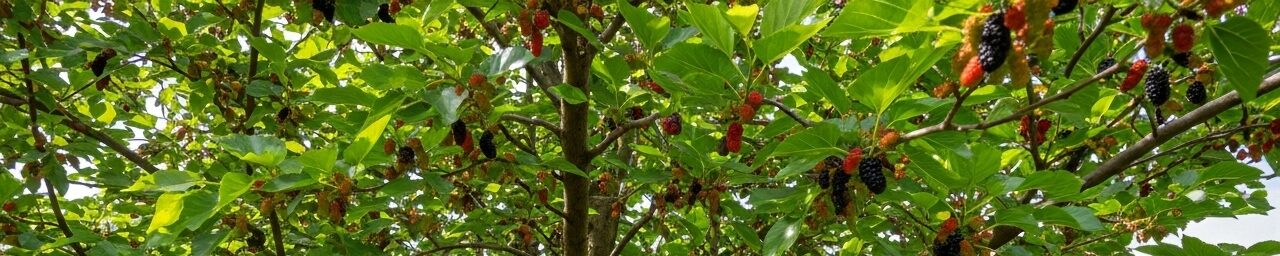
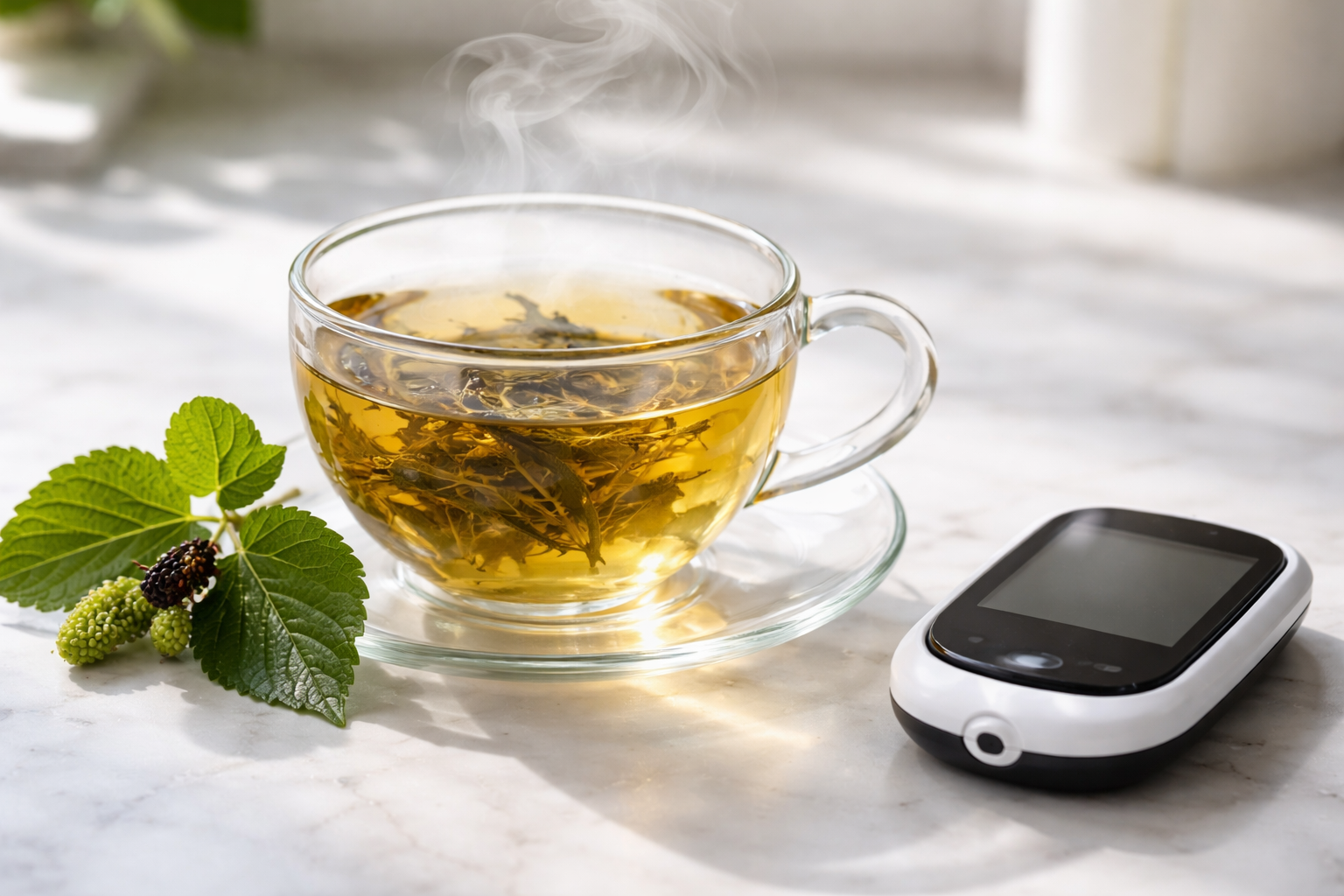
I still remember sitting in my car after that doctor’s appointment, staring at the little printout with my fasting glucose numbers on it. Pre-diabetic. Not diabetic yet, but close enough that my doctor looked at me over her glasses and said, “We need to talk about lifestyle changes.” On the drive home, my brain was already spinning — and somehow it landed on something I had seen floating around the mulberry growing community for years: mulberry tea blood sugar benefits. I had always half-dismissed it as folk remedy talk. Suddenly, I was very motivated to find out if there was anything real behind it.
So I did what any slightly anxious, newly pre-diabetic person with a mulberry obsession would do. I spent a weekend deep in PubMed. I read actual studies. I took embarrassingly detailed notes. And what I found genuinely surprised me — in the best possible way. This post is my attempt to share that research with you honestly, separating what the science actually shows from the breathless marketing claims you see everywhere.
This post contains affiliate links. As an Amazon Associate I earn from qualifying purchases at no extra cost to you.
Why Mulberry Tea and Blood Sugar Became My Research Obsession
Before I get into the studies, let me just say — I am not a doctor, a dietitian, or any kind of medical professional. I am a person who grows mulberries in her backyard, writes about them with probably too much enthusiasm, and takes her health seriously enough to actually read the primary sources before swallowing (pun intended) any health claim. Please talk to your own healthcare provider before making changes to how you manage your blood sugar. That said, here is what the peer-reviewed research looks like.
The story starts with a compound called 1-deoxynojirimycin, or DNJ. This is a naturally occurring alkaloid found in mulberry leaves, and it works as what scientists call an alpha-glucosidase inhibitor. In plain English? It slows down the enzymes in your digestive system that break carbohydrates into glucose. When those enzymes work more slowly, the glucose from your meal enters your bloodstream more gradually, which means smaller, gentler spikes in blood sugar after eating. Interestingly, this is the same general mechanism used by some prescription diabetes medications. The fact that mulberry leaves contain a natural version of this compound is not a rumor — it is well-documented in the biochemistry literature.
What the Actual Clinical Studies Show
Okay, here is where I get genuinely excited. Because it is one thing to know a compound exists in a plant. It is another thing entirely to see it tested on real humans in controlled studies. And there are several of those now.
Study 1: Mulberry Extract in Healthy Adults (2016)
A 2016 randomized, placebo-controlled study published in the Journal of Functional Foods (you can find it listed under PMC5321430) tested mulberry extract on healthy adult volunteers. This was a well-designed study — randomized, placebo-controlled, which is the gold standard for this kind of research. The results showed that participants who received the mulberry extract had significantly reduced blood glucose and insulin levels after meals compared to those who received the placebo. The fact that this effect showed up even in healthy adults — people who were not diabetic — suggests the mechanism is real and not just an artifact of an already-compromised system.
Study 2: Mulberry Leaf Tea in Type 2 Diabetes Patients (2015)
This one is the study I kept coming back to. Published in BMC Complementary Medicine (PMC4281624), it looked specifically at mulberry leaf tea — actual brewed tea, not a concentrated extract capsule — in patients who already had type 2 diabetes. The researchers measured post-prandial blood glucose, which is your blood sugar after eating, and found that drinking mulberry leaf tea reduced those post-meal spikes by up to 27 percent. Twenty-seven percent. In an already-diabetic population. That is not a trivial effect. I will be honest: when I first read that number I thought I had misread it. I had not.
Study 3: Borderline Diabetic Adults and a Mulberry Combination (2025)
The most recent research I found, published in 2025 (PMC11937486), looked at a combination of mulberry leaf and water chestnut in adults who, like me, were in that in-between zone — borderline diabetic, or what is often called pre-diabetic. This study confirmed a reduction in postprandial glucose in that specific population. Why does that matter to me personally? Because borderline is exactly where I am. Seeing research focused on that group, rather than only people with established diabetes, made this feel much more directly relevant to my situation.
Being Honest About What We Do Not Know Yet
I want to be real with you here, because I think honesty is more useful than hype. The research on mulberry tea and blood sugar is genuinely promising — but it is still a developing field. Most of the studies are relatively small. We do not yet have large, long-term trials showing that drinking mulberry tea for five years leads to measurably better health outcomes. The 2015 study showed a 27% reduction in post-meal glucose spikes, which is exciting, but we should understand that as a positive signal warranting more research, not as a proven cure.
Mulberry tea is also not a replacement for medication if your doctor has prescribed it. It is not a substitute for eating well or moving your body. What it might be — and what I have come to think of it as in my own life — is a genuinely useful, evidence-supported addition to a broader healthy lifestyle approach. I think of it as a lovely, low-risk habit with some real science behind it. That feels like a reasonable way to frame it.
One more practical note: the DNJ content in mulberry products varies quite a bit depending on the leaf variety, harvest timing, and processing method. This is why I am pretty particular about which products I buy, which brings me to my next section.
Products I Recommend for Getting Started
After trying several options, these are the products currently sitting in my kitchen cabinet. I have linked them all for you — and yes, these are affiliate links, which means I earn a small commission if you purchase through them. I only recommend things I have personally used and genuinely like.
- FullChea USDA Organic White Mulberry Tea — This is my current everyday tea. USDA certified organic, which matters to me when I am drinking something specifically for health reasons. The flavor is mild and pleasant, not grassy or bitter the way some herbal teas can be.
- Bravo Tea Absolute White Mulberry Leaf Tea Bags — A great option if you want the convenience of tea bags with no fuss. I keep these at my desk for workday afternoons.
- TooGet Natural Mulberry Leaf Loose Tea — If you prefer loose leaf (and I often do), this one is lovely. You get a lot of tea for the price, and I find loose leaf tends to have a fresher, more aromatic quality.
- Glucose Monitor Kit with Test Strips — I added this one because, honestly, getting a basic glucose monitor changed how I understood my own body. If you are pre-diabetic or just curious about how different foods and drinks affect your blood sugar, being able to test yourself at home is incredibly informative. I tested my post-meal numbers with and without mulberry tea over several weeks. Very eye-opening.
My Honest Recommendation and Where to Go From Here
Here is where I land after all of this research, and after several months of incorporating mulberry tea into my daily routine: I think this is one of the most legitimately interesting and well-supported herbal teas for anyone paying attention to their metabolic health. The science on mulberry tea blood sugar benefits is not hype — it is real, peer-reviewed research showing meaningful effects in multiple human trials. Is it a magic cure? No. Is it a low-risk, genuinely pleasant habit with good evidence behind it? Absolutely yes.
If you are in a similar situation to mine — pre-diabetic, or simply wanting to support healthy blood sugar levels through lifestyle choices — I would encourage you to talk to your doctor about mulberry leaf tea, share some of these studies if that feels useful, and consider giving it a try. Start with one cup per day, ideally with or just before a meal, and pay attention to how you feel. If you have a glucose monitor, even better — track your numbers and see what you notice.
We grow mulberries here because we think this plant is genuinely magnificent. Turns out the leaves might be just as remarkable as the fruit. I am still on my own health journey — still checking in with my doctor, still making changes — but adding mulberry tea to my mornings is one change I am very glad I made. I hope this research roundup helps you make an informed choice too. Drop a comment below and let me know if you have tried mulberry tea, or if you have questions about any of the studies I mentioned. I love hearing from you!