I remember the exact moment my dad slid his prescription across the kitchen table toward me. Statins. He’d just turned 68, and his cholesterol numbers had finally crossed whatever invisible line his doctor had been watching for years. He wasn’t panicking — my dad never panics — but I could see the quiet resignation on his face. He’s the kind of person who grows his own tomatoes, walks two miles every morning, and still somehow ended up here. I went home that night and fell down a research rabbit hole. I typed “mulberry tea cholesterol” into PubMed at about 11pm and did not expect to be genuinely impressed by what came up.
This post contains affiliate links. As an Amazon Associate I earn from qualifying purchases at no extra cost to you.
Now, I want to be really clear before we go any further: I am a mulberry enthusiast with a blog, not a cardiologist. My dad is still on his statins, because that is between him and his doctor and not something I would ever dream of overriding with a cup of tea. But what I found in the research genuinely surprised me — not because mulberry leaf is a miracle cure, but because the evidence behind it is more serious and more rigorous than what you usually find in the “natural remedy” world. Let me walk you through what the studies actually say, and let you decide what questions to bring to your own doctor.
What the Research Actually Shows About Mulberry Tea and Cholesterol
Here is where I have to put on my “let’s read this carefully” hat, because there is a big difference between “a study found something interesting” and “this is proven medicine.” The good news is that the mulberry leaf research clears a higher bar than I expected.
One of the studies that stopped me in my tracks was a double-blind, placebo-controlled clinical trial — that’s the gold standard format in medical research, where neither the participants nor the researchers know who is getting the real treatment. Published on PubMed (PMID 33277698), this trial looked at coronary heart disease patients and found that mulberry leaf extract actually attenuated atherosclerotic lesions, meaning it appeared to reduce the buildup of plaque in the arteries. Researchers pointed to a compound called DNJ (1-deoxynojirimycin), a naturally occurring alkaloid found in mulberry leaves, as a likely mechanism. I had to read that paragraph twice. Actual artery plaque. In actual heart disease patients. In a blinded trial.
A second study looked at 23 adults with high cholesterol who took 280mg of mulberry leaf extract three times daily for 12 weeks. The results showed LDL cholesterol — the kind your doctor frowns at — dropped by 5.6%, while HDL cholesterol — the protective kind — rose by 19.7%. That HDL increase is particularly notable, because raising HDL is notoriously hard to do even with pharmaceutical interventions. A 5.6% LDL reduction might not sound dramatic, but combined with nearly a 20% HDL bump, those are meaningful numbers for a 12-week dietary intervention.
A broader review of cardiometabolic effects (PMC6130672) added more weight to the picture. It found that daily consumption of 6 grams of mulberry leaf tea over 12 weeks reduced total cholesterol by 9.8% and triglycerides by 14.9%. Triglycerides are another blood fat that contributes to cardiovascular risk, and a nearly 15% reduction from drinking tea is not something I expected to type in a sentence.
So how does it work? The leading explanation is that mulberry leaf polyphenols — a broad category of plant compounds that also give blueberries and green tea their health reputations — inhibit cholesterol absorption in the gut and improve overall lipid metabolism. In other words, the leaf may be helping your body process and clear fats more efficiently, rather than letting them accumulate in the bloodstream.
What We Don’t Know Yet (And Why Honesty Matters Here)
I would be doing you a disservice if I only showed you the exciting side. Here is what the research has not yet established clearly:
- Most studies are relatively small. Twenty-three participants is promising but not definitive. We need larger trials to confirm these results at population scale.
- The studies use varying doses and forms — some use concentrated extract at specific milligram doses, while others use whole leaf tea. Results may not translate perfectly between formats.
- Long-term effects beyond 12 weeks are not well studied yet.
- Mulberry leaf can interact with diabetes medications, particularly those that lower blood sugar, since it also has glucose-lowering properties. If you’re on medication, please talk to your doctor before adding this to your routine.
- None of these studies suggest mulberry tea is a replacement for prescribed medication. It is a complement, and even that framing requires a conversation with your healthcare provider.
I share all of this because I think the natural health space does a lot of damage by overselling things. Mulberry leaf tea has genuinely interesting, rigorous, peer-reviewed research behind its cardiovascular effects. That is worth knowing about. It does not make it magic, and it does not make your statin prescription optional.
Products I Recommend: The Mulberry Teas I Actually Keep in My Cupboard
If you want to try incorporating mulberry leaf tea into your routine — again, alongside your doctor’s guidance, not instead of it — here are the products I feel good about recommending. I have tried to find options at different price points and in different formats, because not everyone wants the same thing from their tea ritual.
FullChea USDA Organic White Mulberry Tea
This is the one I reach for most often. It is USDA certified organic, which matters to me when I am drinking something daily, and the flavor is clean and mild — kind of grassy and gently sweet. Great for everyday drinking. Find it on Amazon here.
Bravo Tea Absolute White Mulberry Leaf Tea Bags
Bravo Tea has been doing herbal and specialty teas for a long time, and this mulberry leaf option is convenient and reliably consistent. If you are new to mulberry tea and want something easy and approachable, this is a solid starting point. Check it out on Amazon.
TooGet Natural Mulberry Leaf Loose Tea
For anyone who prefers loose leaf — and I do think it produces a better cup — this one is lovely. The leaves are whole and dried beautifully, and steeping it in a proper infuser feels like a little ceremony. Good for people who want to be intentional about their tea time. Grab the loose leaf version here.
Bio Nutrition White Mulberry Tea 30 Bags
This is the most budget-friendly option on the list and a great way to try mulberry leaf tea without a big commitment. Thirty bags is enough for a solid trial run to see how you like the taste and how it fits into your daily rhythm. See it on Amazon.
My Honest Recommendation: Is Mulberry Tea Worth Trying for Heart Health?
If you are someone who is watching your cholesterol, already eating reasonably well, and looking for evidence-based additions to your daily routine, then yes — I think mulberry tea cholesterol research gives you a real reason to consider adding this to your day. The studies are not perfect, but double-blind clinical trials showing reduced arterial plaque and peer-reviewed data showing LDL reduction and significant HDL improvement are not nothing. That is a meaningful body of evidence for a cup of tea.
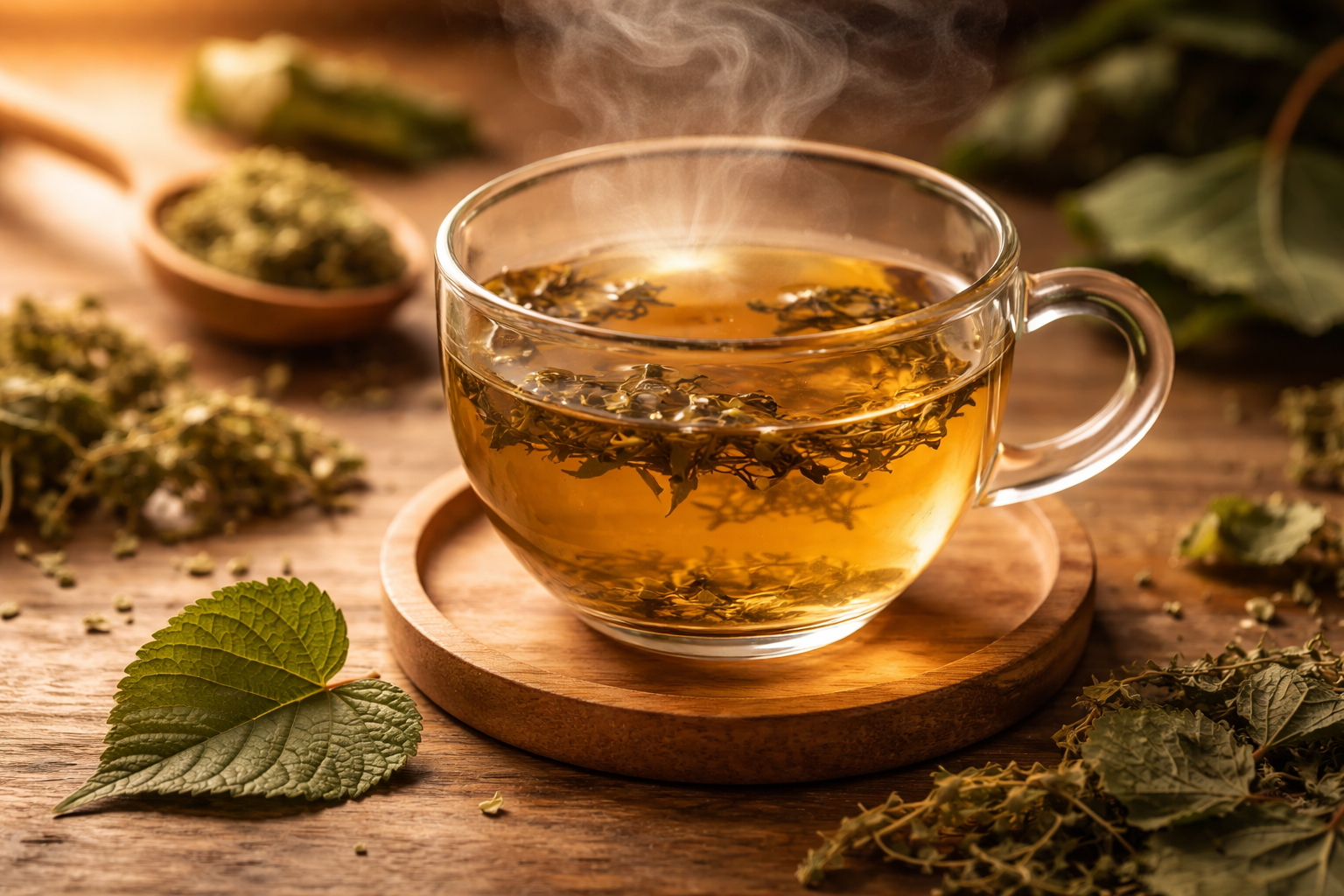
What I would encourage you to do is this: bring the research to your next appointment. Print it out if you have to — doctors generally appreciate patients who show up with actual PubMed citations rather than something they saw on Instagram. Ask whether adding mulberry leaf tea alongside your current plan makes sense for your specific situation. And if your doctor gives you the green light, start with one cup a day and see how it feels. The 6g daily dose referenced in the cardiometabolic review is roughly equivalent to two standard tea bags, which is a very achievable habit.
My dad is still on his statins, and I am still researching. But there is a box of organic mulberry leaf tea on his counter now, and his last cholesterol panel was the best in three years. I am not drawing conclusions — correlation is not causation, and I am still just a person with a mulberry blog. But I am paying attention, and I think you should be too. Mulberry tea and cholesterol health is a connection worth knowing about, worth discussing with your doctor, and honestly, worth enjoying one warm cup at a time.