Mulberry leaf tea was the last thing I expected to become a daily ritual, but after reading the traditional use history and then trying a properly brewed cup, I understood immediately why this preparation has been part of East Asian wellness practices for centuries. It’s not just about the flavor — the functional properties are genuinely interesting. What struck me, though, was the realization that I’d been composting or ignoring the very leaves I was now steeping every morning, which sent me down a rabbit hole of rethinking everything I was letting leave my property as waste — leaves, fruit, stems, the lot. If you’re growing a mulberry tree and you’re only thinking about the berries, you’re working with maybe half the plant, and the sheet harvest method I rely on to pull twenty pounds of fruit in under an hour is actually what freed up enough time and mental bandwidth for me to start experimenting seriously with the leaves, the ferments, the dried fruit leathers, and every other output this tree is quietly offering. This guide is going to cover the harvesting mechanics in real, practical detail — not the vague “shake the branches” advice you’ve already read — because getting the harvest right is the foundation that makes everything else, including that morning cup of leaf tea, actually sustainable.
Why the Mulberry Harvest Sheet Method Changed Everything for Me
Before I found my groove with this method, mulberry season was a beautiful, exhausting, finger-staining disaster. I’d stand under the tree for an hour, picking individual berries one by one, eating about a third of them, and ending up with maybe four or five pounds in a bucket. Meanwhile, the ground beneath the tree looked like a crime scene — perfectly ripe berries falling and going to waste by the hundreds. There had to be a better way. And there was. I just had to humiliate myself a couple of times before I figured it out properly.
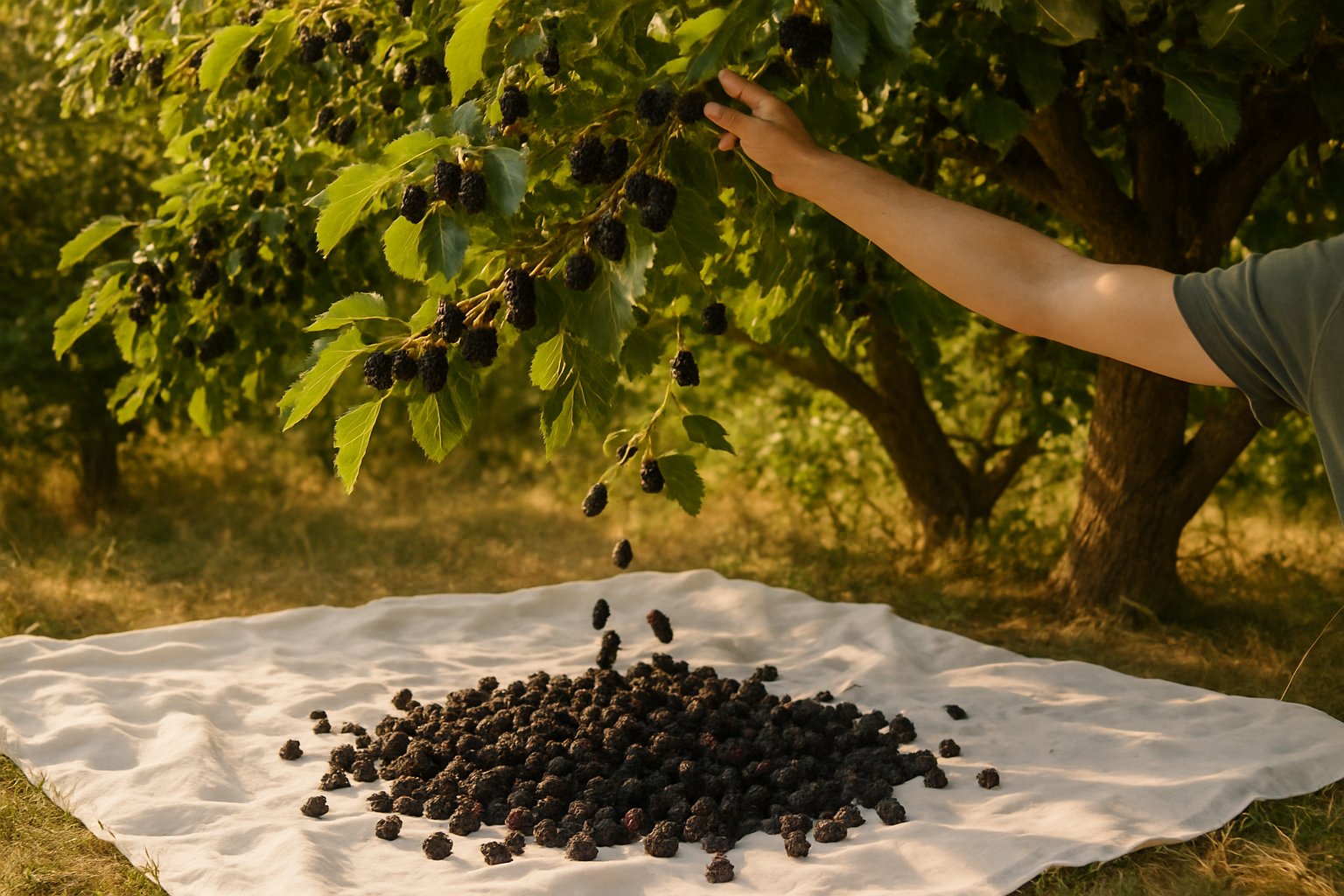
The core idea is beautifully simple: spread a large sheet or tarp on the ground beneath your mulberry tree, give the branches a good shake, and let gravity do the heavy lifting. Ripe mulberries — and only the ripe ones — will fall freely. Unripe berries hold on tight. This means you’re essentially getting a pre-sorted harvest with almost zero effort. Once you collect the fallen berries, you funnel them into containers and repeat. On a productive tree in peak season, twenty pounds in under an hour is genuinely achievable. I’ve done it. Minus the dog interruptions.
How to Do It Right: Step-by-Step Tips for Sheet Harvesting Mulberries
Pick the Right Moment
Timing matters enormously. The sheet method works best when the tree is at peak ripeness — when berries are falling on their own with the slightest breeze. Early morning is ideal. The berries are cool, firm, and less likely to get crushed when they drop. Harvesting on a hot afternoon means softer fruit and more mess. Check your tree every day once berries start changing color, and plan your big harvest day for when you see significant natural drop happening on its own.
Choose the Right Sheet Material
This is where my original mistake lives. A fabric bedsheet sounds poetic, but mulberry juice soaks right into cloth fibers and never, ever comes out. Ask my husband, who still grieves a set of Egyptian cotton pillowcases. You want a smooth, non-porous surface that lets you funnel berries easily and wipe clean afterward. Heavy-duty plastic sheeting is your best friend here.
The Tarp That Doesn’t Tear Under a Tree Full of Ripe Mulberries
The sheet method only works if your tarp can handle the weight of thousands of berries dropping at once and won’t shred when branches snap back up after you’ve finished shaking. I learned this the hard way with cheap plastic that split on the second harvest.
What works
- The 16 mil thickness actually holds up to repeated branch contact and doesn’t puncture when twigs and debris land on it during the shake—I’ve used the same tarp for three seasons now without a single tear.
- Clear plastic lets you see exactly where the berries pooled so you don’t miss any rolled into corners, and you can spot sticks, leaves, and bird droppings before scooping.
- The 10x20ft footprint is big enough for my mature tree without needing to fold or overlap multiple sheets, which means fewer seams for berries to escape through.
What doesn’t
- Getting it positioned under the canopy solo is a two-handed wrestling match—wind will catch it before you’re anchored, and I’ve chased this thing across my yard more than once.
- After a harvest, rolling it up wet with stuck leaves and berry debris is heavy and awkward; it takes real effort to clean and store without creating mildew spots.
I almost gave up on tarps entirely after my third attempt to position one solo in a 15-mph breeze, but I brought a friend over for the next harvest and the whole system clicked. 16 Mil Greenhouse Cover Clear Plastic Tarp (10x20FT)
This post contains affiliate links. As an Amazon Associate, I earn from qualifying purchases at no extra cost to you.