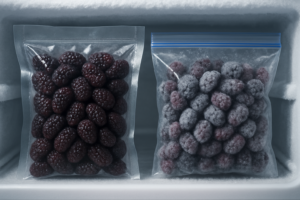
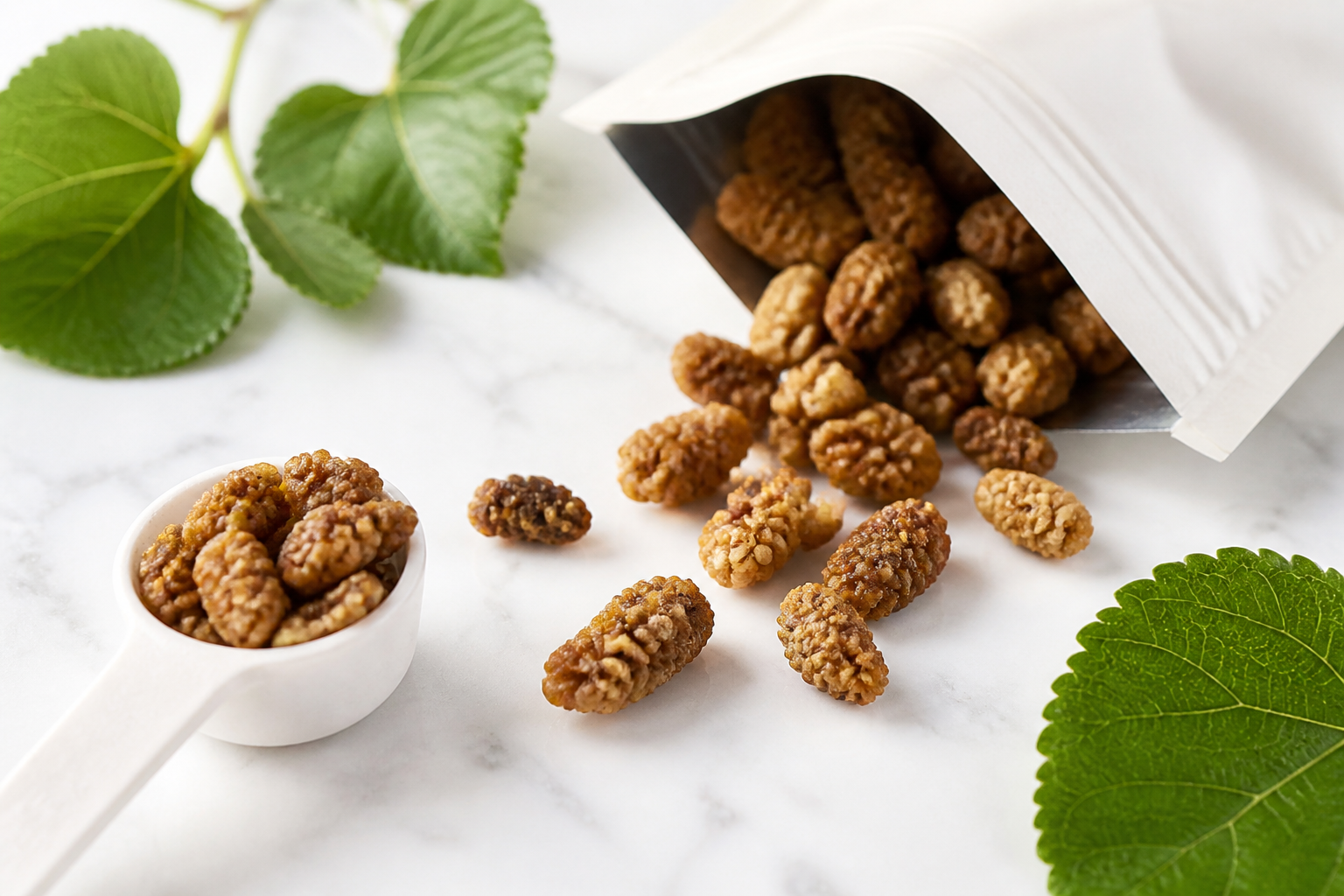
A heavy mulberry harvest presents a real storage challenge. With fruit ripening over 4–6 weeks and soft berries prone to splitting on the branch, growers often face decisions about preservation methods. Freeze-dried conversion is one option for handling abundance, particularly for those managing limited freezer space or seeking shelf-stable storage.
My neighbor casually dropped “freeze dried mulberries” into conversation one afternoon. I made appropriate noises and went home to Google like my life depended on it.
What followed was a rabbit hole through research that completely reframed how I think about getting my harvest through the off-season. I’m laying out what I found: the actual mechanics behind the process, what it does to the nutritional profile, the honest-to-goodness shelf life numbers, and most importantly—whether this approach makes sense for your situation or if you’re better off sticking with what you already know.
What Actually Happens During Freeze-Drying?
Understanding whether freeze dried mulberries deserved my attention meant first understanding what actually happens to the fruit.
Freeze-drying (technically called lyophilization) is a process where approximately 95–99% of the water content gets removed using deep freezing paired with vacuum pressure. The berries get locked into solid ice, then placed into a vacuum chamber where those ice crystals transition directly into vapor without ever becoming liquid—it’s sublimation in action, which is physics doing the heavy lifting.
The distinction matters because most conventional preservation techniques rely on heat to push moisture out. Your standard dried berry, whether sun-dried or oven-processed, gets there through thermal energy that, while getting the job done, also zaps away some of the more fragile nutritional compounds. The cold-and-vacuum approach sidesteps that entirely.
What you end up with is impossibly light, shelf-stable for decades, and chemically closer to what the berry was fresh. That shifted my view from “novelty product” to “actually clever preservation technique.” I started seeing why serious brands and nutrient-focused folks got so interested in these.
Nutrients Don’t Disappear: What the Research Shows
The data actually surprised my initial skepticism.
A 2023 comparison of different dehydration methods revealed that freeze-dried berry material hung onto 85–95% of its anthocyanins—those dark pigment compounds with serious antioxidant activity that make mulberries so deeply colored. Pit that against air-dried or thermally processed samples, which only held 40–60% of the same compounds. The difference isn’t marginal—it’s nearly double.
What grabbed me as someone who grows mulberries myself was something more specific: freeze-drying preserves 1-deoxynojirimycin (DNJ), a naturally occurring compound in mulberries that researchers have been studying for its connection to blood sugar balance. Fresh mulberries contain it. Freeze-dried versions keep it intact. The evidence for traditionally dried mulberries is murkier—pointing toward some nutrient loss in the drying stage.
I should be straight with you: the DNJ story is still unfolding in the research world. It’s not a cure-all, and I’m not pushing this as a substitute for anything your doctor tells you. But the research suggesting that freeze-drying preserves these compounds better than alternative methods? That evidence is there.
If your goal in buying preserved mulberries is to keep their nutritional punch intact, the data points toward freeze-drying as the winner.
Years on the Shelf: A Storage Advantage That Actually Solves Problems
This is where the practical value becomes obvious:
Your refrigerator will hold fresh mulberries for roughly 2–3 days before they start deteriorating. Frozen ones make it through a season or two in your freezer. Freeze-dried mulberries sitting in sealed containers? 12–25 years of stability.
That’s legitimately remarkable longevity.
Freeze-dried mulberries offer practical advantages in the home kitchen. With a harvest window of 4–6 weeks and limited freezer capacity, converting some fresh fruit to freeze-dried versions preserves shelf life while freeing freezer space. Freeze-dried berries store indefinitely on a pantry shelf, providing long-term access to the harvest.
If you’re thinking long-term food security, want to avoid the freezer-space squeeze, or simply dread the empty-cupboard feeling when February rolls around, the shelf-life proposition of freeze dried mulberries becomes genuinely valuable.
Can You Actually Use Them in Food? Practical Applications
The finest preservation method falls apart if you can’t figure out how to eat the result.
The encouraging part: freeze dried mulberries regain texture and flavor within 5–10 minutes of being dropped into liquid, which opens up genuine flexibility in how you use them. My own experiments have included:
- Blended into smoothies (they soften without needing advance soaking)
- Steeped in herbal teas or used in mulberry leaf preparations
- Mixed into batter for baked goods, either plumped up first or ground into powder form
- Scattered across breakfast bowls of yogurt or grain
- Eaten directly as a snack (they’re genuinely tasty this way)
They won’t replicate the experience of biting into a fresh mulberry—the taste profile is more intense and the mouthfeel switches from juicy to crisp. But different doesn’t equal inferior. Most people I’ve had try them actually favor the concentrated flavor of the freeze-dried version.
Having freeze dried mulberries on hand means you’re not locked into just eating mulberries during the 6-week window they naturally ripen. You can make a mulberry smoothie in October. That’s the real shift these offer.
Getting Through Big Harvests Without Running Out of Freezer Space
Years of watching ripe mulberries go soft and mushy because every shelf in my freezer was already claimed taught me that processing everything myself wasn’t sustainable. Buying freeze-dried mulberries lets you skip the whole “do I own a dehydrator” question and jump straight to something shelf-stable that actually tastes like mulberries instead of cardboard.
The upsides
- They rehydrate into genuine mulberry pieces that work in tea and smoothies without turning into mush, giving you actual fruit texture and tang rather than colored water.
- They survive indefinitely in a pantry jar without cold storage, which fixes the actual bottleneck when you’re picking 50+ pounds and your freezer already has two shelves stacked solid.
- The quality versions skip added sweeteners, so you can tell from the flavor whether the producer actually used ripe berries or harvested them underripe—and you absolutely notice the difference if you know what real mulberries taste like.
The downsides
- You’re paying substantially more per ounce than fresh or frozen mulberries cost during season, which only pencils out if you’re plugging gaps between your own harvests or you live somewhere these don’t grow locally.
- Quality swings from one supplier to the next—some bags arrive with noticeably smaller pieces or duller color—and you won’t know until it shows up at your door.
I was skeptical that freeze-dried pieces would taste like anything at all until I tried them side-by-side with my own frozen mulberries in a smoothie, and I was genuinely surprised by how much flavor stayed intact. If you’re drowning in harvest surplus or running low on freezer real estate, check out Freeze Dried Mulberries — 150g/5.3oz, for Beverages, Tea, Snacks & Baking.
Frequently Asked Questions
How long do freeze dried mulberries stay good?
Freeze-dried mulberries last 12–25 years in sealed containers, compared to 2–3 days for fresh ones in the refrigerator or a season or two frozen. That shelf stability means you can store them in a pantry jar indefinitely without needing freezer space.
Do freeze dried mulberries keep their nutrition?
Yes. Freeze-dried mulberries retain 85–95% of their anthocyanins, the antioxidant compounds that give them their deep color. They also preserve 1-deoxynojirimycin (DNJ), a naturally occurring compound in mulberries that fresh versions contain but traditionally dried ones may lose during the drying stage.
How quickly do freeze dried mulberries rehydrate?
Freeze-dried mulberries regain texture and flavor within 5–10 minutes of being dropped into liquid. They work in smoothies, tea, baked goods, or yogurt, and most people find the concentrated flavor of the freeze-dried version actually tastes better than fresh.
What’s the difference between freeze drying and regular drying?
Freeze-drying removes 95–99% of water content using deep freezing and vacuum pressure, avoiding heat that damages fragile nutrients. Regular dried berries use thermal energy instead, which zaps away more nutritional compounds. The cold-and-vacuum approach leaves you with something chemically closer to fresh fruit.
Keep Reading
About This Article

Written by Ruth Nakamura. Ruth Nakamura is a backyard orchardist in the Pacific Northwest who has grown mulberries for fifteen years, cultivating twelve different varieties in her own backyard. Not a horticulturist by formal training - she shares what she has learned through hands-on growing, workshops, and connecting with nurseries and growers across the country. More about this site.
Scope and limits. Ruth is a backyard orchardist without formal horticultural training. Growing conditions vary enormously by region, so confirm variety, timing, and pest guidance with your local extension service.
Verify this against a primary source
Specifics change, and your situation may differ from the one described here. These are the authorities worth checking directly:
- USDA Plant Hardiness Zone Map — zone verification for your location
- Oregon State University Extension — fruit growing and pruning research
- USDA PLANTS Database — species range and identification