Mulberries vs. Blackberries, Raspberries, and Figs: How They Actually Compare
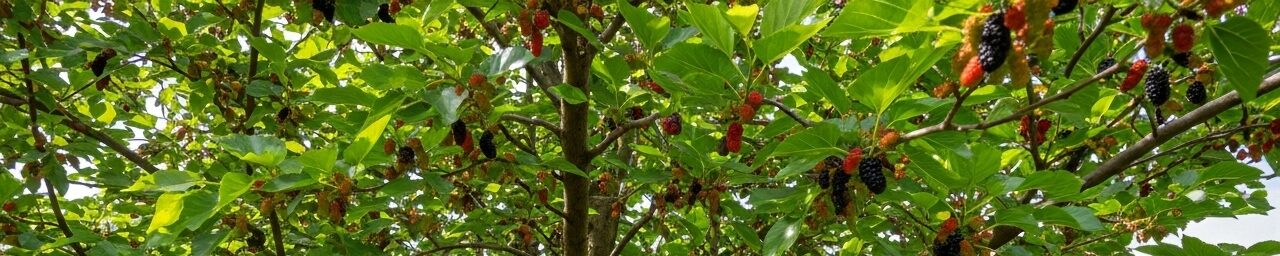
Back in early June, a stretch of unseasonably cool nights followed by two days of hard rain kept me watching my ripening fruit more closely than usual. Standing under my Pakistan mulberry that morning, I noticed something that had always been there but suddenly felt obvious: the way those berries held their shape and firmness against the moisture, while the blackberry canes at the yard’s edge looked waterlogged and slack. Side by side, they seemed like completely different plants masquerading as cousins. That weather event taught me something I should have paid closer attention to years earlier—the surface likeness between mulberries and the other dark berries people often confuse them with masks some pretty fundamental differences. Understanding those distinctions changes how you use each one in the kitchen, and it matters before you plant something or commit a harvest to a recipe.
Mulberry vs. Blackberry
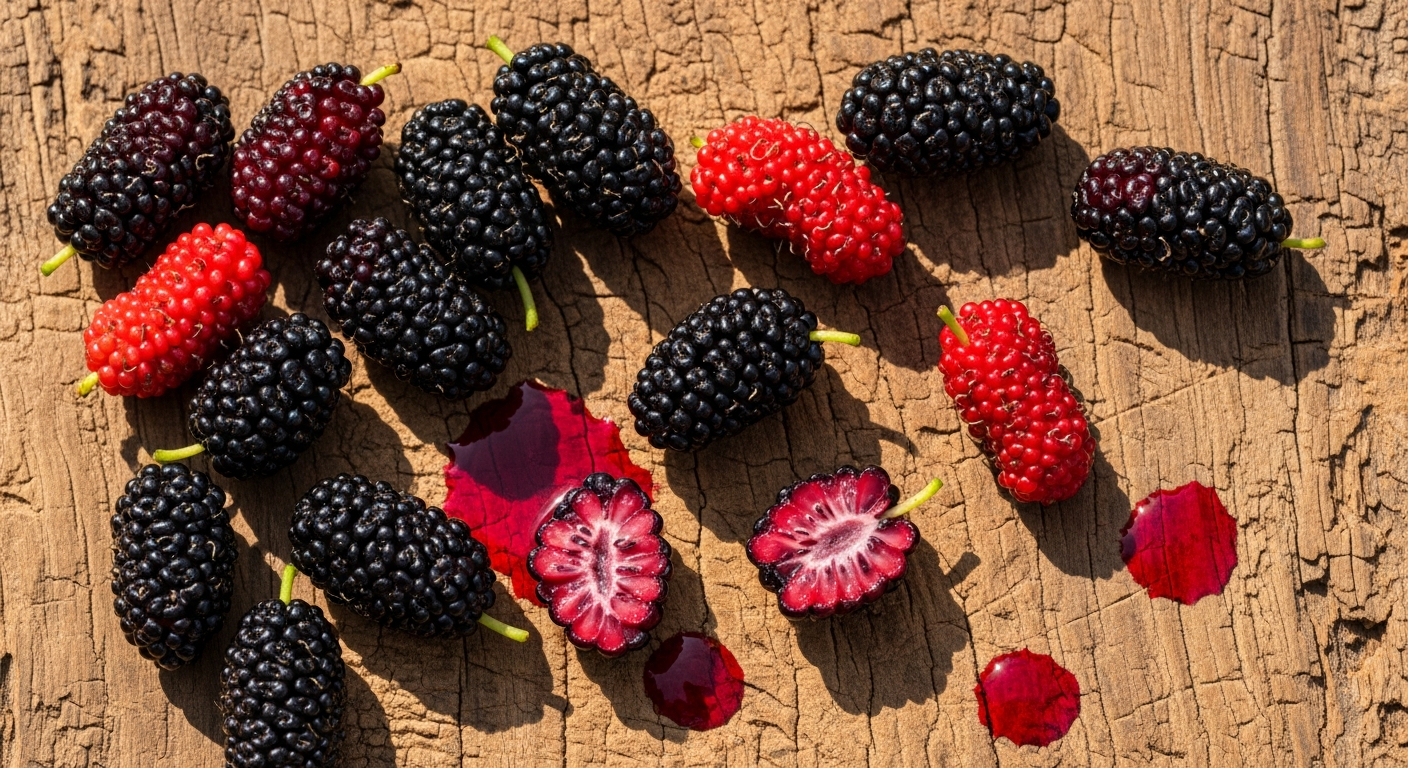
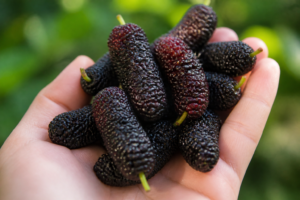
Slice into them and the architecture tells you everything: a blackberry consists of many tiny individual fruits (each one a drupelet) clustered around a woody central axis that stays attached no matter how ripe it gets. A mulberry, by contrast, emerges from something entirely different—the fused ovaries of an entire inflorescence, meaning there’s no central hard structure at all. That absence of a core explains why mulberries surrender to pressure so readily, why they leak juice the moment you handle them roughly, and why they deteriorate on the counter faster than their blackberry neighbors.
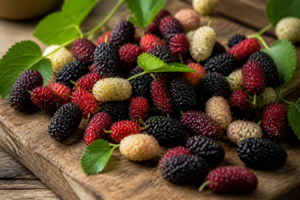
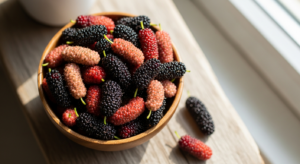
Structurally, blackberries emerge from thorny, sprawling brambles that hug the ground, whereas mulberries crown a wooden tree that can reach three stories tall in older specimens. The taste profile diverges too: blackberries skew toward sharpness and a subtle astringency that intensifies if you pick them even a day too early, while a fully mature mulberry—especially the dark purple or ivory kinds—delivers sweetness tempered by a gentle, unassertive flavor. Should you find yourself substituting mulberries into a blackberry-centered recipe, plan for mushier results and a mellower taste; you’ll likely want to dial back the added sweetness and introduce acidity (lemon, vinegar, or citric acid) to restore balance.
Mulberry vs. Raspberry
Raspberries share blackberries’ clustered-drupelet construction, yet they part ways at a crucial detail: when fully ripe, a raspberry detaches from a hollow, cone-shaped white receptacle and leaves that core behind on the plant. Blackberries refuse to separate from their cores no matter what. Mulberries bypass this entire dynamic because they lack a detachable core structure altogether—the whole fruit remains intact as a single, unified object from stem to tip.
On the durability front, raspberries actually outpace mulberries in fragility, typically collapsing within 24 to 36 hours after harvest if not immediately refrigerated or processed. Mulberries grant you slightly more grace—a couple of extra days of usability, especially in a cold environment. Taste-wise, raspberries deliver a more vibrant, almost perfumed sharpness that sits at odds with most mulberry varieties (excepting the underripe or red cultivars, which do carry tang). When your recipe requires that penetrating, palate-waking sourness—think raspberry coulis spooned over chocolate mousse or a raspberry gastrique—you’ll want the genuine article rather than betting on a sweet black mulberry to carry the load.
Mulberry vs. Fig
This comparison gains relevance mainly in the dried state. Living on the tree, a fig and a mulberry bear little resemblance—the fig presents as a bulbous, pear-like form packed internally with seed matter, substantially larger than any mulberry. But subject a white mulberry to drying, and the transformation is striking: the texture becomes almost leathery and tacky, the taste shifts into a deep, caramel-tinged realm that uncannily approaches the character of dried fig. The similarity holds enough weight that dried white mulberries can stand in reasonably well for minced dried figs mixed into oatmeal, homemade trail blends, or cookie and bread batters—though you forfeit the fig’s signature crunchy seed content and its more assertive mineral notes.
Which One Should You Actually Use?
- Substituting into blackberry pie or jam recipes: Mulberries transition smoothly using equal volumes, though you’ll want to trim the sugar load marginally and possibly incorporate a gelling agent to achieve proper set.
- Require sharp, cutting acidity to slice through fat and richness: Grab raspberries or a tart, underripe red mulberry cultivar—the dark, sugar-forward mulberries simply won’t deliver that knife-edge quality.
- Hunting for a dried-fig replacement with gentler flavor: Dried white mulberries come closest, particularly where baking projects or granola preparations are involved.
- Foraging situation where you’ve encountered only one species: Mulberries dominate as the most readily available urban and suburban feral discovery, because the tree itself thrives on neglect in ways that brambles and fig trees do not.
These distinctions gain real significance once you’re beneath an actual tree harvesting, and mulberries specifically demand considerably more caution during collection than bramble fruits or figs—even an accidental squeeze translates into flesh rupture and leakage.
| Fruit | Shelf Life | Flavor Profile | Core Structure |
|---|---|---|---|
| Mulberry | A couple of extra days in cold environment | Sweetness tempered by gentle flavor | No central hard structure |
| Blackberry | Longer than mulberry | Sharp with subtle astringency | Woody central axis stays attached |
| Raspberry | 24 to 36 hours unless refrigerated | Vibrant, perfumed sharpness | Detaches from hollow cone-shaped receptacle |
The Picking Tool That Finally Stops Bruising My Best Fruit
Delicacy defines the mulberry harvest. A careless grab crushes the flesh, or worse, snaps dormant growth right where you needed it. I spent my first several seasons working by hand, watching massive percentages of perfect ripe fruit transform into paste before reaching my collection vessel. The irritation ran deep: viable, flavorful berries disintegrating through my own fingers.
My approach shifted completely once I committed to testing better equipment. The instrument you choose during harvest fundamentally shapes both the volume and quality of usable fruit you bring inside.
What works
- The bristles on the collection head are soft enough to embrace ripe mulberries without pulping them; gravity rolls them down into the catch bag instead of mashing them between your palm and fingers.
- The length of the handle extends your working radius upward and outward, granting access to fruit nestled deep within the crown structure without requiring overextension or snapping secondary branches—invaluable on my taller Pakistan specimen that perpetually strains skyward.
- Throughput multiplied once I transitioned from dual-handed fumbling; entire buckets now fill in roughly half my previous time investment.
- Harvesting at absolute peak maturity becomes feasible because the mechanism eliminates crushing risk, which translates directly into improved taste development and extended time before spoilage.
What doesn’t
- The receptacle reaches capacity and grows cumbersome quickly once saturated with berry juice, forcing you to empty it repeatedly rather than executing a single comprehensive sweep of the entire tree.
- When branches carry maximum fruit load, the tool struggles to isolate individual ripe berries from the surrounding cluster without inadvertently harvesting less-mature fruit alongside them.
- The technique demands genuine practice—incorrect angle, twist rate, or pressure means missed berries or unintended damage to the growth behind them.
Practical Tips for Getting Results
I nearly abandoned this tool during year one because the skill component felt overwhelming—the angle and rotation have to align precisely—but persistence through that initial frustration paid dividends. The winning technique emphasizes a controlled, spiraling motion instead of a forceful pinching action. Begin your picking session at dawn when temperatures are lowest and berries possess maximum firmness. Traverse the canopy systematically instead of chasing individual stragglers, and remain unafraid to leave marginally immature fruit for collection during your return visit three or four days forward.
Grab the Plastic Berry Baskets 10Pcs Fruit Picking Basket Berry tool and save your fruit from your own hands. Your harvest yield will improve, and more importantly, the quality of your mulberries—their flavor, texture, and longevity—will noticeably increase.
Frequently Asked Questions
How long do mulberries keep compared to raspberries after picking?
Mulberries offer slightly more shelf life than raspberries. Raspberries typically collapse within 24 to 36 hours after harvest unless they’re refrigerated or processed right away, while mulberries stay usable for a couple of extra days in cool storage. They still deteriorate at room temperature faster than blackberries do, so refrigeration immediately after harvest is recommended.
Why do mulberries fall apart so easily when I pick them?
Mulberries have no central core. A blackberry’s drupelets cluster around a woody axis that stays attached, but a mulberry forms from the fused ovaries of an entire inflorescence, so there’s no hard structure inside holding it together. That absence is why the fruit surrenders to pressure, leaks juice when handled roughly, and ruptures from even an accidental squeeze.
What time of day is best for harvesting mulberries?
I start at dawn, when temperatures are lowest and the berries are at maximum firmness. I work through the canopy systematically instead of chasing individual stragglers, and I leave marginally immature fruit alone rather than forcing it. Those berries get collected on a return visit three or four days later, which keeps me from bruising the ripe ones.
Can dried white mulberries replace dried figs in granola or cookies?
They come closest of anything I’ve tried. Drying a white mulberry turns the texture almost leathery and tacky and shifts the flavor into a deep, caramel-tinged range that uncannily approaches dried fig. They stand in reasonably well for minced dried figs in oatmeal, trail blends, and cookie or bread batters, though you lose the fig’s crunchy seeds and stronger mineral notes.
Keep Reading
About This Article
Written by Ruth Nakamura. Ruth Nakamura is a backyard orchardist in the Pacific Northwest who has grown mulberries for fifteen years, cultivating twelve different varieties in her own backyard. Not a horticulturist by formal training - she shares what she has learned through hands-on growing, workshops, and connecting with nurseries and growers across the country. More about this site.
Scope and limits. Ruth is a backyard orchardist without formal horticultural training. Growing conditions vary enormously by region, so confirm variety, timing, and pest guidance with your local extension service.
Verify this against a primary source
Specifics change, and your situation may differ from the one described here. These are the authorities worth checking directly:
- USDA Plant Hardiness Zone Map — zone verification for your location
- Oregon State University Extension — fruit growing and pruning research
- USDA PLANTS Database — species range and identification