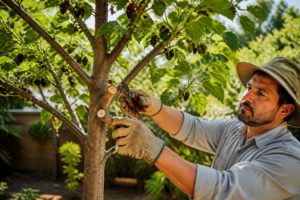
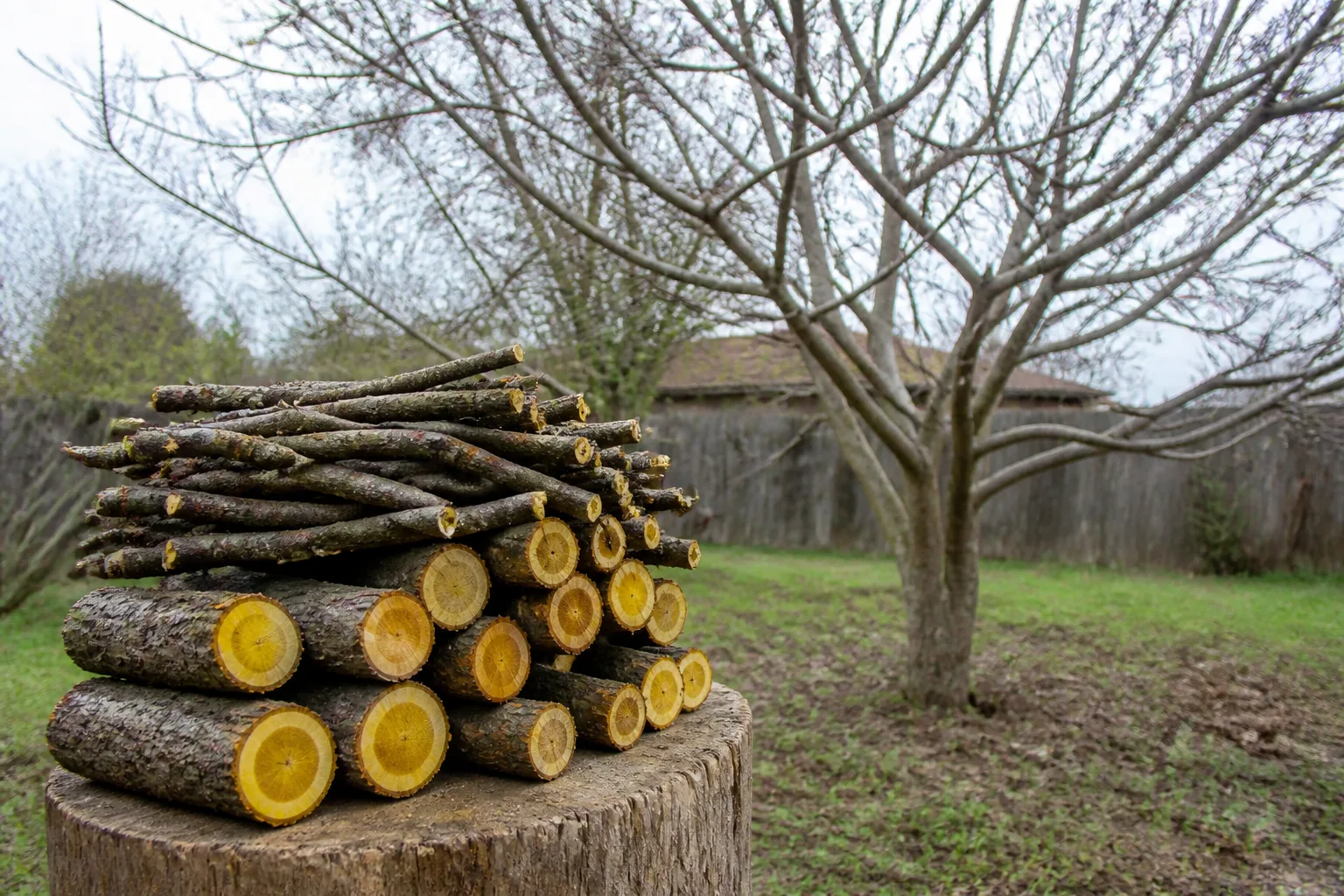
Every November, once the leaves are long gone and the mulberries have stopped staining the walkway, I drag a big pile of prunings out to the edge of the yard and stare at it for a while. Mulberry is one of the more useful woods a backyard tree produces, and most of that pile doesn’t have to end up in the yard waste bin. The short answer: mulberry wood works well for smoking meat and fish, burns as a dense hardwood for heat, can be turned into bowls and spoons, and the thinnest twigs make decent mulch. The trick is sorting the pile first.
I sort by thickness, which takes about ten minutes and saves me from burning good smoking wood or throwing away good turning stock. Here is how I break it down and what I do with each pile.
Why Mulberry Is Worth Saving
Mulberry belongs to the same plant family as Osage orange and fig, and it shares a bit of Osage orange’s golden color. Fresh-cut heartwood is a bright golden yellow. Give it some sunlight over a few months and it darkens to a warm russet brown, which I find more attractive than most of the lumber I buy. The sapwood is pale and doesn’t do much for anything, so I cut it away whenever I can.
The wood is dense and rot-resistant. Older growers I’ve talked with at workshops have told me the heartwood was traditionally used for fence posts, and I can see why. It’s not a wood for fine furniture in my experience, but it holds up outdoors and it looks good doing it.
Sort the Pile Before You Do Anything Else
Before you touch a saw or start stacking, walk through the pile and sort it roughly by thickness. Pencil-thick and under goes in one heap. Thumb-thick up to about wrist-thick goes in another. Anything thicker gets its own spot. The sorting rules below are the ones I use every year.
- Under pencil thickness: chip for mulch or add to the compost.
- Thumb to wrist thickness: cut into smoking chunks or kindling.
- Thicker than your wrist: split for firewood or save for turning stock.
One thing to watch for while you sort: pull out any wood that looks diseased, cankered, or oddly discolored. That material goes in the trash or gets burned, never chipped and never used for smoking. A healthy tree’s prunings can go to all of these uses, but a sick tree’s wood can spread problems to the next place it goes.
Smoking With Mulberry Wood
Mulberry is a mild, slightly sweet fruitwood, and people often compare its flavor to apple. I use it on pork, chicken, and fish, and it’s gentle enough that it doesn’t overwhelm the meat. It’s a good choice if you find hickory too strong or cherry too sweet for what you’re cooking.
The most important rule is seasoning. Green wood gives off bitter smoke, which will ruin a good brisket faster than anything else. I let my smoking chunks dry for at least six months, and I usually aim for closer to a year when I can wait that long. Cut the wood into chunks that fit your smoker, stack them off the ground in a dry, airy spot, and forget about them until spring or the following fall.
Never use wood from a tree that has been sprayed with anything, and that includes the weed killer you might have sprayed under the tree last season. If you’re not sure about a tree’s history, skip the smoking and put that wood to a different use.
Burning Mulberry for Heat
Mulberry is a dense hardwood, and the figure usually quoted for it is roughly 25 million BTU per cord, which puts it in the same range as the oaks. That’s a lot of heat from a backyard pile. The downside is that mulberry throws sparks and pops, so keep a screen on the fireplace or burn it in a closed stove. I learned that the hard way on a cold evening when a spark landed on the hearth rug.
Split the thick pieces and stack them to season for at least a full year before burning. Green mulberry is heavy, hard to light, and smoky, so the patience pays off. If you heat with wood, mulberry is a respectable addition to the mix, especially if you already have a supply of oak or other hardwoods.
Turning and Carving Mulberry
Woodturners and carvers like mulberry for bowls, spoons, and small pieces. The golden color and the way the grain shows up when it’s finished both make it a pleasure to work with. It’s not the easiest wood to finish perfectly, but the results are worth the effort for a small project.
The critical step is sealing the end grain right after you cut the blank. Mulberry checks, which means it cracks as it dries, and the ends are where the cracking starts. I coat the ends with wax or a sealer within an hour or two of cutting, then store the blanks somewhere cool and slow-drying. Rushing this step has cost me more than one nice bowl blank.
Making Mulch From the Twiggy Stuff
The thinnest prunings can go through a chipper and come out as mulch. I spread the chips around the base of the same tree, keeping them a few inches away from the trunk. This works only if the tree was healthy when you pruned it, which is the same rule I gave above. A chipper on diseased wood spreads the problem around.
One practical note: fresh mulberry cuttings root readily. If you leave a pile of prunings lying on damp soil, you may end up with a patch of new seedlings and sprouts. I don’t mind that sometimes, but I’d rather control it. Pencil-thick dormant cuttings are also useful if you want to propagate new trees, so before you chip anything, pull out a few of the straightest ones and set them aside.
A Quick Reference for Sorting Your Pile
I keep a rough version of this table taped inside the shed door so I don’t have to think about it every November.
| Branch thickness | Best use | Seasoning time |
|---|---|---|
| Under pencil thickness | Chipped mulch or compost | Not required |
| Pencil-thick, dormant and straight | Propagation cuttings | Store cool and moist until planting |
| Thumb to wrist thickness | Smoking chunks or kindling | 6 to 12 months for smoking; 1 year for kindling |
| Thicker than wrist, sound heartwood | Firewood or turning blanks | At least 1 year for firewood; seal ends right away for blanks |
| Any diseased or cankered wood | Trash or burn, not chipped | Not applicable |
Frequently Asked Questions
Can I use mulberry wood for smoking right after pruning?
No, you should season it first. Green mulberry gives off bitter smoke that can ruin the flavor of what you’re cooking. Give smoking chunks at least six months to dry, and a year is better if you can wait.
Is mulberry wood good for firewood?
Yes, it’s a dense hardwood that produces a lot of heat, comparable to oak. It does throw sparks and pop, so use a screen or a closed stove. Season it for at least a full year before burning.
Why does my mulberry wood crack at the ends?
Mulberry checks as it dries, and the end grain is the most vulnerable spot. Seal the ends with wax or a similar sealer within an hour or two of cutting, and store the blanks somewhere cool and slow-drying.
Can I chip all of my mulberry prunings into mulch?
You can chip the thin, healthy prunings and spread the mulch around the same tree, keeping it away from the trunk. Do not chip wood from a diseased tree, and do not chip thicker pieces you might want for smoking, firewood, or turning.
About This Article

Written by Ruth Nakamura. Ruth Nakamura is a backyard orchardist in the Pacific Northwest who has grown mulberries for fifteen years, cultivating twelve different varieties in her own backyard. Not a horticulturist by formal training - she shares what she has learned through hands-on growing, workshops, and connecting with nurseries and growers across the country. More about this site.
Scope and limits. Ruth is a backyard orchardist without formal horticultural training. Growing conditions vary enormously by region, so confirm variety, timing, and pest guidance with your local extension service.
Verify this against a primary source
Specifics change, and your situation may differ from the one described here. These are the authorities worth checking directly:
- USDA Plant Hardiness Zone Map — zone verification for your location
- Oregon State University Extension — fruit growing and pruning research
- USDA PLANTS Database — species range and identification