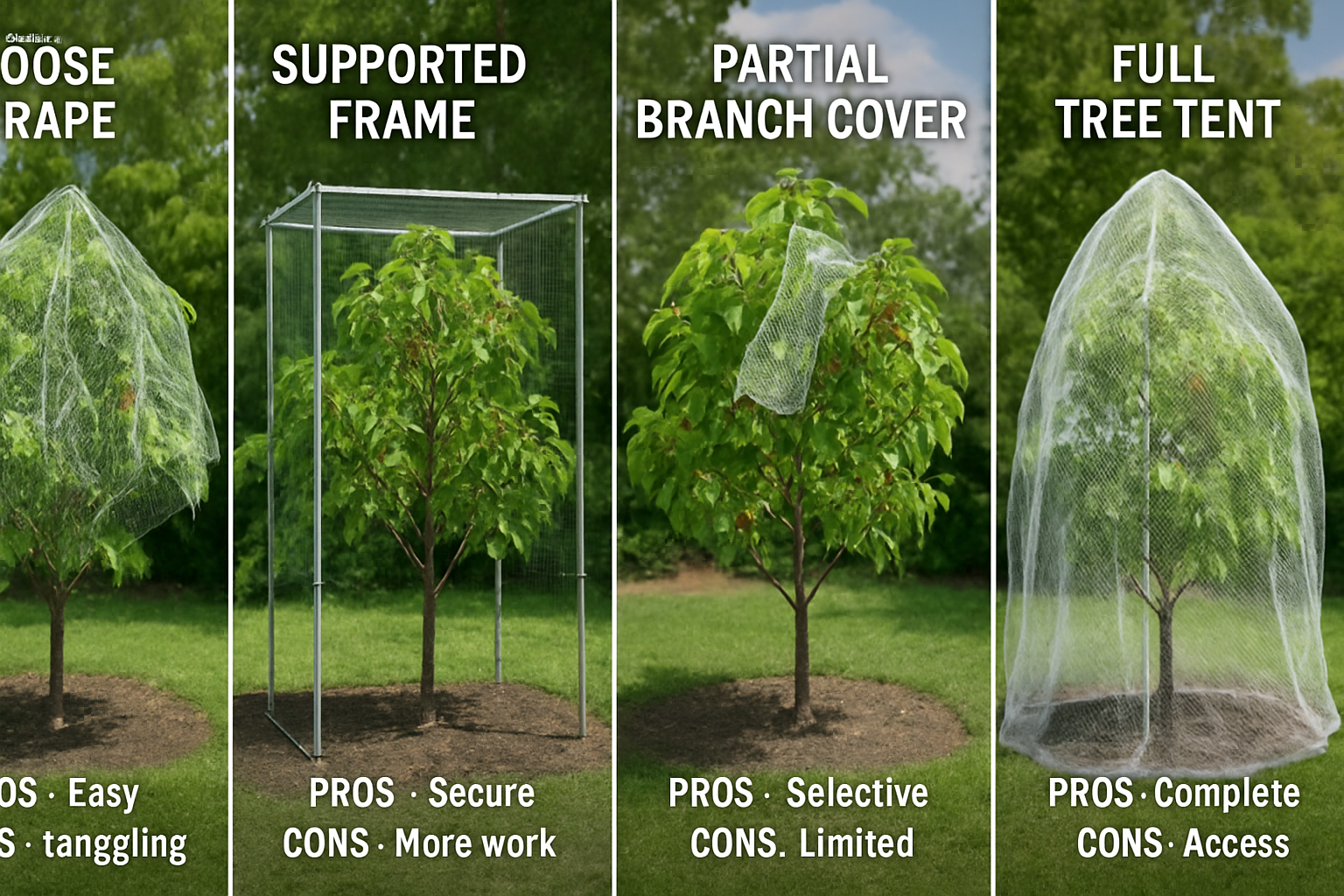
I went down a mulberry rabbit hole on YouTube that led me to three forum threads, two conflicting blog posts, and a lot of contradictory advice. Eventually I just started testing things myself and documenting what actually worked in my yard, in my climate, with my soil. That hands-on trial-and-error is what this guide is built on. Bird netting matters more than most new mulberry growers expect, because the window between almost ripe and perfectly ripe is so short that losing even a few days of fruit to birds can mean the difference between a real harvest and a handful of bruised leftovers — and mulberries don’t wait for you to figure out your system mid-season. What follows is my honest breakdown of four netting methods I’ve actually used on my own tree, what worked, what failed spectacularly, and what I’d do differently if I were starting over.
Mulberry trees are generous to a fault. They produce so abundantly that you’d think there’d be plenty for everyone — you, the birds, the squirrels, and apparently one very nosy tabby cat. But if you’ve ever watched a flock of starlings strip your tree in a single afternoon, you know the heartbreak is real. After three seasons of experimenting (and one cat-related incident I will never fully live down), I’ve tested four different netting approaches on my trees. Here’s my honest breakdown of each one.
Why Bird Netting Mulberry Trees Requires a Specific Strategy
Mulberry trees aren’t like blueberry bushes. They get big — sometimes 20 to 30 feet wide — and their fruit ripens unevenly over several weeks rather than all at once. That means a netting solution that works great on a compact raised bed might be completely useless on a sprawling mulberry canopy. You need something that accounts for size, fruit access over time, and — I can’t stress this enough — wildlife escape routes. Netting that traps birds or small animals is worse than no netting at all. Always use mesh with openings no larger than half an inch so birds can’t push their heads through and get stuck.
4 Bird Netting Mulberry Trees Methods: What Actually Works
The 1/2-Inch Mesh That Finally Stopped the Mid-Ripening Raids
The mesh size matters more than I initially thought—too large and smaller birds slip through; too small and you’re fighting water pooling and fruit visibility during harvest. The Meanchen netting with 1/2-inch mesh sits in that sweet spot where robins and starlings actually get blocked, but you can still reach in to pick ripe berries without tearing holes.
What works
- The mesh is fine enough that even small songbirds can’t wedge through, and I watched the starling raids stop within 48 hours of draping it over my tree.
- It doesn’t snag on branch tips like finer netting does, so securing it with clips or zip ties takes maybe 15 minutes instead of an hour of untangling.
- Light still gets through clearly—you can visually assess ripeness from outside the net without lifting it, which matters when you’re checking the tree twice a day during peak season.
What doesn’t
- Rain pools on top of it if you don’t angle the drape, and I’ve had standing water that kept berries from ripening evenly underneath—now I secure one side higher than the other.
- The material tears if you’re careless pulling it over branches with thorns or rough bark, and patching small holes is annoying enough that prevention is mandatory.
I almost gave up on netting entirely after my first attempt with dollar-store stuff fell apart mid-season, but switching to this Meanchen product meant I actually got to harvest most of my fruit instead of watching birds claim 60% of the crop. Meanchen Bird Netting with 1/2-inch mesh
This post contains affiliate links. As an Amazon Associate, I earn from qualifying purchases at no extra cost to you.