When you’re processing large harvests on a homestead schedule, efficiency matters as much as technique. I’ve batch-processed over forty pounds of mulberries in a single weekend using a system that keeps the kitchen from descending into chaos — and produces multiple products simultaneously rather than making one thing at a time. But here’s the thing nobody tells you when you’re deep in harvest mode, hands stained purple to the elbow and dehydrator trays lined up across every flat surface: none of that processing efficiency matters if your tree is stressed from improper watering, because a thirsty or waterlogged mulberry tree doesn’t just look bad — it produces smaller fruit with lower sugar content, drops its crop early, and in bad cases, won’t give you much worth preserving at all. I learned this the expensive way after a zealous irrigation schedule nearly cost me an entire tree and a full season’s worth of potential jam, wine, and dried fruit. This guide covers exactly what I wish I’d known about mulberry watering before I started treating my tree like it needed the same attention as my raised bed vegetables — because it absolutely does not, and getting this wrong is one of the most common mistakes home growers make.
How I Accidentally Overwatered My Mulberry Tree (and What It Cost Me)
Here’s the embarrassing truth: I killed it with kindness. We had a stretch of hot, dry weeks that summer, and I panicked. I started watering my mulberry every single day — sometimes twice a day — convinced I was doing the responsible thing. The soil around the base always looked dry on top, so I kept adding more water. What I didn’t realize was that the deeper soil was completely waterlogged. The roots were sitting in standing moisture for days at a time.
By the time I noticed the yellowing leaves and called my local cooperative extension office, I’d already triggered the early stages of root rot. The agent I spoke with asked me one simple question: “Are you watering based on a schedule, or based on what the soil actually tells you?” That question changed everything for me. I’d been on a rigid daily routine, completely ignoring the tree itself. I lost about six weeks of good growing season nursing it back, and I honestly wasn’t sure it would make it. The whole experience was stressful, a little heartbreaking, and completely avoidable.
Mulberry Tree Watering Guide: How Much Water Do They Actually Need?
Let’s get into the practical stuff, because this is what I desperately needed and couldn’t find in one clear place.
Young Trees vs. Established Trees
Mulberry trees are surprisingly drought-tolerant once they’re established — usually after two to three years in the ground. But young trees are a different story. For the first year especially, consistent moisture is critical for root development. The key word there is consistent, not constant.
- Young trees (years 1–2): Water deeply once or twice a week during warm months. You’re aiming for moisture 12–18 inches deep, not just the surface.
- Established trees (year 3+): Watering once every 7–10 days during dry spells is usually plenty. In mild weather or after rainfall, you may not need to water at all.
- Winter dormancy: Greatly reduce watering. Overwatering a dormant mulberry is one of the fastest ways to invite root rot.
The Finger Test (and Why I Swear by It Now)
After my near-disaster, this became my golden rule. Before you water, push your finger two to three inches into the soil near the drip line of the tree (not right against the trunk). If it feels moist, wait. If it feels dry at that depth, it’s time to water. It sounds almost too simple, but it saved my tree and it will save yours.
Deep Watering vs. Shallow Watering
This is the piece I was missing entirely. Frequent shallow watering encourages roots to stay near the surface, making the tree weaker and more drought-stressed over time. Deep, infrequent watering pushes roots down into the soil where they belong, building a stronger, more resilient tree. Aim to water slowly and deeply, letting water penetrate well below the surface rather than running off.
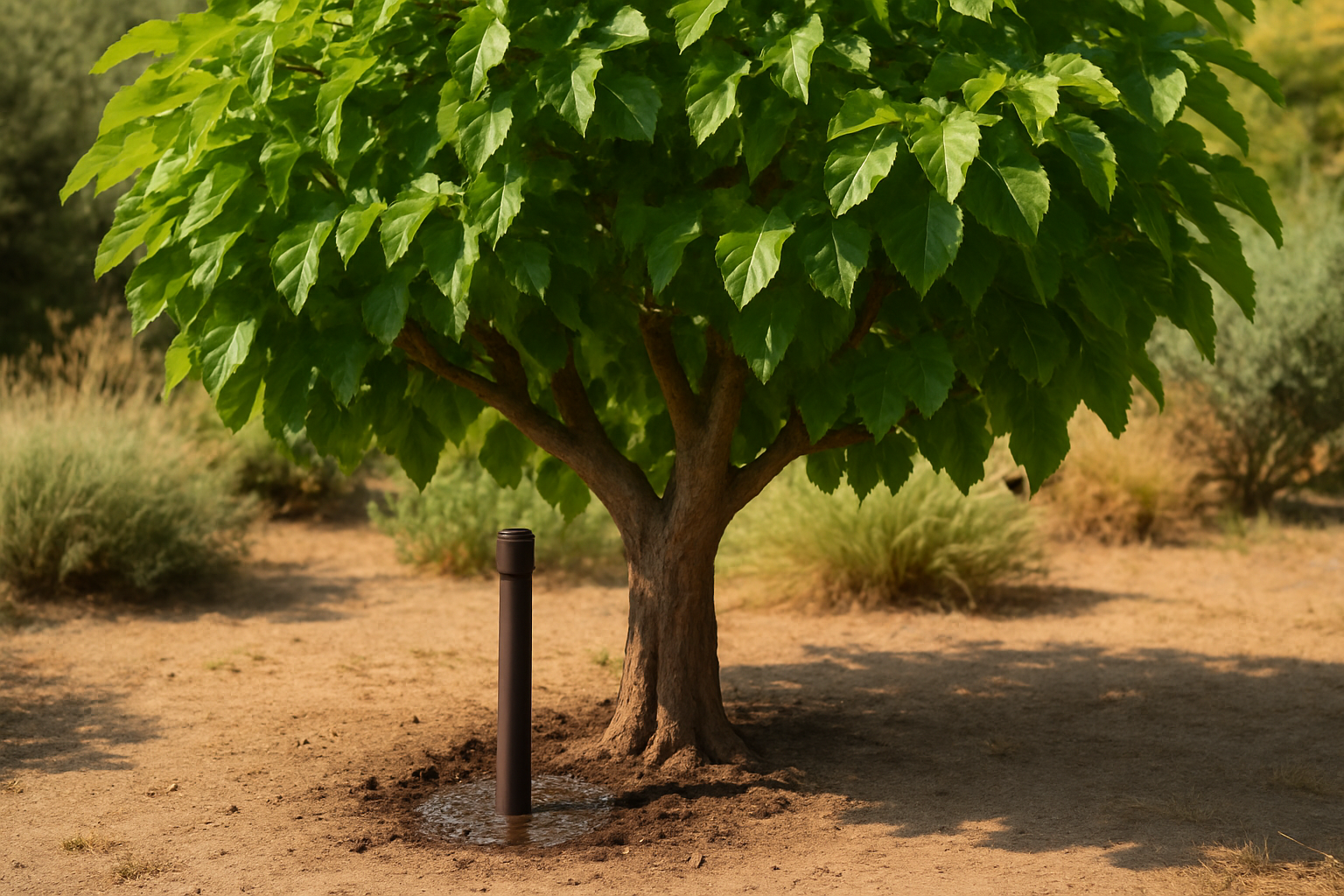
Deep Watering Stakes That Actually Reach the Root Zone (No More Guessing)
When I was overwatering my mulberries into root rot, the problem wasn’t that I was trying too hard—it was that my water wasn’t going deep enough. Surface watering and sprinklers kept the top inch wet while deeper roots stayed dry and stressed, exactly the conditions that invite fungal problems and mushy soil.
What works
- Water travels directly to the root zone instead of pooling on the surface, so you can actually feel when you’ve watered enough without creating a swamp.
- Three stakes per pack let you ring a mature tree—the water distributes evenly so no section gets waterlogged while another stays dry.
- 24-inch depth means the stakes reach below the top layer of compacted soil where actual feeder roots are living, not just where surface moisture sits.
What doesn’t
- You need to remove them or work around them when you’re pruning or doing any close work near the base—they’re not subtle and they stay in the soil year-round.
- Hard clay soil or rocky ground can make installation frustrating; I had to water my soil the day before to soften it enough on my second tree.
I almost returned these after struggling to install them in drought-hardened soil, but once I figured out the prep work, they cut my watering confusion in half. Grab the DEEP DRIP 24-inch Tree Watering Stakes (3 Pack) and actually know whether your mulberries are drowning or thriving.
This post contains affiliate links. As an Amazon Associate, I earn from qualifying purchases at no extra cost to you.