Understanding Compact Mulberry Trees
Maximizing Harvests in Small Spaces
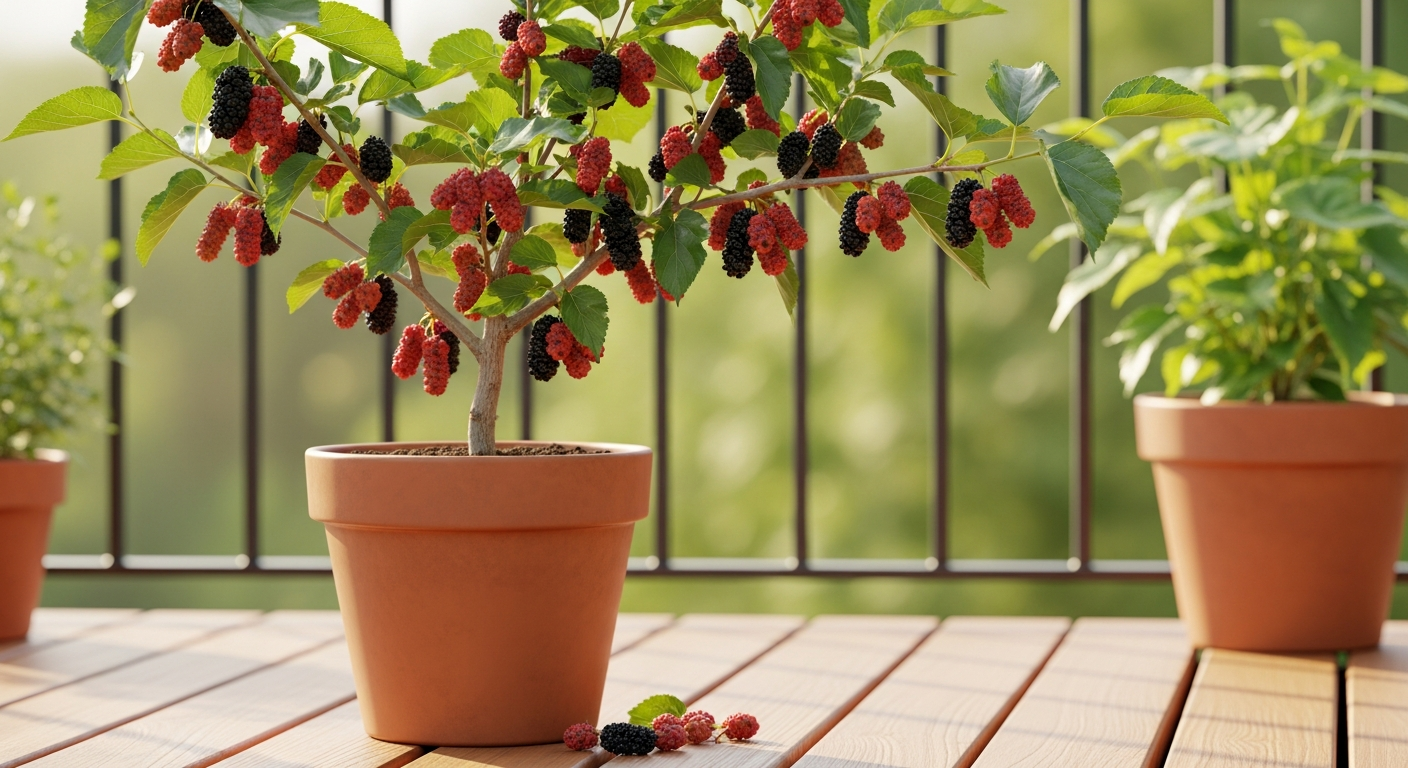
Dwarf mulberry varieties make it possible to grow mulberries without large property. You genuinely don’t need acres to harvest fresh fruit straight from your own trees. Balconies, compact patios, and bright indoor spaces all work just fine. Urban growers especially have discovered these cultivars unlock the possibility of homegrown fruit in confined spaces.
Why Compact Mulberries Make Sense for Small-Space Gardeners
Dwarf cultivars don’t mean smaller berries, weaker production, or compromised flavor. The berries taste every bit as rich and complex as anything from a full-size specimen. The real advantage lies elsewhere: these trees—typically 4 to 8 feet at maturity—funnel their growth energy into fruit rather than sprawling limbs, which translates to higher yields in the footprint you actually have available.
There’s also a flexibility factor that shouldn’t be overlooked. Container-grown dwarf mulberries work beautifully if you’re in a rental situation, if you migrate seasonally, or if you simply want to trial whether the plant thrives in your particular microclimate before committing to in-ground planting. They adapt remarkably well to being repositioned, and that’s been important for growers experimenting with different sun exposures and watering routines.
Container Setup and Soil Essentials
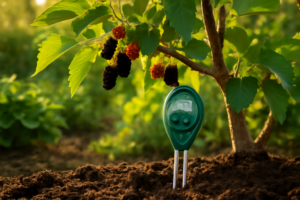
Everything hinges on starting with adequate volume and the right soil recipe. Don’t go smaller than 15 to 20 gallons, and drill extra drainage holes if the pot doesn’t have them on the bottom and sides. Mulberries punish you hard for sitting water—root rot from wet soil is the fastest way to kill one of these trees. A soil formula of 60% potting mix, 20% coconut coir, and 20% perlite manages drainage while holding enough moisture through summer heat waves.
Refreshing the soil every two years in early spring before the growing season accelerates keeps everything aerated and gives roots room to branch outward. When you do move it up, gently loosen any roots that are wrapping around the root ball; mulberries get tangled in tight containers quickly. I once forgot this step and ended up with a root-bound Illinois Everbearing that took ages to bounce back.
Choosing the Right Pot: Size and Material
Undersizing the container is probably the single biggest mistake growers make. Fifteen to 20 gallons is genuinely the floor if you’re keeping the tree in a pot for multiple years; anything smaller means constant repotting, fighting erratic moisture, and dealing with soil that heat-dries and warms up much faster in sun exposure. Width and depth matter equally: mulberries spread their roots horizontally even in containers, so you want a pot that’s wide and moderately deep rather than tall and narrow.
Container material shifts the maintenance equation. Plastic and sealed ceramic hang onto moisture longer, which can be a safety net if you forget to water, though you still need substantial drainage holes. Breathable fabric grow bags and unglazed terracotta shed water faster, cutting root-rot likelihood but demanding more frequent hydration during heat. I’ve worked with both materials across different years. In the Pacific Northwest’s wet winters, I reach for the breathable stuff; in hot, dry summers, plastic gives me some forgiveness between waterings. I learned this during a particularly hot spell when my fabric pots dried out too quickly, leaving my Black Beauty looking droopy.
Building the Soil Mix Properly
That 60/20/20 split I use isn’t just something I pulled from thin air—everything in the blend serves a concrete purpose. The potting mix itself carries nutrients and organic matter to feed the tree. Coconut coir manages moisture distribution without compacting the way peat moss eventually does, and it stays neutral on pH so you’re not chasing acidity fluctuations on top of container challenges. Perlite is your rot prevention tool—it punctures the soil with air channels so excess water drains through instead of stagnating against the roots, which is the number one culprit behind dead container mulberries.
If your base potting mix already incorporates visible perlite or pumice, you have room to adjust—something like 65/20/15 works without downsides. The trap to avoid is ditching the perlite or coir entirely and relying on straight bagged potting soil alone; within one growing season of regular watering, most commercial mixes consolidate and lose the drainage capacity a young mulberry demands. I made this mistake with my first Ozark Premier and ended up having to repot it far too soon.
Repotting: Timing, Signs, and Technique
I move my trees into fresh soil every two years during early spring, before growth accelerates—that gives the roots a full season to settle into new medium before dormancy returns. But the calendar isn’t the whole story. Real-world signs tell you when the roots have actually outgrown their container: you’ll spot roots threading through the drainage holes, water streaming straight through without soaking in, or the soil drying at a rate that seems disconnected from your watering habits. Any of those signals means the root mass has consumed the available soil and an upgrade is overdue.
Step up just one size rather than jumping two or three—an oversized pot contains soil the roots can’t reach, and that abandoned wet soil around a compact root system breeds rot. Ease the tree out of the old pot, and if the roots have wrapped themselves around the outside of the root ball, work them loose gently with your fingers or score a few shallow vertical lines with a sanitized knife to steer the roots outward into fresh soil instead of continuing their circular path. Position the tree at its original depth, fill around it with your prepared mix, and water thoroughly to collapse any air gaps between the fresh soil and the roots.
Getting a Potted Mulberry Through Winter
Roots in containers experience cold differently than roots buried in ground—there’s no insulating earth surrounding the pot to moderate temperature swings, so a hard frost can damage roots at temperatures the same cultivar would brush off if planted in-ground. For zones where winter temperatures sink well below your tree’s hardiness rating, plan ahead: position the pot against a structure that blocks wind, wrap the container itself in burlap or insulating bubble wrap, or relocate it into an unheated but protected structure like a garage or garden shed during the worst freeze periods. You’re not trying to keep the tree warm—you’re just preventing the container soil from becoming a solid block of ice, which container roots cannot tolerate.
Frequently Asked Questions
Do dwarf mulberry berries taste as good as full-size trees?
They do, in my experience. I assumed dwarf cultivars meant smaller berries or weaker flavor, but that doubt disappeared once I grew my first compact tree, an Illini Star. The berries taste every bit as rich and complex as anything from a full-size specimen, and these 4 to 8 foot trees put their energy into fruit instead of sprawling limbs.
Can I use bagged potting soil alone in a mulberry container?
I wouldn’t. Relying on straight bagged potting soil, without perlite or coir, is the trap to avoid: within one growing season of regular watering, most commercial mixes consolidate and lose the drainage a young mulberry demands. I made that mistake with my first Ozark Premier and had to repot it far too soon.
Should I adjust my soil mix if the potting mix already contains perlite?
Yes, you have room to adjust. My standard blend is 60% potting mix, 20% coconut coir, and 20% perlite, but if your base potting mix already includes visible perlite or pumice, something like 65/20/15 works without downsides. Just don’t drop the perlite or coir entirely, since that’s what keeps water moving through instead of stagnating.
Are container mulberries a good choice if I rent my home?
Container mulberries work well for renters, seasonal movers, or anyone wanting to trial a tree before committing to in-ground planting. Potted trees can be relocated to adjust sun exposure and watering routines, and they adapt remarkably well to container life.
Keep Reading
About This Article

Written by Ruth Nakamura. Ruth Nakamura is a backyard orchardist in the Pacific Northwest who has grown mulberries for fifteen years, cultivating twelve different varieties in her own backyard. Not a horticulturist by formal training - she shares what she has learned through hands-on growing, workshops, and connecting with nurseries and growers across the country. More about this site.
Scope and limits. Ruth is a backyard orchardist without formal horticultural training. Growing conditions vary enormously by region, so confirm variety, timing, and pest guidance with your local extension service.
Verify this against a primary source
Specifics change, and your situation may differ from the one described here. These are the authorities worth checking directly:
- USDA Plant Hardiness Zone Map — zone verification for your location
- Oregon State University Extension — fruit growing and pruning research
- USDA PLANTS Database — species range and identification