
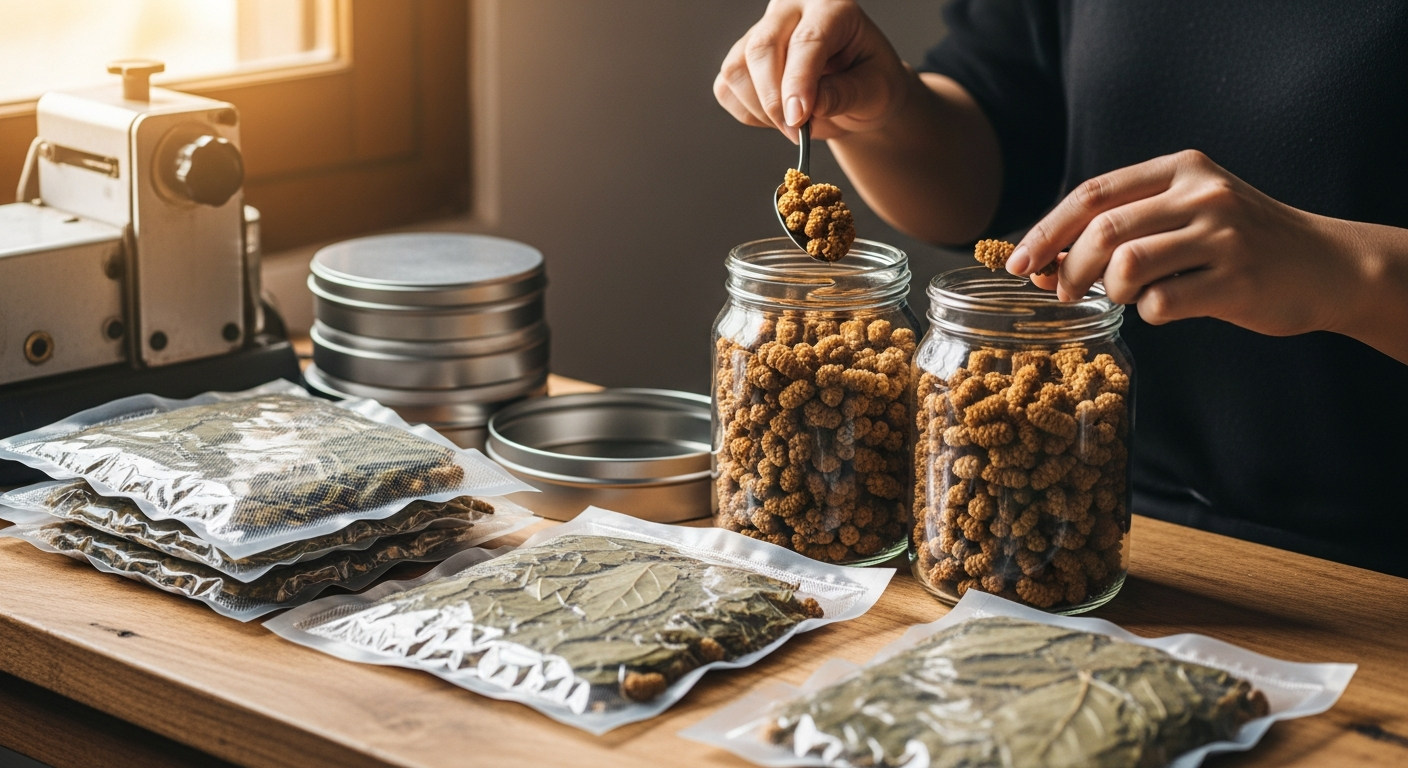
Most people who plant their first mulberry assume that leaf harvesting is an afterthought—something you do with what falls or if you happen to have extra. That assumption costs you. The leaves, frankly, deserve as much attention as the fruit itself. Over the years I’ve been growing mine, I’ve learned that the foliage holds genuine value for tea, animal feed, and powdered seasonings—but only if you dry and store it with real intention. The tricky part is that leaves punish you faster than fruit does if you skip steps or mistime the process. Mold, flavor fade, and nutrient loss happen in a hurry. I’ve tested multiple approaches across my dozen cultivars—from basic open-air racks to controlled-temperature methods—and what I’m sharing here is what actually produces leaves you’ll still want to use come winter.
Drying Mulberry Leaves Without Losing Half Your Harvest to Mold
The second you harvest a mulberry leaf, two enemies emerge: excess moisture and stagnant air. Both will sabotage your work if you’re not deliberate about managing them. A well-designed drying rack hands you the tool to keep those enemies at bay by stacking leaves with space between each layer so nothing sits cramped or wet. I learned this the hard way after my first few drying attempts resulted in moldy leaves that were more suited for the compost bin than my tea pot.
The advantages
- A unit with six tiers lets you move through a substantial leaf-picking session without cramming everything onto one surface where leaves touch and begin to break down. I remember the first year I tried to dry too many leaves on a single tray; the result was a soggy mess that turned my excitement into disappointment.
- Mesh screens on every level pull air through from underneath and overhead, reducing drying time from the 7–10 day range to around 3–4 days. This method also helps preserve the vibrant green color and flavor of mulberry leaves.
- Once the season ends, the whole thing folds up small enough to tuck into a garage corner or closet, so you’re not tripping over it in January. Trust me, after a busy mulberry season, the last thing I want to deal with is extra clutter!
The limitations
- Those zipper mechanisms grab the mesh fabric if you’re not slow and careful during assembly and takedown—I discovered this the hard way early on and bent my frame a little in frustration. It taught me to take my time, which is a valuable lesson in gardening, too!
- A still closet or interior room won’t work; you need to position the rack where natural breezes can find it, and you may end up running a small portable fan alongside it on humid days. In my humid Pacific Northwest summers, I’ve learned that a little airflow goes a long way to avoid disappointment.
The build quality feels solid and the zippered access actually makes turning your leaves (which I do once midway through) less of a production than you’d think. MEKOLIFE 6-Layer Collapsible Mesh Herb Drying Rack has become a staple in my mulberry routine.
Frequently Asked Questions
Why do my mulberry leaves turn moldy while drying?
Mold sets in when leaves hold excess moisture and sit in stagnant air. My first drying attempts failed because I crammed too many leaves onto a single tray, where they touched and broke down into a soggy mess. Spacing leaves across separate layers with air moving underneath and overhead is what fixed it for me.
How long does it take to dry mulberry leaves at home?
Leaves drying on an ordinary surface typically require 7–10 days, while stacking them on mesh screens that pull air through from both underneath and overhead reduces that to around 3–4 days. Faster drying also helps preserve the green color and flavor.
Should I turn mulberry leaves while they are drying?
Yes, I turn mine once midway through the drying process. With a rack that has zippered access on each level, this is far less of a production than it sounds. Turning helps both sides get airflow so nothing stays damp underneath, which is where mold and flavor fade tend to start.
Can I dry mulberry leaves in a closet or spare room?
A still closet or interior room won’t work for me. Leaves need natural breezes to find them, so I position my rack where air actually moves. During humid Pacific Northwest summers I run a small portable fan alongside it, because even a little airflow makes the difference between usable leaves and compost.
Keep Reading
About This Article

Written by Ruth Nakamura. Ruth Nakamura is a backyard orchardist in the Pacific Northwest who has grown mulberries for fifteen years, cultivating twelve different varieties in her own backyard. Not a horticulturist by formal training - she shares what she has learned through hands-on growing, workshops, and connecting with nurseries and growers across the country. More about this site.
Scope and limits. Ruth is a backyard orchardist without formal horticultural training. Growing conditions vary enormously by region, so confirm variety, timing, and pest guidance with your local extension service.
Verify this against a primary source
Specifics change, and your situation may differ from the one described here. These are the authorities worth checking directly:
- USDA Plant Hardiness Zone Map — zone verification for your location
- Oregon State University Extension — fruit growing and pruning research
- USDA PLANTS Database — species range and identification