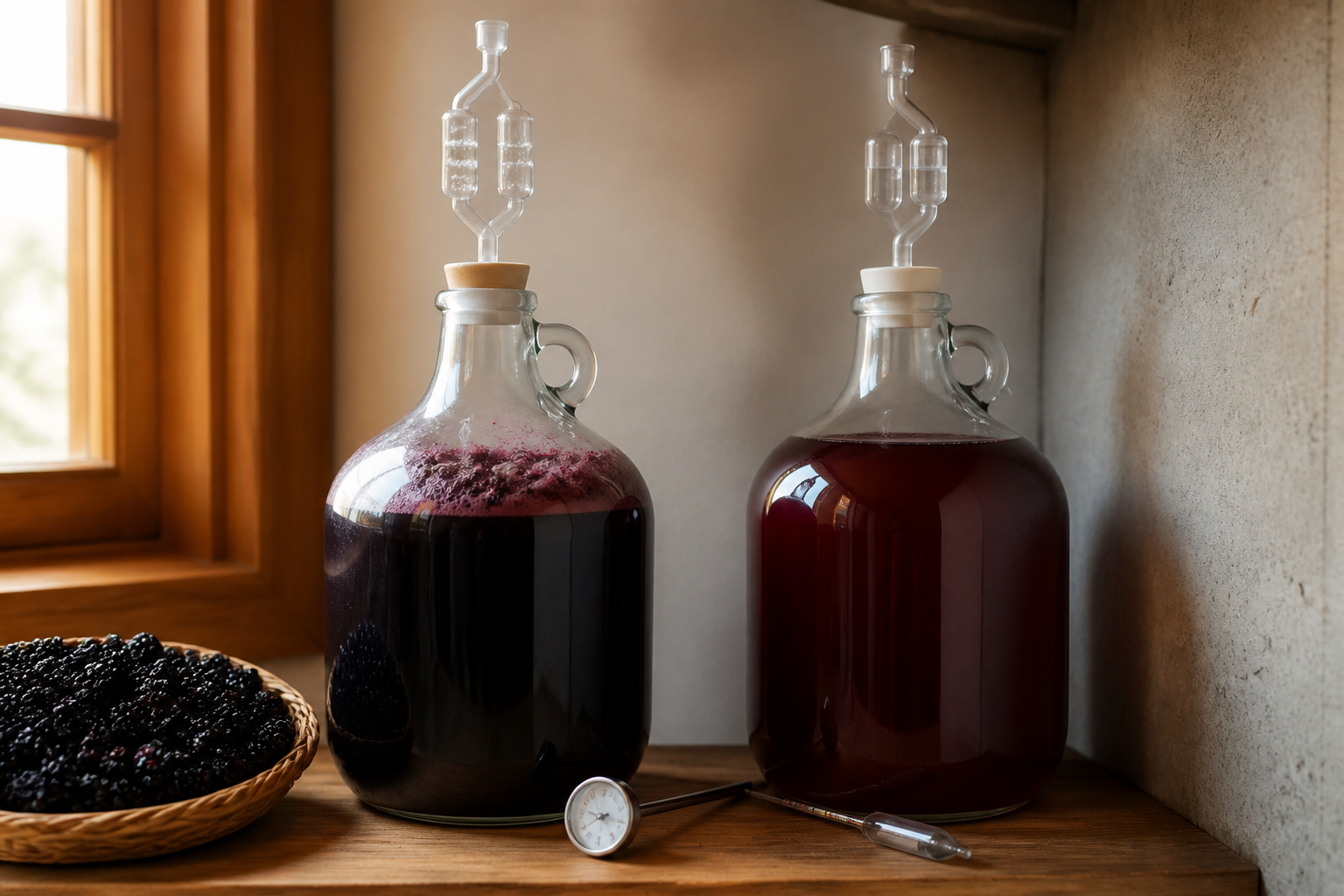
Two batches, same recipe, same five pounds of mulberries picked off the same tree an hour apart — and they came out like they were made by two different people. My first batch sat on top of the refrigerator because that was the only flat surface in my kitchen, and three weeks later it hit me like rubbing alcohol, no fruit, no softness, just heat. The second batch, made the following week, I moved down to a shelf in the basement out of pure necessity because my kitchen counter was full of tomatoes. That one came out deep, jammy, and genuinely drinkable. Same fruit. Same yeast packet from the same jar. The only real difference was the number on a thermometer I hadn’t even bothered to check the first time.
If your mulberry wine tastes like alcohol — that harsh, burning quality that makes you wince instead of sip — I have good news: this is one of the most fixable problems in home winemaking, and it almost always comes down to one thing: fermentation temperature.
I’m going to walk you through exactly what went wrong with my first batch, what temperature is actually doing to your yeast, and the specific, practical steps I now take to ensure every batch comes out tasting like wine instead of paint thinner. Once I understood the science, I stopped losing batches — and you can too.
Why Temperature Controls What Your Wine Actually Tastes Like
Here’s what I didn’t know when I made that first batch: yeast isn’t just sitting there quietly converting sugar to alcohol. It’s a living organism with very strong opinions about its working conditions — and temperature is the biggest one.
Wine yeast performs best in a fairly narrow temperature band, roughly 65–75°F (18–24°C) for most fruit wine strains. This matters because yeast doesn’t just produce alcohol; it also produces all the aromatic compounds, the esters, the subtle flavors that make your wine taste like mulberries instead of a chemistry experiment. When fermentation stays in that sweet spot, yeast has time to work carefully, building flavor and complexity.
But when the temperature climbs above that range — especially if it’s consistently sitting in the low 80s or higher — something shifts. The yeast metabolism speeds up. Your yeast gets stressed. Instead of producing fruity, aromatic esters that give wine its character, stressed yeast throws off something called fusel alcohols: heavier, harsher-tasting alcohols that taste exactly like what you’re describing — alcohol, heat, and nothing else.
In my case, that refrigerator top was sitting in a warm kitchen corner, probably holding steady around 78–80°F. Seems warm enough, right? It was — just warm enough to stress the yeast without me realizing it. The yeast raced through the sugar so fast that all those delicate mulberry flavor compounds never had time to develop. I got alcohol content, sure. I just got very little of anything else.
The Most Common Fermentation Temperature Culprits
A must that ferments too hot is the single most common home cause of a batch that tastes like “pure alcohol.” Let me give you the places I’ve accidentally — and then deliberately — experimented with:
- Above or near kitchen appliances: Your refrigerator top might seem like a convenient, out-of-the-way spot (I thought so too), but if your kitchen gets warm during the day, that spot is often the warmest in the house. Same goes for near a stove, oven, or dishwasher if you’re running them regularly.
- Near radiators or heating vents: If you live somewhere with forced heating, fermentation carboys near an active radiator will climb into the 80s fast. I learned this the hard way in early spring when I’d forget to move my batch away from a baseboard heater.
- Sunny windowsills: Direct sunlight isn’t just bad for UV exposure to your wine (that’s a separate issue) — a south-facing window in spring and summer can push temperatures up to 80°F or higher, especially if the carboy glass concentrates the heat.
- Hot garages or sheds: This one catches a lot of home winemakers. A garage that feels pleasantly cool in the morning might be 82°F by afternoon. If you’re fermenting there, your temperature is probably swinging all over the place.
That basement shelf where my second batch fermented? It stayed a steady 62–68°F year-round. Slower fermentation, yes. But the result was a wine that tasted like mulberries.
How Cooler Fermentation Saves Your Flavor
There’s a reason professional winemakers obsess over temperature control. A cooler, slower fermentation — in the low-to-mid 60s °F — gives yeast more time to do what it does best: produce fruity esters and let flavor compounds from the mulberries fully extract. It sounds counterintuitive (shouldn’t faster be better?), but it’s the opposite. Slow and steady wins here.
Think of it like cooking mulberry jam. If you blast it on high heat, you get thick syrup fast — but the subtle fruit flavor burns off. If you simmer it low and slow, the fruit flavor deepens and intensifies. Fermentation is the same principle.
This is actually why two batches from the same fruit and recipe can taste completely different if one fermented in a warm kitchen and the other in a cool basement. Same mulberries, same yeast, same sugar — completely different results based entirely on what temperature did to the fermentation process.
If you’re following my complete step-by-step mulberry wine recipe, this is the one variable that, more than anything else, will determine whether your batch tastes professional or harsh.
The Temperature Troubleshooting Checklist
Okay, let’s fix this. Here’s what I do now, every single time:
Step 1: Check Your Current Fermentation Temperature
Get a basic thermometer — nothing fancy required — and place it right next to your carboy. Write down the temperature at different times of day: morning, afternoon, evening. Do this for three days. You’re looking for the average and the range. If it’s fluctuating wildly or sitting above 75°F, that’s your problem.
Step 2: Find a Cooler Fermentation Spot
An unfinished basement is ideal — cool, stable, dark. A closet in a cooler room works. Even a wine fridge (if you’re willing to invest) is perfect for small batches. The goal is 65–72°F and consistency. Temperature swings during active fermentation — not just a too-high average — also stress yeast and can produce off-flavors. A consistent temperature, even a slightly cooler one, generally produces a cleaner, fruitier result than one that fluctuates day to night.
Step 3: Move Your Current Batch (If It’s Still Active)
If your batch is currently fermenting and tasting too hot, move it to the cooler spot right now. I know — you might think you’ve already ruined it. You haven’t. If fermentation is still happening (you’d see bubbles in the airlock), a cooler environment will let the remaining fermentation proceed more smoothly and can improve the final flavor significantly.
Step 4: Use a Hydrometer to Confirm Fermentation Is Actually Done
Here’s a trick that saved me from thinking I’d ruined more batches than I actually had: sometimes wine that tastes “too strong” or “too hot” isn’t actually finished fermenting. A hydrometer reading before and after fermentation — original gravity versus final gravity — is the only reliable way to confirm fermentation actually finished. A wine that has residual unfermented sugar can read as harsh and hot, when really you’re tasting sweetness masking the alcohol. If your final gravity is higher than expected, let it ferment longer in that cool spot. The flavor might surprise you.
If your batch is already in a fermentation kit, most include basic hydrometers. If not, they’re inexpensive and honestly indispensable — grab one if you’re serious about this.
What I Actually Use for Temperature Control
You don’t need expensive equipment to manage fermentation temperature well. Here’s what actually sits in my basement right now:
- A basic digital thermometer ($5–10) taped to the wall next to my fermentation carboys so I can check temperature without opening anything
- A small fan (optional, but helps with air circulation in a stagnant basement)
- An old shelf unit in my coolest room, away from heat sources
- For beginners who want a complete system, the Home Brew Ohio Upgraded 1 Gallon Wine from Fruit Kit gives you everything including basic temperature guidance
- If you prefer something more comprehensive, the Craft A Brew Fruit Wine Making Kit is excellent for starting out and includes clear instructions on fermentation management
I checked the wine making kits I actually use before recommending them, so you’re not getting random advice here — these are tools that actually work for mulberry batches.
Understanding How Fermentation Transforms Your Mulberries
If you want to really understand why temperature matters this much, it helps to think about how fermentation transforms mulberry juice into wine. This isn’t just about converting sugar to alcohol. This is about coaxing out the best version of your mulberries. Temperature is the variable that determines whether you get that deep, jammy, genuinely drinkable result or something that tastes like a chemistry experiment.
Moving Forward: Your Temperature Action Plan
If your mulberry wine tastes like alcohol right now — that harsh, hot, “is this even wine” quality — don’t throw it out. First, check your fermentation temperature with a thermometer. Move your batch to the coolest, most stable location you have access to. If fermentation is still happening, give it more time in that cool spot. Use a hydrometer to confirm it’s actually finished.
And for your next batch? Pick your cool spot first, verify the temperature for a few days, then start your fermentation there. I promise you, this single change will transform your results.
Once I understood what temperature was doing to my yeast, I stopped losing batches to that harsh, hot taste — and that second batch from my basement? It’s still the gold standard I measure every new batch against. You can get there too. Start with a cool location, verify it with a thermometer, and let your mulberries show you what they’re really capable of.
This post contains affiliate links. As an Amazon Associate I earn from qualifying purchases at no extra cost to you.